Brave Fine Art has dated this piece to the 1890s.
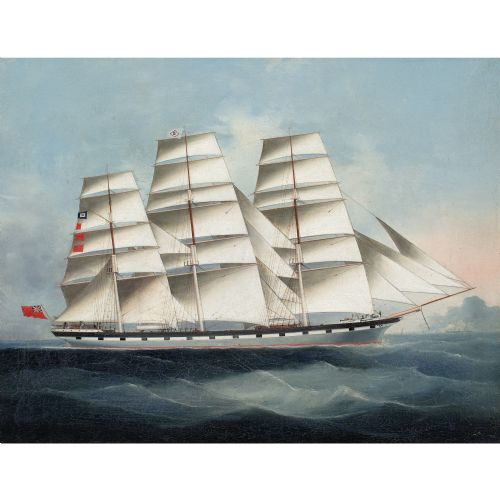
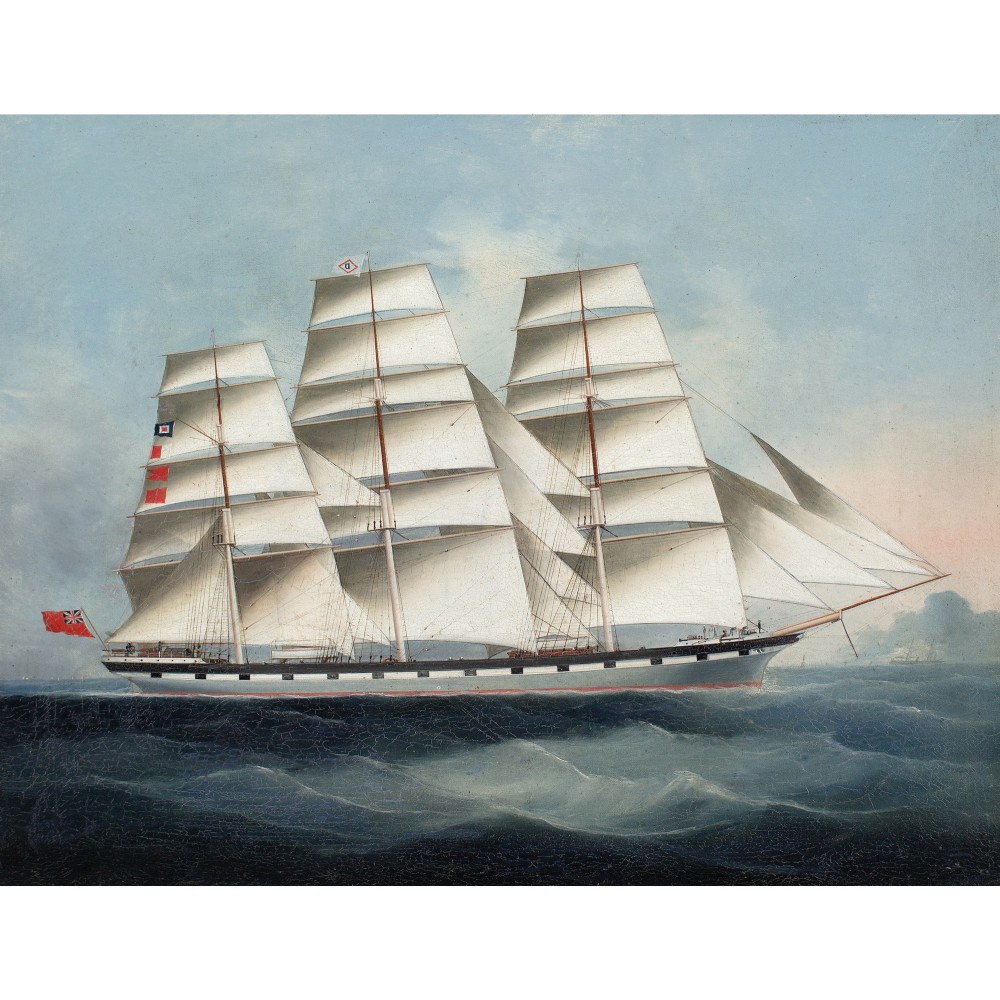
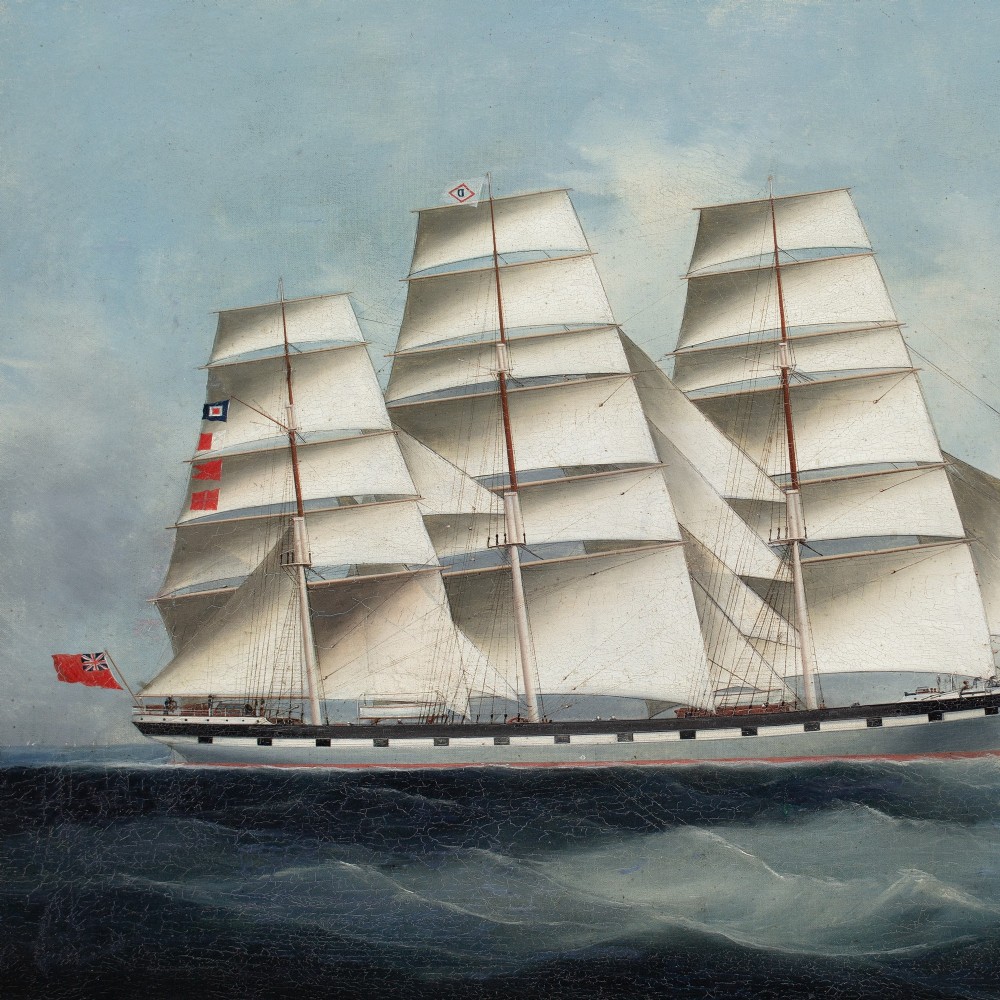
Launched from the well-known shipyard of Robert Duncan and Co Ltd, Port Glasgow, the Clan Mackenzie was over 250 feet long and weighed 1,597 net tons. Regarded as the fastest in her fleet, she undertook numerous voyages for the Clan Line before being sold to Norwegian owners in 1909 and renamed ‘Majorka’.
Following the outbreak of war, transatlantic travel became increasingly perilous due to the presence of German U-boats patrolling the shipping lanes. Numerous ships were targeted as they undertook vital trips to collect war goods from America before returning to British ports. On one such trip, in 1917, the Clan Mackenzie left London for Delaware but was sunk by a mine. An explosion on her port side was followed by a second and split the ship in two. Within minutes, she was underwater, with the crew struggling to escape. Just eleven survived. In 1998, her wreckage was discovered and identified via an inscription on the ship’s bell.
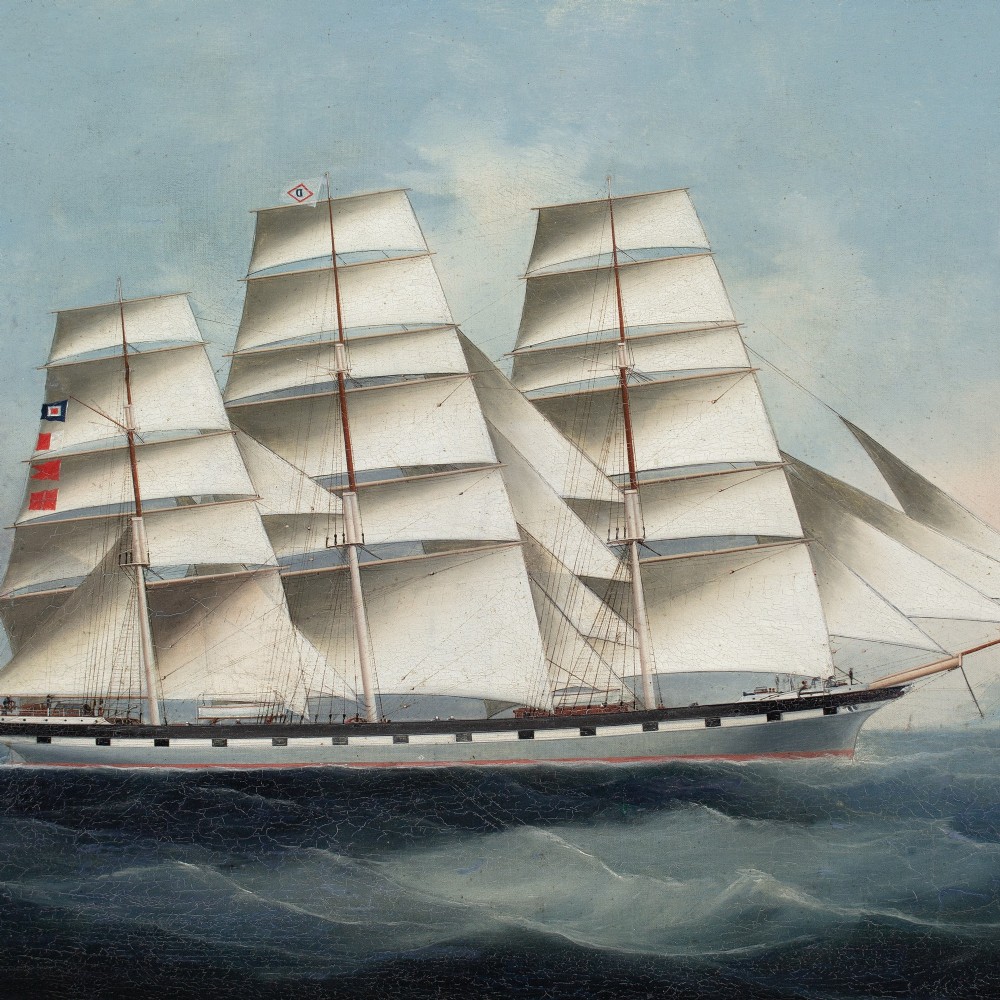
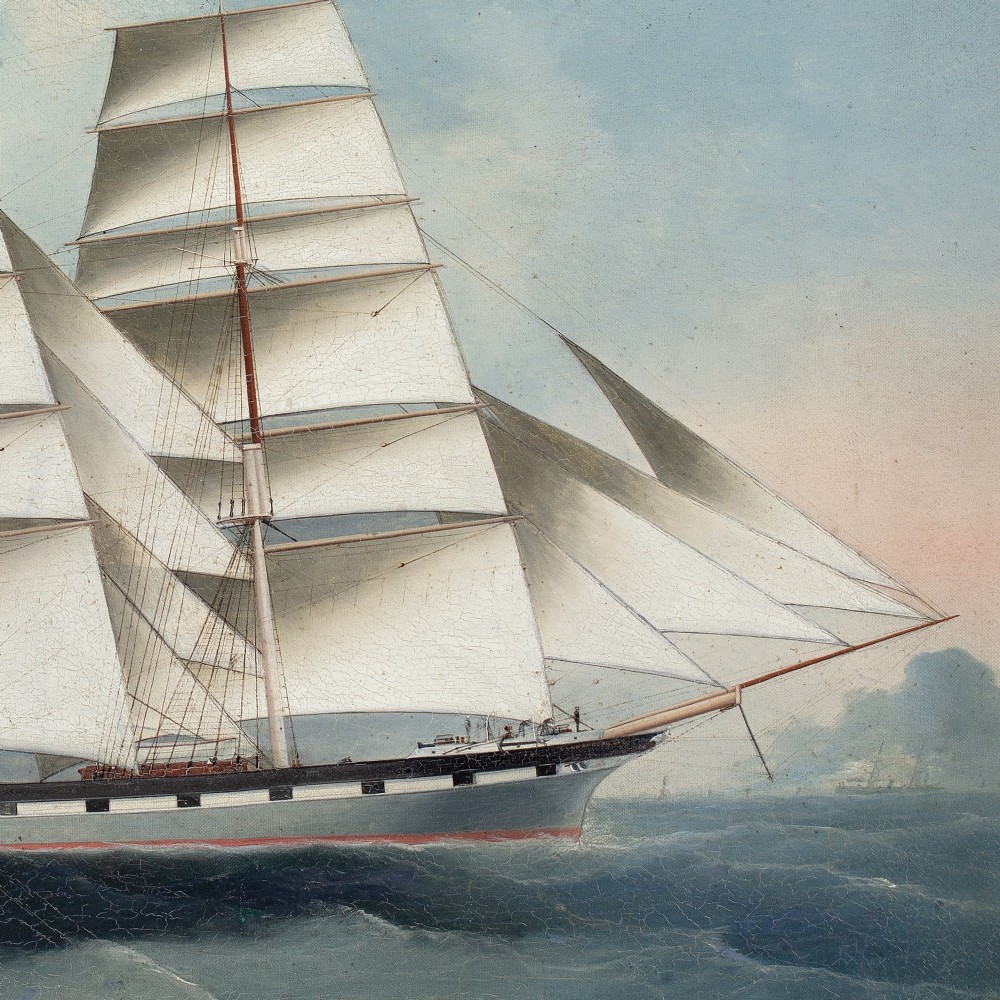
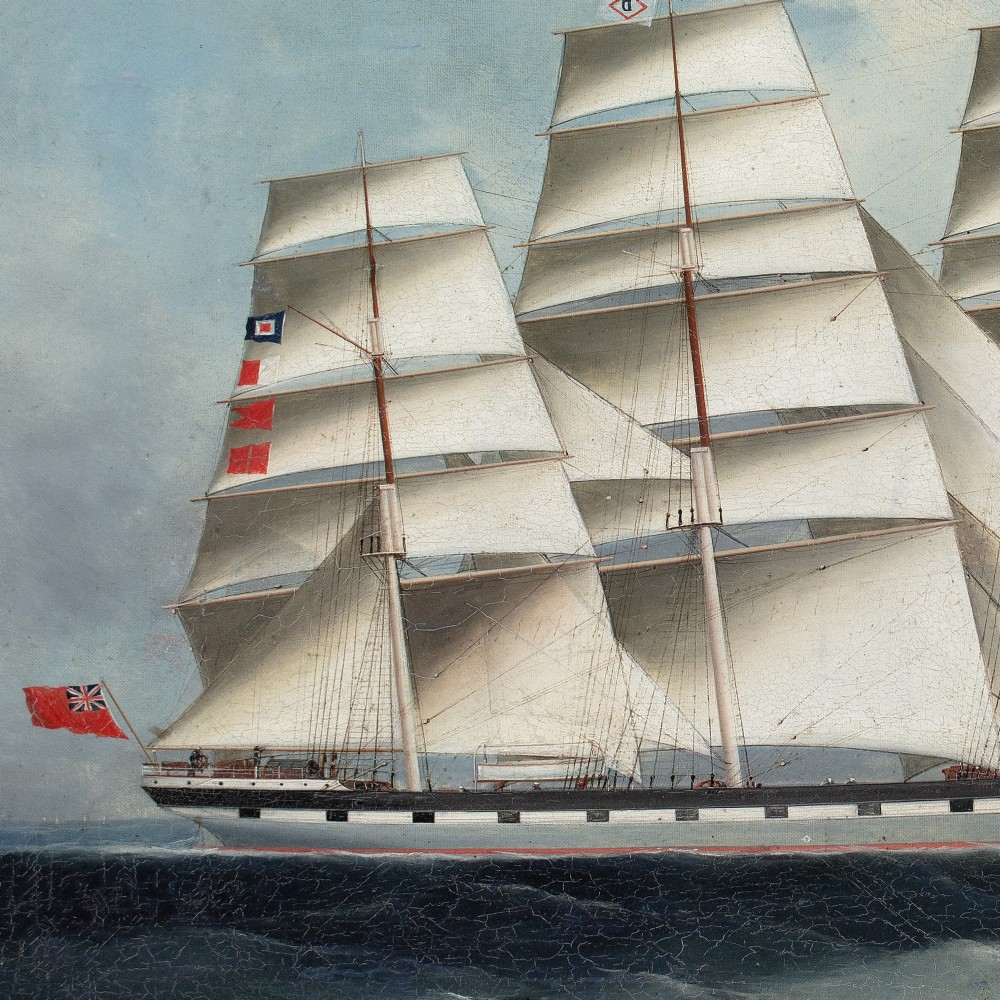
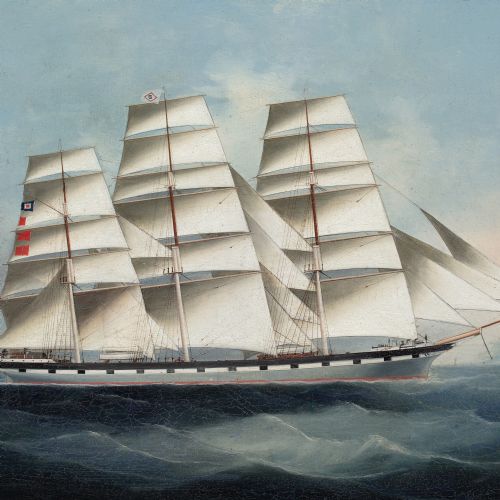
Here, in a portrait from around 1890, she’s captured during her brighter days - fully rigged, and sailing in relatively calm waters. Stylistically, the work bears some resemblance to a similar piece in the collection at Royal Museums Greenwich, which depicts the Tyburnia. The museum also holds a photo of the Clan Mackenzie at moorings in Gravesend Reach on the River Thames.
Held within a later frame.
Medium: Oil on linen
Overall size: 27½” x 21½” / 68cm x 55cm
Year of creation: c. 1890
Provenance: Private collection, UK.
Condition: Assessed and approved by our conservator. Fine and settled craquelure, as you would expect. The paint layer is stable.
Our reference: BRV1882
Brave Fine Art has dated this piece to the 1890s.
Exquisite antique paintings that capture the imagination.
You can view the stock and full dealer information on the Brave Fine Art Profile Page
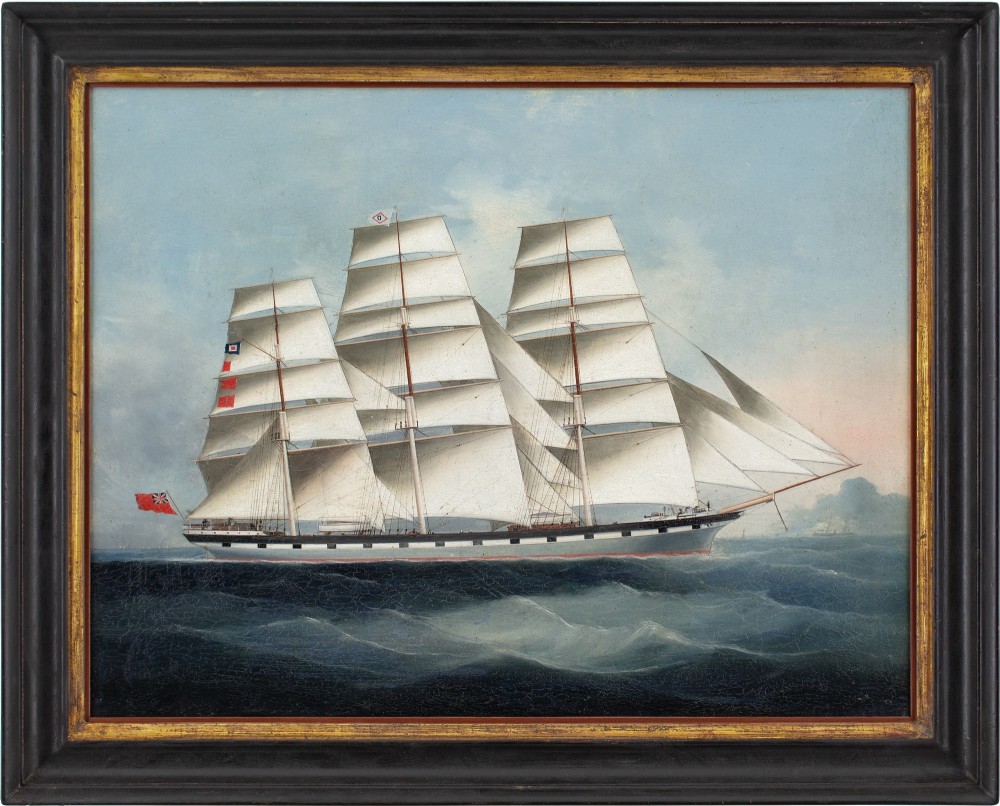
19th-century British School, Portrait of the Fully-rigged Clan Mackenzie - Antique Oil Painting