





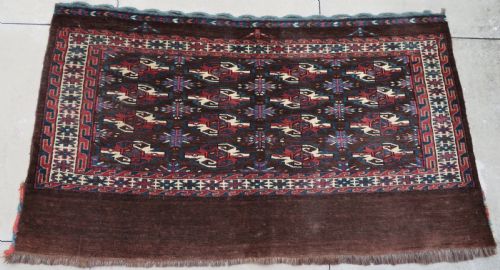

Yomut Gul Wool Carpet
These yomut gul wool carpet examples are enduring tribal weavings from Central Asia that bring rich geometric patterning and deep history into your interior.
Yomut Gul Wool Carpet
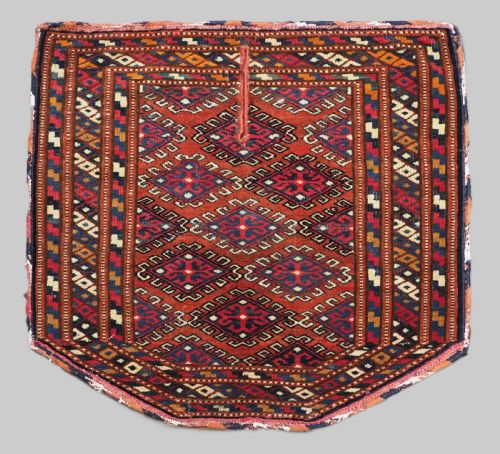
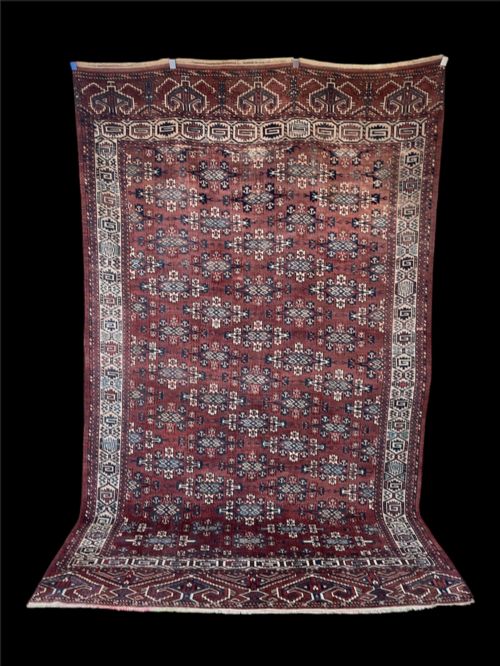
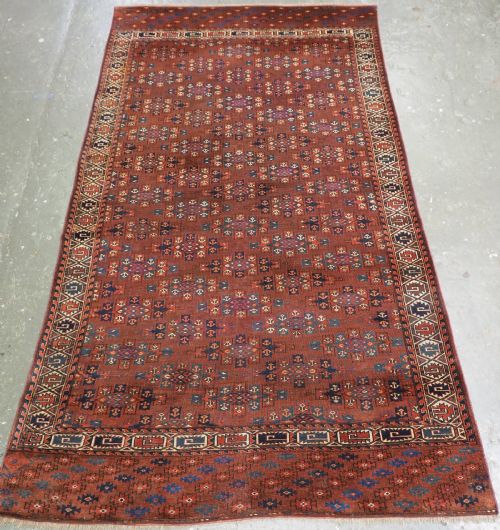
When you search for a yomut gul wool carpet, you encounter traditional tribal textiles originating from the Trans-Caspian steppes and Turkmenistan. These pieces span the late nineteenth century through to the early twentieth century, encompassing main carpets, rugs, and specific utilitarian forms.
Central Asian tribal weavers utilised distinctive regional motifs, notably repeating octagonal guls and specialised patterns like the kepse and dyrnak designs. Each format reflects the specific cultural traditions of Yomut groups operating across the Central Asian landscape.
How they were made
The construction relies heavily on hand-spun wool combined with natural dyes, creating resilient surfaces intended for heavy nomadic usage. Weavers frequently paired this wool foundation with cotton elements to build structured textile grounds.
Traditional dyeing techniques produced deep, saturated tones across the pile, while tight knotting ensured high durability. Artisans executed precise geometric layouts entirely by hand without preliminary paper cartoons.
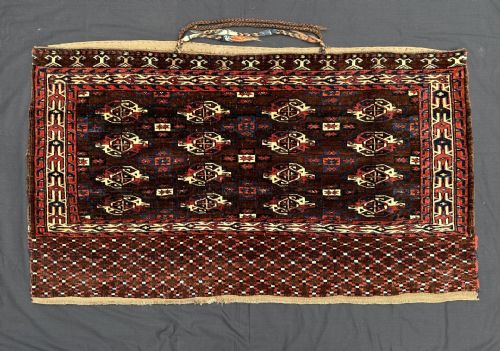
Object forms include main carpets, saddle covers, torba face pieces, and storage-bag chuvals attributed to Turkmen tribal makers.
What varies in quality
Quality in these textiles depends on the fineness of the weave and the clarity of the primary gul motifs. Tighter knot counts and precise execution of secondary border patterns elevate the visual impact of the piece.
The richness and preservation of the natural dye palette determine the overall visual depth. Pieces retaining vibrant, intact hues across the wool pile stand apart from examples showing heavy fading or structural wear.
The Yomut Gul Wool Carpet Glossary
- Gul
- A primary octagonal medallion motif repeated across Turkmen carpets. This design serves as the central identifying emblem for specific tribal groups.
- Chuval
- A large tent-storage bag woven by nomadic groups for domestic storage. These items frequently display multiple guls and function well as wall hangings.
- Torba
- A smaller storage bag face produced for household utility in Turkmen tents. They often feature intricate geometric field arrangements.
- Kepse
- A specific repeating lattice or gul pattern associated with Yomut weaving. The design creates a dense, interlocking visual grid.
- Dyrnak
- A characteristic comb-like or triangular motif found within Yomut textile design. It forms structured geometric rows across the carpet field.
Yomut Gul Wool Carpet: Frequently Asked Questions
How were these carpets used?
Nomadic weavers created these textiles for daily domestic utility inside traditional tents, utilising them as floor coverings, storage bags, and animal trappings.
Larger formats served as main carpets for family living spaces, while smaller bags stored blankets and household goods.
How do I identify a Yomut piece?
Look for specific octagonal gul motifs, particularly the kepse and dyrnak designs, executed in rich wool piles with natural dyes.
These tribal characteristics distinguish Yomut weavings from other Central Asian groups originating from the same nineteenth century period.
Can I hang these on walls?
Many smaller formats, particularly chuvals and torba pieces, adapt well to vertical display as textile art. Their manageable proportions allow secure mounting on interior walls.
Ensure proper hanging methods distribute the weight evenly across the wool foundation to prevent stretching.
What periods do these cover?
The pieces seen here date predominantly from the late nineteenth century through to the early decades of the twentieth century.
Examples span from eighteen seventy up to nineteen twenty, representing traditional tribal craftsmanship from the Trans-Caspian steppes.