





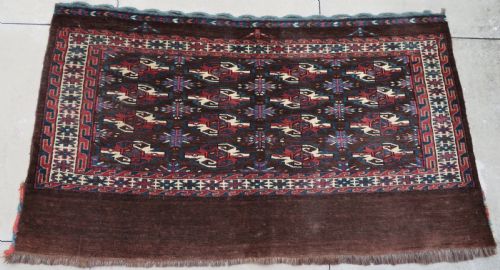

Yomut Gul Carpet
A yomut gul carpet brings the geometric strength of the Trans-Caspian steppes into a room through deeply saturated tribal weaving.
Yomut Gul Carpet
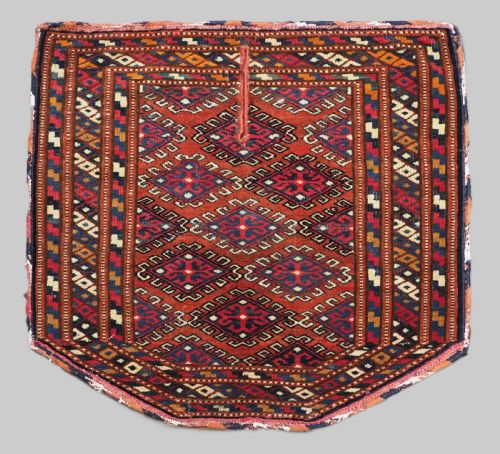
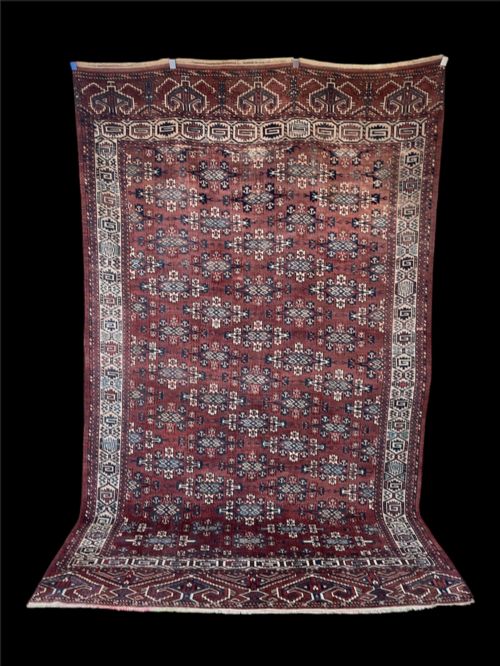
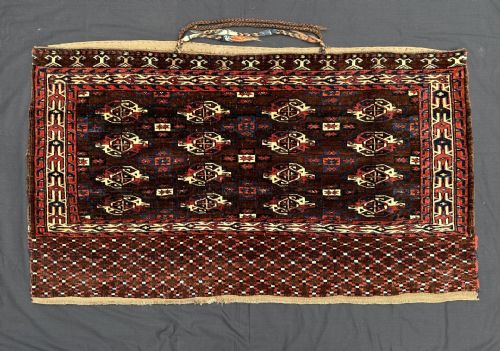
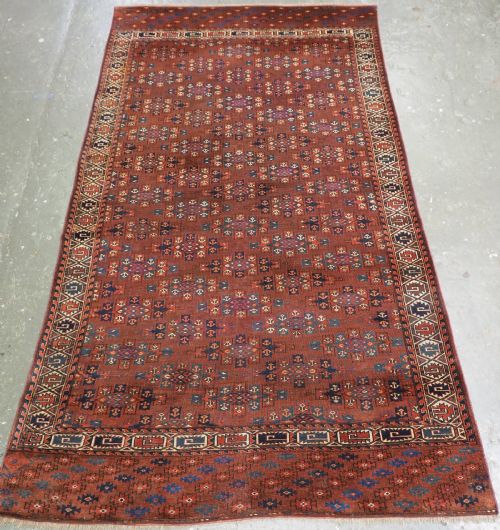
When searching for a yomut gul carpet, a buyer encounters tribal and nomadic weavings originating from Central Asia, specifically the Trans-Caspian steppes associated with Turkmen tribes. These pieces include large main carpets alongside smaller formats such as rugs, saddle covers, and storage bags like torbas and chuvals.
The most common examples on this page date from the nineteenth century, stretching from the 1870s through to 1900 and slightly beyond into the 1920s. They display distinctive repeating geometric motifs known as guls, including the kepse and dyrnak patterns, often complemented by curl leaf borders.
How they were made
These textiles are constructed using hand-spun wool for the pile, complemented by cotton foundations in many instances. The weavers utilised natural dyes to achieve the rich colour palettes characteristic of Turkmen tribal work.
The density of the weaving varies, resulting in structures ranging from standard utility rugs to finely woven pieces intended for specialised wall art or ceremonial use within nomadic communities.
Listings span the nineteenth century, including specific decades from the 1870s to the 1900s, alongside nineteenth century and 1920 examples.
What varies in quality
The standard of a weaving rests upon the crispness of the gul geometry and the depth achieved through natural dyes. Tightly packed knots and fine hand-spun wool elevate certain main carpets and chuvals above heavier, simpler utility items.
Condition and format also divide the group, with complete main carpets and intact storage faces holding distinct visual presence compared to fragments or smaller saddle covers.
The Yomut Gul Carpet Glossary
- Gul
- A primary repeating geometric medallion motif found across Turkmen tribal weavings. These octagonal or rhomboid forms define the visual rhythm of the carpet.
- Kepse gul
- A specific diamond-shaped lattice or leaf-like motif repeated across the field. It is a signature design element of Yomut work.
- Dyrnak gul
- A comb-like or hooked repeating motif used within the main field of carpets and storage bags. This gul anchors the central design.
- Chuval
- A large tent-storage bag woven by nomadic tribes. These pieces were utilised inside the yurt before entering the collector market as rugs or wall hangings.
- Torba
- A smaller storage bag format than the chuval, often featuring a decorated face. They were hung against the lattice walls of tents.
Yomut Gul Carpet: Frequently Asked Questions
What is a gul?
A gul is a major octagonal or geometric medallion repeated across the field of a tribal carpet. Different Turkmen tribes developed their own distinct gul patterns to identify their weaving heritage.
On these particular pieces, you will encounter variations such as the kepse gul and the dyrnak gul, which form the primary visual structure of the design.
How were storage bags used?
Bags such as chuvals and torbas were woven by nomadic women to store household goods and bedding inside the traditional yurt. Their patterned faces were displayed outward while mounted on the interior lattice walls.
Today, these storage bag faces function primarily as small decorative rugs or wall art within modern interiors.
Are these made with natural dyes?
The materials recorded for these pieces include wool, hand-spun wool, cotton, and natural dyes. These traditional dye sources contribute to the deep, enduring tones seen in nineteenth-century nomadic work.
Over decades of age, these vegetable and insect colorants settle into a rich, harmonious palette across the wool pile.