


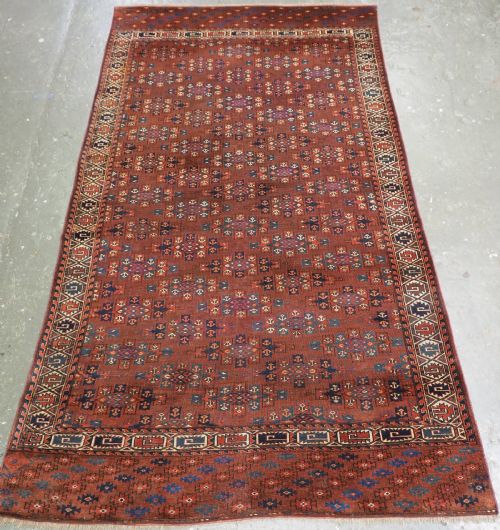
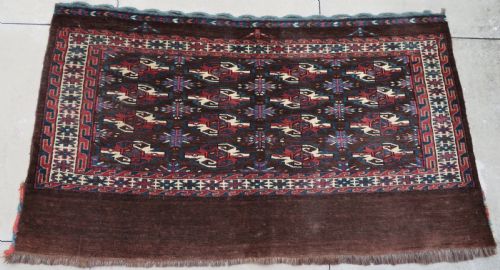

Yomut Carpet 19th Century
A yomut carpet 19th century brings disciplined Turkmen tribal artistry and rich natural dyes directly into a modern interior.
Yomut Carpet 19th Century
A yomut carpet 19th century represents the weaving tradition of the Turkmen tribes, featuring geometric motifs such as the kepse gul, dyrnak gul, and c-gul centres. These textile works encompass large main carpets, ensis, chuvals, torbas, and ceremonial asmalyks produced across the nineteenth century.
The pieces encountered most frequently include main carpets and smaller tribal rugs dating from the decades between eighteen seventy and eighteen ninety. Collectors also find specialised formats like horse saddle rugs and wall-hung textiles exhibiting dense wool piles and traditional tribal layouts.
Materials and construction
Weavers constructed each yomut carpet 19th century using hand-spun wool for both the dense pile and the foundation structure. Natural dyes provided the deep reds, browns, and contrasting hues that characterise these tribal textiles.
Makers integrated cotton for specific structural elements or highlights within certain rugs. The hand-woven technique ensured a durable textile designed for nomadic or village utility.
Listings feature wool, natural dyes, and cotton across Turkmen tribal styles dating from eighteen seventy to eighteen ninety.
Judging quality in nineteenth-century weaving
The precision of the drawing within the gul designs and elem panels separates standard examples from superior works. Finer knotting density and the complexity of border patterns, such as curl leaf motifs, elevate specific carpets.
Preservation of the original pile depth and the vibrancy of the natural dyes determine the visual impact of each piece. Unusual formats, such as ceremonial items or published examples, demonstrate greater rarity within the tradition.
The Yomut Carpet 19th Century Glossary
- Gul
- A primary medallion or octagonal design motif repeated across Turkmen carpets. Each tribe utilised distinct gul forms to signal identity.
- Ensi
- A tent door hanging featuring a characteristic quartered design field. These textiles served a specific architectural function in nomadic structures.
- Elem
- The lower panel at the end of a carpet or ensi, often decorated with tree or plant motifs. This decorative band anchors the main field pattern.
- Torba
- A small storage bag face produced by tribal weavers. These items display intricate miniature versions of major carpet designs.
Yomut Carpet 19th Century: Frequently Asked Questions
How do I hang a rug on the wall?
Mount a textile using a non-damaging sleeve or specialist conservation Velcro attached to a sturdy backing board.
Ensure the weight distributes evenly across the entire upper edge to prevent distortion of the wool foundation.
What is a kepse gul?
The kepse gul is a diamond-shaped lattice medallion utilised heavily by Yomut weavers.
It forms a repeating geometric grid across the field of main carpets and smaller torbas.
How do I clean an antique rug?
Surface dust requires gentle vacuuming with a suction-only attachment through a protective mesh screen.
Professional textile conservators must handle deep washing to protect natural dyes and wool pile.