




19th Century Saddle Rug
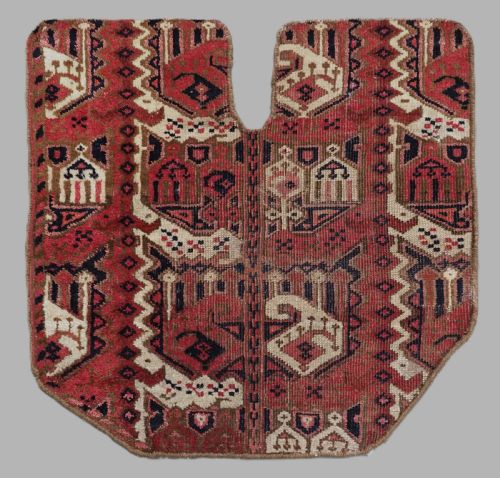
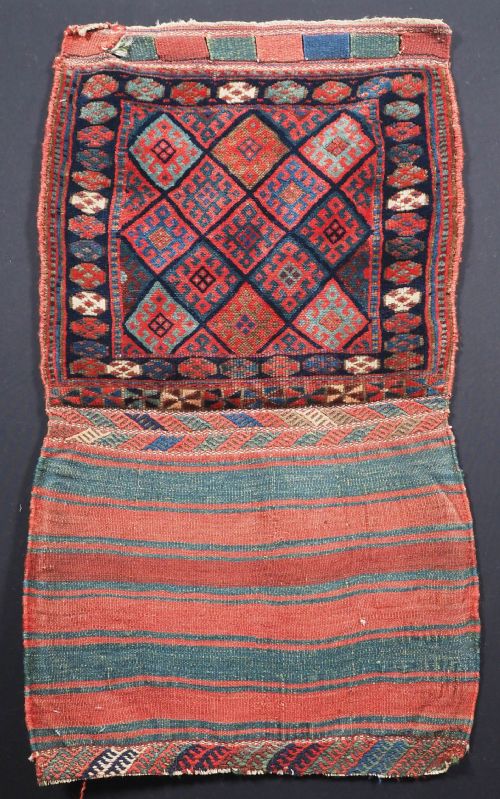
A 19th century saddle rug is a nomadic textile woven for horse furniture, prized by collectors for its dense tribal patterns and rich natural dyes.
19th Century Saddle Rug
When you examine a 19th century saddle rug, you look at utilitarian nomadic weavings created for horse tack across Central Asia, Persia, the Caucasus, and Anatolia. These pieces served practical functions as horse covers, saddle bags, and animal trappings during daily nomadic migrations.
The versions most commonly met on this page include tribal saddle covers, complete bag pairs, and individual bag faces from Turkmen, Shahsavan, Afshar, and Tibetan makers. Each piece reflects the specific weaving vocabulary of the tribe that produced it.
Tribal weavings from this period display distinct regional formats, ranging from long narrow strips designed to drape over a saddle to paired compartments utilised for carrying belongings on journeys.
How they were made
Weavers utilised hand-spun wool combined with natural dyes to create these heavy textile pieces, often incorporating cotton and metal elements for structural support or decoration. The spinning method produced irregular, textured yarns that absorbed natural plant and insect colourants unevenly.
Construction techniques varied by region, including pile knotting, flatweave kilim, and the intricate soumak wrapping method. Leather backing and facings occasionally appear on pieces designed for heavy daily use on horseback.
Listings feature 19th century saddle rugs and bags from Turkmen, Shahsavan, Afshar, and Tibetan tribal traditions.
What varies in quality
Quality in a 19th century saddle rug rests upon the purity of the natural dyes and the lustre of the wool used in the pile. Deep, saturated colour palettes achieved through traditional dyeing methods distinguish superior tribal examples from simpler utilitarian pieces.
The tightness of the knotting or precision of the flatweave structure also marks the distinction between standard items and masterwork tribal pieces. Complex drawing within design motifs like gul patterns or boteh layouts demonstrates the weaver's skill.
The 19th Century Saddle Rug Glossary
- Gul
- A primary medallion motif characteristic of Turkmen tribal weaving. These repeated octagonal designs often identify the specific clan that made the rug.
- Soumak
- A flatweave technique where pattern threads are wrapped over the warp yarns before being taken back underneath. This method produces a textured surface resembling embroidery on the front.
- Chuval
- A large storage bag woven by Turkmen tribes for household goods rather than horse transport. These wide pieces display prominent face designs.
- Boteh
- A stylised floral motif resembling a pear or bent almond, widely utilised in Persian and Afshar tribal weavings. The shape represents fertility and life.
19th Century Saddle Rug: Frequently Asked Questions
How do I tell different tribal designs apart?
Tribal origins are identified by the structural techniques and distinct motifs woven into the wool, such as the octagonal gul patterns of Turkmen pieces or the geometric Soumak wrapping of Shahsavan work.
Colour palettes also provide clues, with specific regions favouring particular combinations of madder reds, indigos, and yellows derived from local plants.
Are saddle bags and saddle rugs the same thing?
Saddle rugs and saddle bags both originated as horse tack, but they served different purposes on the animal. Rugs were single panels designed to drape across the mount, while bags were constructed as paired pouches to carry belongings.
Both fall under the wider heading of tribal textiles from the nineteenth century.
How should I care for a tribal wool rug?
Protect antique wool textiles by keeping them out of direct sunlight to prevent natural dye fading, and shake or vacuum them gently without a rotating brush.
Keep the natural fibres clean and dry, avoiding excessive moisture that can damage hand-spun wool and traditional dyes.