
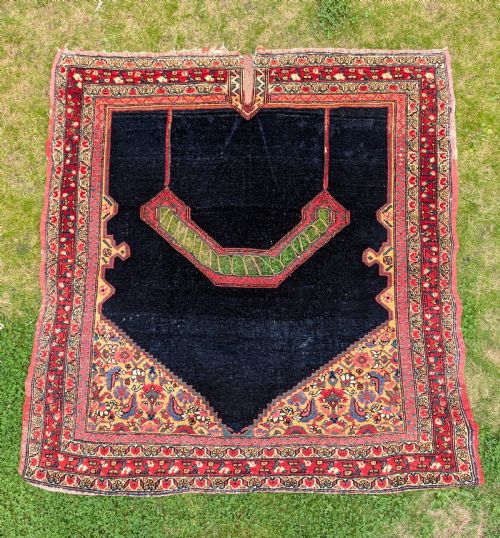
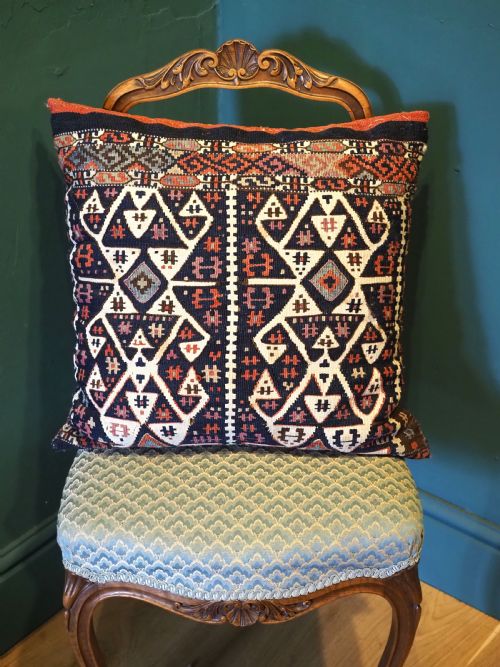
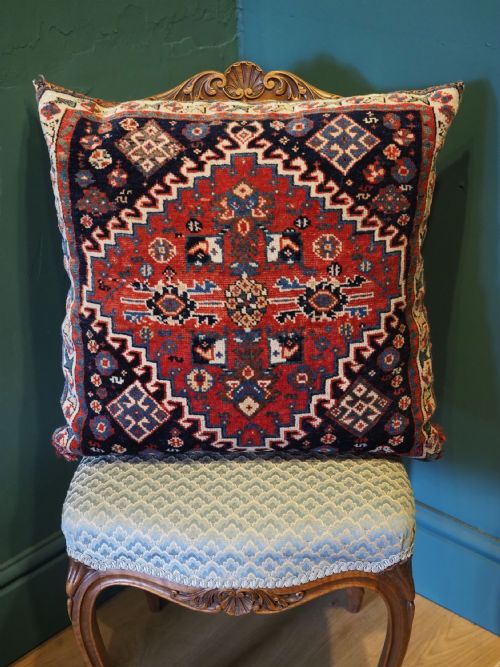


Navy Wool Saddle Cover
These navy wool saddle cover pieces are tribal weavings from the nineteenth century, prized for their dense wool and rich natural dyes.
Navy Wool Saddle Cover
The objects on this page span the periods from 1880 to 1900, showing strong regional aesthetics from groups such as the Afshar, Qashqa'i, Yomut, and Bakhtiari. They bring authentic tribal craftsmanship and robust textile history directly into modern interiors.
How they were made
These textiles rely on hand-spun wool combined with natural dyes to create durable, lustrous pile and flat-weave surfaces. Weavers utilised traditional tribal techniques to produce sturdy structures intended for practical use on horseback.
Many examples incorporate cotton foundations alongside the heavy wool surface, while others utilise complete plain weave backs. The materials reflect local availability and nomadic resourcefulness during the nineteenth century.
Nomadic weavers occasionally left minor wool colour irregularities in these bags, proving that even working horses deserved a touch of artistic flair.
What varies in quality
The standard of a piece rests heavily on the quality of the wool and the depth of the natural dyes. Lustrous, luminous wool handles differently and retains richer hues over decades of exposure.
Completeness also distinguishes the examples, as intact saddle bags retaining their plain weave backs hold greater integrity than single faces or adapted cushion covers.
The Navy Wool Saddle Cover Glossary
- Khorjin
- The traditional Persian term for a double-sided saddle bag used by nomadic tribes. These were woven as a single connected piece to carry possessions across the saddle.
- Kilim
- A flat-weave textile produced without a pile. This technique creates a smooth, durable surface often utilised for the backs and structural elements of saddle bags.
- Boteh
- A traditional teardrop or almond-shaped motif representing a floral spray or cypress tree. It appears frequently across Persian tribal weavings.
- Pile
- The dense, upright surface of a rug or textile formed by knotting yarn onto warp threads. High-grade wool enhances the resilience of this raised surface.
Navy Wool Saddle Cover: Frequently Asked Questions
What is a navy wool saddle cover?
A navy wool saddle cover is a nineteenth-century nomadic textile, often adapted from tribal saddle bags or ceremonial horse rugs.
These pieces feature rich natural dyes and hand-spun wool, reflecting the utilitarian and artistic traditions of Persian and Anatolian weavers.
How were these saddle bags used?
Nomadic tribes utilised these woven bags to transport household goods and personal belongings across horses or camels during seasonal migrations.
They were constructed with durable materials to withstand the rigours of daily travel in rugged landscapes.
How do I live with a tribal saddle bag?
Many collectors display these textiles as wall hangings or place them on furniture as decorative cushions and pillows.
Their robust wool construction allows them to endure gentle everyday use when placed away from heavy foot traffic.
How do I identify different tribal styles?
Different tribal groups such as the Afshar, Qashqa'i, and Yomut employ distinct colour palettes, geometric motifs, and weaving structures.
Examining the specific design elements and border patterns helps reveal the geographic origin of each nineteenth-century piece.