


Yellow Wool Area Rug
A yellow wool area rug brings warmth and historic dye work into a room through centuries of traditional regional weaving.
Yellow Wool Area Rug
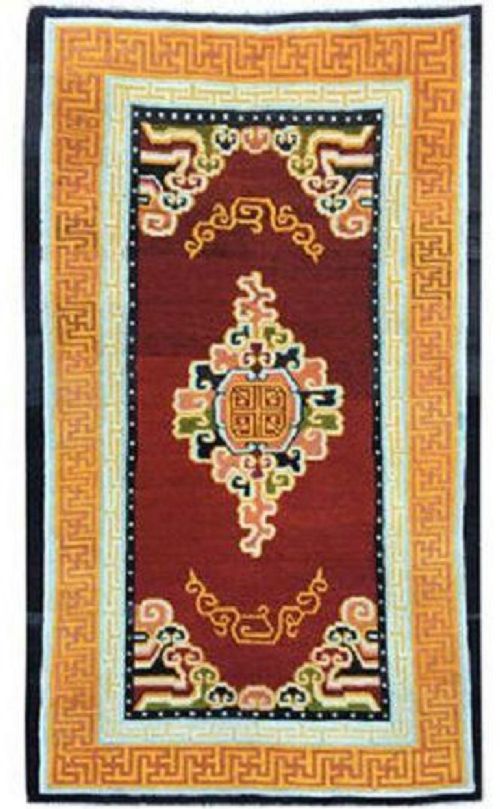
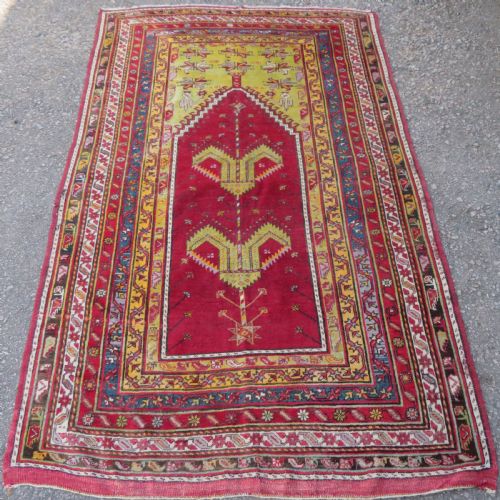
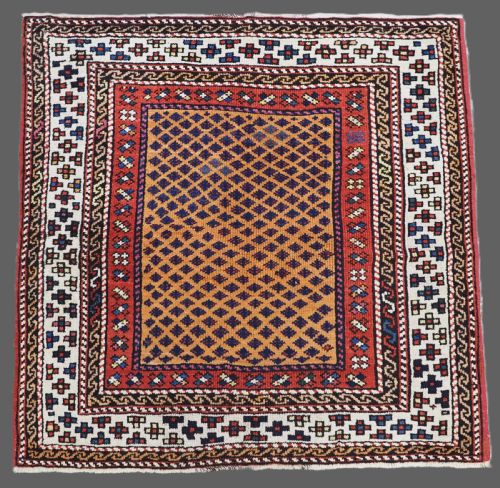
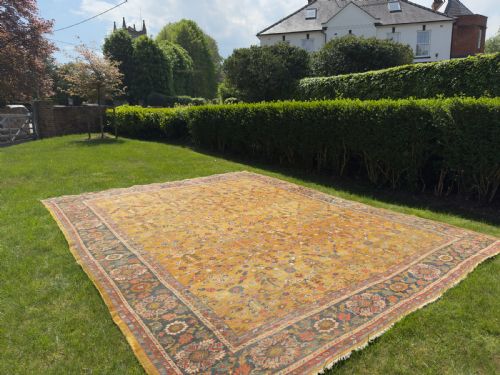
A yellow wool area rug encompasses antique floor coverings woven across Turkey, the Caucasus, Persia, China, and Europe from the mid nineteenth century into the early twentieth century. Buyers seeking this phrase encounter room sized carpets, runner rugs, square formats, and small seating mats originating from established weaving centres. The selection includes Turkish Oushak, Kirsehir, and Ghiordes pieces alongside Caucasian Kazak, Dagestan, and Marasali examples.
Regional variations span the geometric lattices of Caucasian rugs, the sprawling floral fields of Persian Oushak and Ziegler carpets, and the distinct motifs of Tibetan and Chinese Ningxia pieces. Many examples utilise golden, lemon, or faded yellow grounds that highlight medallion layouts, prayer niches, or shrub designs. These floor textiles served domestic and ceremonial functions in their regions of origin before entering the antiques market.
Materials and Construction
The physical fabric relies primarily on sheep wool for the pile and structure, frequently paired with cotton foundations in specific regional traditions. Weavers knotted or flatwove these materials by hand on upright looms, employing natural dye stuffs that produced mellow golden fields and contrasting borders over decades of wear.
Construction techniques range from the soumak flatweave and kilim methods to dense pile knots seen in Bidjar and Kurdish formats. The integration of wool fibres with sturdy foundation warps allowed these textiles to endure heavy foot traffic while retaining structural integrity.
Listings feature wool and cotton rugs spanning production years from 1850 through 1930.
Distinctions in Quality
Quality rests on the integrity of the wool pile, the precision of the hand knotted design, and the retention of natural colour saturation across the yellow field. Finer examples display crisp lattice work, balanced medallions, and harmonious secondary tones without excessive intervention.
The distinction between standard village production and master workshop output manifests in knot density, wool quality, and the complexity of the border systems. Pieces retaining uncompromised pile height and original margins occupy the upper tier of the range.
Gavin Morton Donegal
The Yellow Wool Area Rug Glossary
- Ground
- The main background colour of the rug field. In this group, yellow, golden, and lemon grounds predominate.
- Prayer rug
- A small format textile featuring a mihrab or niche design intended for devotional use. These pieces often originate from Turkish and Caucasian looms.
- Medallion
- A central ornamental motif placed in the middle of the rug field. They appear frequently in Caucasian and Persian carpet designs.
- Kilim
- A flatwoven textile produced without a pile. These pieces rely on interlocking weft techniques to create geometric patterns.
- Soumak
- A brocade like flatweaving technique that wraps weft threads over warps for added durability and texture.
Yellow Wool Area Rug: Frequently Asked Questions
How do I clean an antique rug?
Surface dirt should be removed gently using low suction vacuuming without beating attachments. Professional textile conservators should handle wet cleaning to protect natural wool and historical dyes.
Harsh chemical detergents and automated washing machines will cause irreversible damage to antique fibres. Spot cleaning requires specialist knowledge of how historical wool reacts to moisture.
Are these rugs suitable for daily use?
Wool and cotton construction provides natural resilience that accommodates moderate foot traffic in domestic settings. Placing a suitable underlay beneath the textile prevents slipping and reduces fibre friction.
Fragile flatweaves or remnants require placement in low traffic zones to preserve their historical structure. Regular rotation distributes wear evenly across the surface over time.
How are production periods determined?
Stylistic analysis of border motifs, structural materials, and regional weaving traits establishes the likely era of manufacture. Comparative examination of dye palettes and knot counts offers further chronological markers.
Inscriptions, structural wear patterns, and documented workshop histories assist in narrowing the timeframe. Exact dating remains approximate unless supported by direct provenance records.