
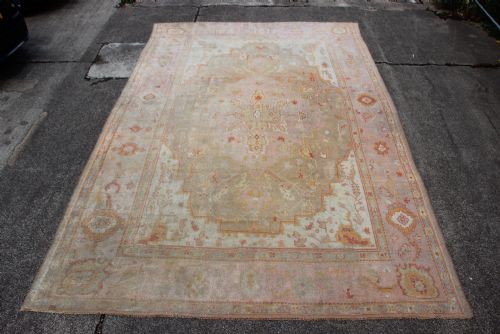


Muted Oriental Carpet
A muted oriental carpet brings subdued tones and traditional craftsmanship into a room, offering understated floors that ground a period interior.
Muted Oriental Carpet
A muted oriental carpet encompasses hand-knotted floor coverings originating from traditions such as Persian Ziegler, Ottoman, Anatolian, and Bidjar styles. These pieces range from large room-sized carpets down to runners and area rugs, spanning periods from the nineteenth century into the early twentieth century.
The most common examples met on this page are antique Ushak and Ziegler carpets, often featuring faded palettes, soft pinks, and pastel colours. These historic floor coverings present traditional motifs softened by age and wear, suiting contemporary spaces seeking historical texture.
Originating from Turkish and Persian centres, these textiles include specific regional types such as Oushak, Mahal, Sivas, and Hamadan carpets. Each regional weaving tradition yields distinct handle and design characteristics while maintaining the subdued colouration that defines the search.
How they were made
These carpets are constructed using natural materials, predominantly wool and cotton, with occasional use of angora wool in specific Ushak pieces. Weavers knotted pile yarn onto foundational cotton or wool warps and wefts.
Natural dye methods and historic wear create the characteristic faded palettes seen in these pieces, from soft pastels to muted earthy tones. Hand-knotting techniques vary by region, resulting in differing pile densities and structural weights across Persian and Ottoman examples.
Listings feature wool, cotton, and angora wool materials across nineteenth and early twentieth-century periods.
What varies in quality
Quality in these carpets rests on the fineness of the knotting, the integrity of the foundation, and the balance of the faded colour palette. Finer knots permit more intricate drawing within the traditional floral and geometric motifs.
The survival of original borders and structural edges distinguishes superior examples from those with extensive restoration. A harmonious, evenly faded surface with sound wool pile represents the higher standard among these nineteenth and early twentieth-century floor coverings.
The Muted Oriental Carpet Glossary
- Ushak
- A Turkish weaving centre known for large-scale floral designs and soft, faded wool palettes. Ushak carpets often display subdued pinks and pastel shades.
- Ziegler
- A nineteenth-century commercial style of Persian carpet featuring softened, muted colours and adapted European-friendly floral patterns. These carpets were produced for Western export markets.
- Bidjar
- A durable Persian rug style characterised by tightly packed knots and sturdy construction. Bidjar pieces often present dense geometric or floral designs.
- Angora wool
- A soft, lustrous fibre utilised in certain specialised Ushak rugs for pile construction. It imparts a distinctive sheen to the surface of the textile.
- Prayer rug
- A small format textile featuring a mihrab or niche design used historically for daily devotions. Examples include Turkish Ottoman formats with inscribed script.
Muted Oriental Carpet: Frequently Asked Questions
How do I clean an antique carpet?
Professional specialist cleaning is essential for antique wool and cotton floor coverings to protect the natural dyes and fragile foundations.
Regular gentle vacuuming without a beater bar prevents dust accumulation in the pile without causing fibre damage.
Where should I place a runner?
Runners suit narrow hallways, corridors, and transitional spaces where traditional floor coverings fit dimensions cleanly.
Placing a quality underlay beneath the rug prevents slipping and reduces friction between the cotton foundation and hard floors.
How do I identify an Ushak rug?
Ushak rugs typically feature loose, soft knotting, large-scale floral motifs, and a distinctive pastel or faded colour palette.
Originating from Western Anatolia, these nineteenth-century pieces display wool pile on wool or cotton foundations.
Can I put antique carpets in high-traffic rooms?
Sturdy regional types like Bidjar or room-sized carpets handle moderate foot traffic when protected with a suitable rug pad.
Placing them away from direct, harsh sunlight preserves the muted natural dyes and prevents uneven fading across the wool pile.