

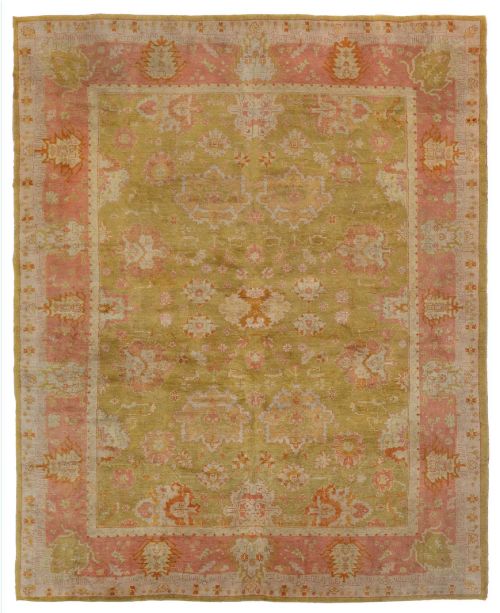
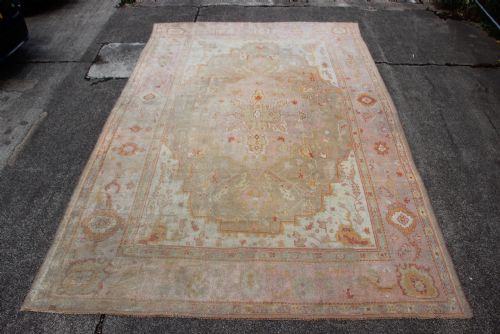


Muted Floral Oriental Rug
A muted floral oriental rug brings subtle pattern and soft colour into a room, grounding your space with centuries of weaving tradition.
Muted Floral Oriental Rug
When you search for a muted floral oriental rug, you are looking at hand-knotted floor coverings originating from the late nineteenth and turn of the twentieth centuries. These pieces carry traditional floral motifs rendered in understated, faded palettes rather than bright primary hues.
The selections available here span significant weaving traditions including Persian Ziegler, Sultanabad, Bidjar, Mahal, Hamadan, and Ottoman Anatolian styles. Large carpets and room-sized formats dominate the selection, alongside long runners and smaller area rugs suited for various room layouts.
How they were made
These textiles are constructed primarily with wool pile foundationed on cotton warps and wefts. The hand-knotting technique allows for intricate floral curves and dense pile construction that withstands generations of use.
Dyers utilised natural materials to achieve the gentle, subdued tones seen across these examples. The softening of colour often comes from age and gentle wear, which mellows the botanical patterns into the neutral background.
Muted Floral Oriental Rug Retail Price Guide 2026
Typical asking prices for muted floral oriental rug among the pieces listed under this phrase on Sellingantiques today, from the lower quarter to the upper quarter. They describe what is for sale here now, not the wider market.
Every listed piece utilises wool pile upon cotton foundations, spanning production dates from 1880 to 1900.
What varies in quality
Quality rests upon knot density and the precision of the botanical drawing across the field. Finer knotting permits sharper definition in the floral scrolls and delicate vine work.
The harmony of the muted palette and the integrity of the structural foundation distinguish finer weaving centres like Ziegler and Bidjar from standard commercial production of the period.
The Muted Floral Oriental Rug Glossary
- Ziegler
- A nineteenth-century commercial weaving style developed for Western tastes, known for oversized floral patterns and soft, muted colourways. These carpets often feature open fields with gentle pastel or neutral tones.
- Bidjar
- A durable Persian rug type produced by Kurdish weavers, famous for heavy construction and compact knotting. They are frequently described as the iron rugs of Iran.
- Oushak
- A Turkish carpet tradition originating from the town of Ushak, distinguished by large-scale floral motifs and a softer wool texture. The palette tends towards terracotta, gold, and subdued muted washes.
- Warp
- The vertical threads stretched lengthwise on the loom that form the base of the rug. Fringe is typically a continuation of these structural threads.
- Pile
- The upright surface of the rug formed by the clipped ends of knot threads. Wool pile provides both softness and hardwearing resilience.
Muted Floral Oriental Rug: Frequently Asked Questions
How do I clean an old rug?
Surface dust is best removed by gentle brushing or careful vacuuming without a rotating beater bar.
Professional specialist washing is required for deeper cleaning to protect fragile antique wool and cotton foundations.
Where should I place these carpets?
Large formats anchor seating arrangements in drawing rooms or studies where foot traffic is moderate.
Runners suit hallways and corridors, providing pattern and warmth to transitional spaces in the home.
What makes a rug antique?
Textiles produced more than a century ago are generally classified as antique.
The specific dates recorded in this group range from the eighteen-eighties to nineteen-hundred.
How do I identify a Ziegler?
Ziegler carpets typically display expansive, spaced floral designs set against soft, muted fields.
They were specifically designed in the late nineteenth century to complement Western Victorian and Edwardian interiors.