
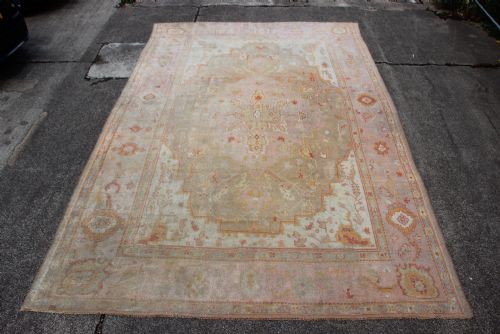


Faded Oushak Area Rug
A faded oushak area rug brings muted pastel tones and historic Anatolian craft into a room, offering understated warmth underfoot.
Faded Oushak Area Rug
A faded oushak area rug represents large scale carpets and rugs originating from western Anatolia, primarily spanning the late nineteenth and early twentieth centuries. These pieces carry traditional Ottoman design sensibilities, translated through large formats and room sized dimensions.
The version most commonly met on this page is a room sized carpet or area rug dating between 1880 and 1920. These pieces often exhibit pale blue, soft pink, and neutral pastel colour palettes resulting from age and wear.
Makers and weavers in traditional workshops produced these floor coverings using distinct Anatolian and Ottoman stylistic traditions. Buyers encountering this selection find carpets that measure from large square formats up to grand rectangular dimensions.
How these rugs were made
Weavers constructed these carpets using wool and cotton foundations, occasionally incorporating angora wool for added softness and texture. These natural fibres formed dense pile surfaces tied by hand in traditional regional workshops.
Natural dye traditions and the passage of time created the soft pinks, pale blues, and faded pastel tones characteristic of these Anatolian carpets. The combination of hand knotting techniques and durable textile materials ensured structural longevity alongside a gentle aesthetic.
Listings show rugs spanning from 1880 to 1920, utilising wool, cotton, and angora wool within traditional Anatolian and Ottoman styles.
What varies in quality
Quality in a faded oushak area rug rests on the fineness of the knotting, the balance of the scale in the traditional Anatolian design, and the integrity of the wool foundation. Superior examples maintain structural stability despite significant age and historic wear.
The aesthetic success of the fading process distinguishes exceptional pieces, where muted pastel tones soften the overall composition harmoniously. The choice of finer materials, such as angora wool, further elevates individual carpets within the regional tradition.
The Faded Oushak Area Rug Glossary
- Oushak
- A town in western Anatolia renowned for producing significant carpets with large scale geometric and floral designs. These rugs traditionally utilised softer pastel palettes than other regional Turkish weaving centres.
- Anatolian
- Pertaining to the historic region forming the Asian part of Turkey, known for centuries of diverse carpet weaving traditions. Pieces carrying this designation reflect the broader cultural motifs of the area.
- Angora wool
- A fine fibre sourced from angora goats, valued in certain nineteenth century rugs for its silky texture and lustrous pile. Its inclusion alters the hand feel and light reflection of the woven surface.
- Ottoman
- Relating to the empire that governed Anatolia and influenced the decorative arts, court aesthetics, and textile designs found across these carpets. This style informs the traditional patterns woven into the pile.
- Pile
- The vertical or slanted loops of yarn that form the usable surface of a carpet. In these antique examples, the pile often shows historic wear that contributes to the faded appearance.
Faded Oushak Area Rug: Frequently Asked Questions
How do I clean a faded oushak area rug?
Professional specialist cleaning is essential for antique textiles woven from wool and cotton. Regular gentle vacuuming without a beater bar helps remove dust trapped in the pile.
Harsh chemical treatments and immersion washing must be avoided to protect the delicate pastel dyes and historic foundation fibres. Consult a conservator experienced in antique Anatolian carpets for any stain removal.
Where should I place an oushak carpet?
These large format rugs suit principal living spaces, dining rooms, and bedrooms where their muted tones complement wooden flooring and traditional furniture. Their generous dimensions help anchor seating arrangements.
Placing them away from direct, harsh sunlight preserves the soft pinks and pale blues characteristic of aged vegetable dyes. A quality underlay adds cushioning and prevents slipping on hard surfaces.
How do I date an antique oushak?
Dating relies on examining the structural characteristics, material composition, and dye palettes visible in the weave. Pieces on this page date from the late nineteenth century up to the 1920s.
Handspun wools, specific knot densities, and characteristic Ottoman design shifts provide clues to the period of production. Comparing construction methods with documented examples from the same Anatolian workshops confirms the era.
Why do these rugs look faded?
Generations of foot traffic, gentle washing, and exposure to light naturally soften the original vegetable dyes over a century or more. This gradual weathering creates the desirable pastel aesthetic prized by modern collectors.
Rather than diminishing value, even fading unifies the intricate Ottoman motifs into a subtle, cohesive visual field. It allows antique carpets to integrate smoothly into contemporary interior spaces.