

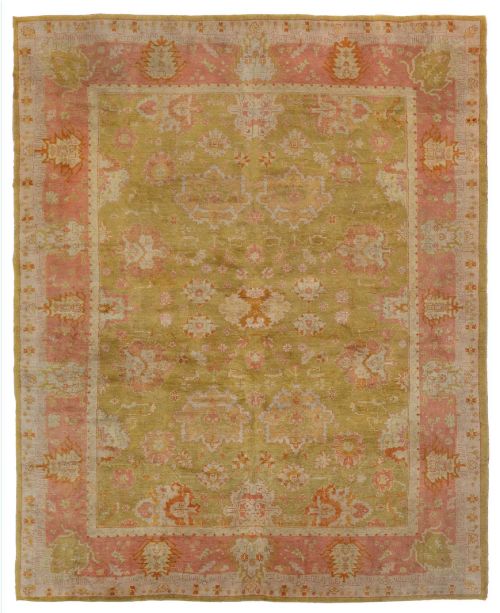
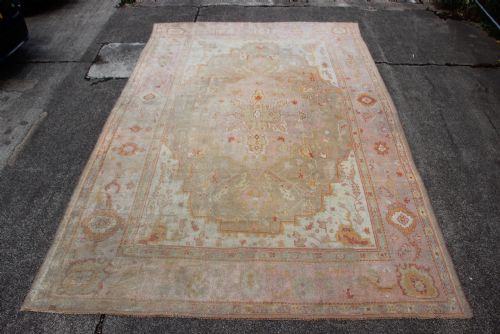


Muted Floral Wool Rug
A muted floral wool rug brings warmth and understated pattern to a room, offering the texture and history of nineteenth-century weaving.
Muted Floral Wool Rug
A muted floral wool rug encompasses nineteenth-century room-size carpets, smaller rugs, and long runners originating from Persia and the Ottoman Empire. These pieces range from grand Oushak and Ziegler carpets measuring over four metres in length down to more compact rugs and runners.
The selection centres heavily on late nineteenth-century examples dated between 1880 and 1900. Buyers encounter traditional regional weaving styles such as Ushak, Bidjar, Mahal, and Hamadan within this group.
How they were made
These floor coverings utilise hand-spun wool pile knotted onto sturdy cotton foundations. The natural resilience of wool allows the pile to withstand generations of foot traffic while maintaining a soft surface texture.
Weavers employed organic and early synthetic dyes that have mellowed over decades into the subtle, muted palettes seen today. The combination of dense hand-knotting and flexible cotton warps and wefts ensures the rugs lie flat and drape naturally.
Muted Floral Wool Rug Retail Price Guide 2026
Typical asking prices for muted floral wool rug among the pieces listed under this phrase on Sellingantiques today, from the lower quarter to the upper quarter. They describe what is for sale here now, not the wider market.
Current listings feature nineteenth-century wool and cotton rugs and carpets spanning the decades from 1880 to 1900.
What varies in quality
Quality rests primarily on the fineness of the knotting and the balance of the overall design composition. Tighter knots per square inch generally create sharper pattern definition and greater structural longevity.
Proportion and scale also separate standard utility floor coverings from the finest decorative examples. Larger room-size carpets maintain harmonious border proportions and balanced field designs across extensive surface areas.
The Muted Floral Wool Rug Glossary
- Pile
- The upright yarn loops that form the soft surface of a rug. This upper layer absorbs wear and displays the woven pattern.
- Warp
- The stationary vertical threads stretched tightly on the loom before knotting begins. Cotton warps provide stability and strength to the carpet foundation.
- Weft
- The horizontal threads passed between rows of knots to bind the structure together. Beating the weft tightly against the knots secures the pile in place.
- Runner
- A long, narrow carpet format designed specifically for hallways, corridors, and staircases. These pieces provide directional pattern movement in confined spaces.
- Oushak
- A traditional Turkish carpet style known for large-scale floral motifs and soft, muted colour palettes. These grand rugs suit spacious interiors.
Muted Floral Wool Rug: Frequently Asked Questions
Where should I place a runner?
Runners suit narrow spaces such as corridors, hallways, and entrance passages where a long, linear pattern adds visual interest. They also function well alongside kitchen islands or beside bedroom furniture.
Ensure you measure the walkway carefully to leave a uniform border of bare floorboards or stone visible on either side.
How do I care for wool pile?
Vacuum the rug gently on a low suction setting without a rotating beater brush to protect the delicate wool fibres. Address spills immediately by blotting with a clean, dry cloth rather than rubbing.
Professional specialist cleaning every few years removes embedded grit that can gradually weaken the cotton foundation.
Are these pieces suitable for living rooms?
Large room-size carpets anchor seating furniture and unify the colour scheme of a reception space. The muted floral motifs blend easily with both antique furnishings and modern upholstery.
Using a quality underlay prevents slipping and cushions the footfall over hardwood or stone floors.
How do I identify a Ziegler carpet?
Ziegler carpets typically feature expansive, open fields with muted floral sprays designed specifically for Western nineteenth-century interiors. They often display softer, faded tones compared to more saturated village weaves.
The commercial production of these pieces combined traditional Persian designs with paler colour schemes favoured by European homes.