
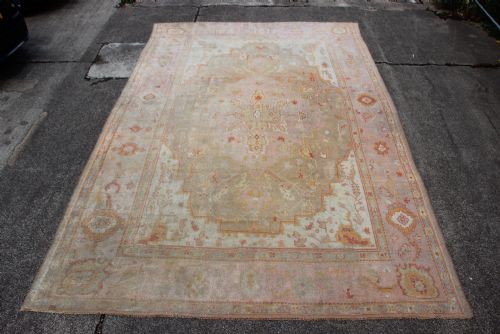


Muted Wool Area Rug
A muted wool area rug brings softness and calm to a room through faded tones and traditional patterns.
Muted Wool Area Rug
When you search for a muted wool area rug, you are looking at floor coverings designed to anchor a room with subdued colour and historic character. The selection on this page consists entirely of antique carpets and rugs originating from the late nineteenth and early twentieth centuries, spanning the years from 1880 to 1920.
The regional origins represented in the evidence include Persian Ziegler, Afghan Tribal, and several Turkish traditions such as Ottoman, Anatolian, Sivas, Hamadan, and Oushak or Ushak. Buyers will most frequently encounter large carpets and smaller rugs attributed to Oushak or Ziegler weaving centres.
These pieces arrive in various formats, ranging from room-sized carpets measuring over four metres in length to smaller area rugs. They suit living spaces and studies where a gentle, faded patina is desired over bright, saturated dyes.
How they were made
The primary material used across these pieces is wool, occasionally paired with cotton foundations or specific fibres like Angora wool. Artisans hand-knotted these natural materials using traditional techniques passed down through generations in Persian and Turkish workshops.
Natural dyes subdued over decades of time and wear create the characteristic soft pinks, beige tones, and faded patinas noted in the listings. The construction relies on sturdy hand-knotting methods designed to withstand generations of domestic use.
Listings span five distinct production decades between 1880 and 1920, predominantly featuring wool and cotton construction across Persian and Turkish regional styles.
What varies in quality
Quality in these textiles depends heavily on the fineness of the knotting and the prestige of the weaving origin, such as Oushak or Ziegler. Pieces described as fine or elegant demonstrate superior density and more articulate design execution.
The desirability also relates to the harmony of the faded palette and the integrity of the natural materials used. Finer examples maintain structural stability while displaying the soft, aged patinas collectors value.
The Muted Wool Area Rug Glossary
- Oushak
- A type of carpet originating from the town of Usak in Turkey, known for larger scale floral motifs and soft, muted wool palettes. These rugs frequently feature warm pastel tones and generous proportions.
- Ziegler
- A nineteenth-century Persian carpet style developed for Western tastes, characterised by subdued colours and reduced, open floral designs. Ziegler carpets are particularly prized for fitting neutral interior schemes.
- Hand knotted
- A construction technique where individual yarn tufts are tied by hand onto the warp and weft threads of the foundation. This labour-intensive method defines genuine antique carpets.
- Patina
- The surface appearance acquired by wool and natural dyes through age, light exposure, and gentle wear. A soft faded patina is a hallmark of antique rugs.
- Hamadan
- A rug originating from the region surrounding the ancient city of Hamadan in western Persia, known for durable village and tribal weaving traditions.
Muted Wool Area Rug: Frequently Asked Questions
How do I clean an antique wool rug?
Antique wool rugs require gentle care, typically professional dusting and surface cleaning rather than immersion washing. Harsh detergents can damage natural fibres and alter historic dyes.
Regular light vacuuming without a rotating beater bar helps remove grit without straining the hand-knotted wool foundation.
Where should I place a large antique carpet?
Large carpets suit principal reception rooms, drawing rooms, or dining spaces where furniture can sit comfortably on top of the field. Placing them away from direct, harsh sunlight preserves the subtle tones.
Using a quality underlay prevents slipping and cushions the wool pile against hard flooring.
What makes Oushak carpets distinct?
Oushak carpets are recognised by their softer wool, often incorporating Angora, and expansive, uncluttered floral designs. Their muted pastel colourways distinguish them from more densely patterned Persian weaves.
This aesthetic has made them enduringly popular for contemporary and traditional interiors alike.
How do I date an older wool rug?
Dating relies on stylistic markers, structural analysis of the weave, and recorded dates such as inscriptions or specific AH calendar markings. Comparing wool preparation and dye saturation helps narrow the period.
Most pieces in this category date from the late nineteenth century up to the nineteen-twenties.