
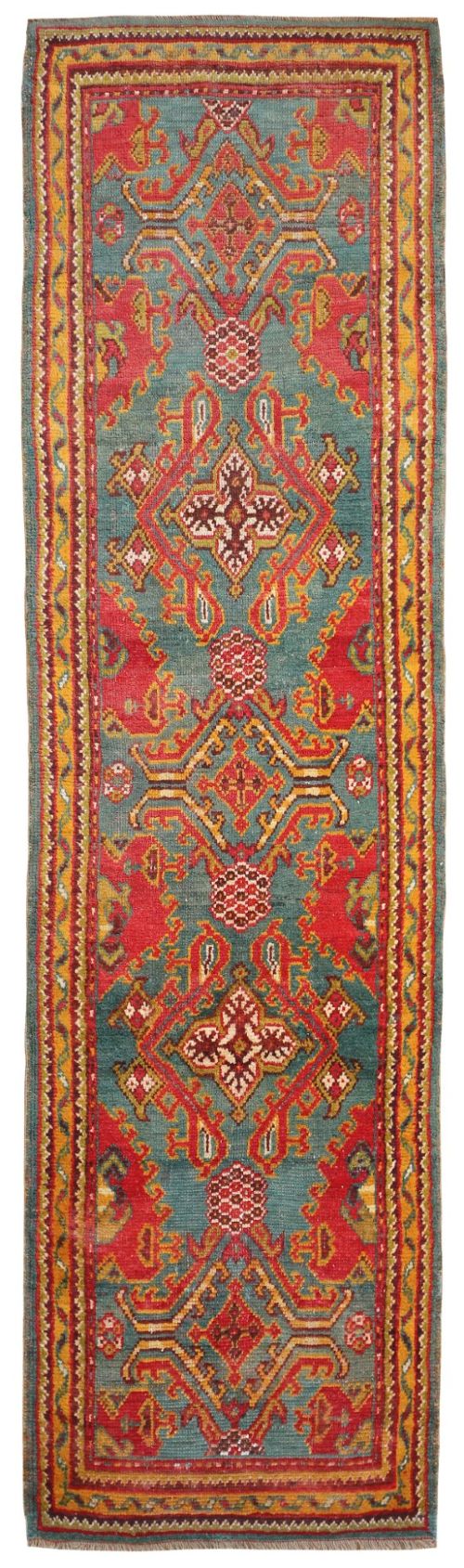



Ushak Wool Carpet
An ushak wool carpet brings a relaxed, monumental geometry to a floor through soft vegetable dyes and generous scale.
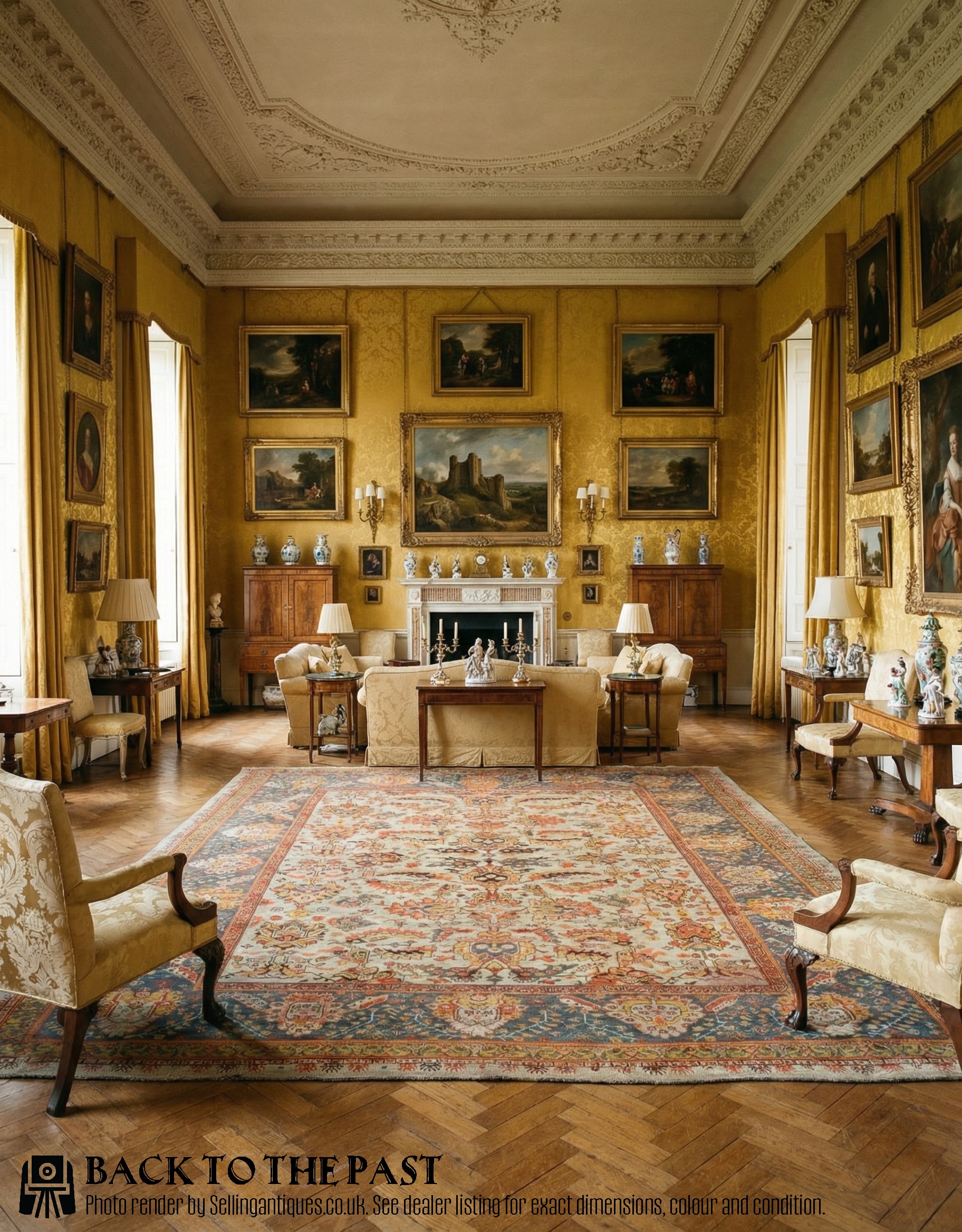
Ushak Wool Carpet
Makers and retailers such as Howard And Sons and Maples handled these textiles historically, cementing their place in English interiors. You will find square formats, long runners and room-sized pieces bearing traditional medallions and open fields.
The aesthetic sits firmly within Ottoman and Turkish design traditions, distinguished by muted palettes and large-scale floral motifs rather than tight, intricate village patterns. These floor coverings are chosen for substantial reception spaces where their faded grandeur anchors the room.
Materials and Construction
The foundation relies on sturdy cotton warps and wefts, providing structural stability for the hand-knotted pile. Weavers utilised sheep wool alongside lustrous angora wool to achieve a softer pile texture that catches the light differently across the surface.
Natural dyestuffs interact with these wool fibres over decades to create characteristic faded tones and abrash variations in colour. Wooden and brass tools aided the weaving and finishing processes in traditional workshops across the region.
A sturdy club armchair once found its permanent partner when upholstered in the exact wool fabric of an ushak carpet.
Distinctions in Quality
The separation between ordinary and superior examples lies in the handling of the pile and the depth of the wool. Finer pieces incorporate high-grade angora wool, which yields a tactile handle and a distinct sheen compared to standard wool weaves.
Proportion and scale dictate visual success, particularly in oversize formats where medallion placement must balance the open ground. The subtlety of the abrash and the harmony of the faded vegetable palette separate exceptional weaving from utilitarian production.
Howard And Sons·Maples·Maples And Co
The Ushak Wool Carpet Glossary
- Abrash
- Natural colour variation within a field of wool, caused by differences in dye batches or hand-spun yarn. This tonal shift adds depth and confirms the traditional dyeing process.
- Angora Wool
- Fine fibre sourced from Angora goats, utilised in select pieces for its silky texture and soft handle. It catches light differently than standard sheep wool.
- Medallion
- A central ornamental motif placed in the middle of the carpet field, drawing the eye across the geometric layout. In these pieces, medallions often feature curved floral or star designs.
- Kilim
- A flat-woven textile produced without a pile, represented here through lighter secondary floor coverings. These items rely on structural warp and weft interlace.
- Runner
- A long, narrow format designed for hallways, corridors or alongside large furniture. These pieces maintain the same decorative palette as room-sized carpets in a condensed width.
Ushak Wool Carpet: Frequently Asked Questions
How do I style a large ushak carpet?
These large floor coverings suit spacious rooms with high ceilings, where their expansive field and muted medallions can breathe. Pair them with understated wooden furniture to let the aged wool texture remain the focal point of the interior.
Keep surrounding colours neutral to echo the faded vegetable tones found within the weave. They work equally well over bare floorboards or traditional stone flags.
What is the difference between an Ushak and an Oushak?
The terms denote the exact same origin and style of weaving from the Turkish town of Usak. The spelling variation simply reflects historical anglicisation by Western merchants and antique dealers over the centuries.
Both spellings refer to the characteristic large-scale patterns and softer wool piles found in these nineteenth and twentieth-century floor coverings.
How should I clean and maintain antique wool pile?
Gentle surface vacuuming without a rotating brush roll keeps dust from settling into the cotton foundation. Professional specialist cleaning remains essential for removing deep-seated grit without disturbing the natural wool fibres.
Avoid harsh chemical spot treatments, which can strip the soft vegetable dyes characteristic of nineteenth-century weaving.
Why do these carpets often appear faded?
Natural vegetable dyes mellow gracefully over decades of exposure to light and air. This fading process, known as patina, is prized by collectors for the gentle harmony it brings to the palette.
Rather than diminishing value, a soft, weathered appearance indicates genuine age and high-grade wool that has aged naturally in historic interiors.