
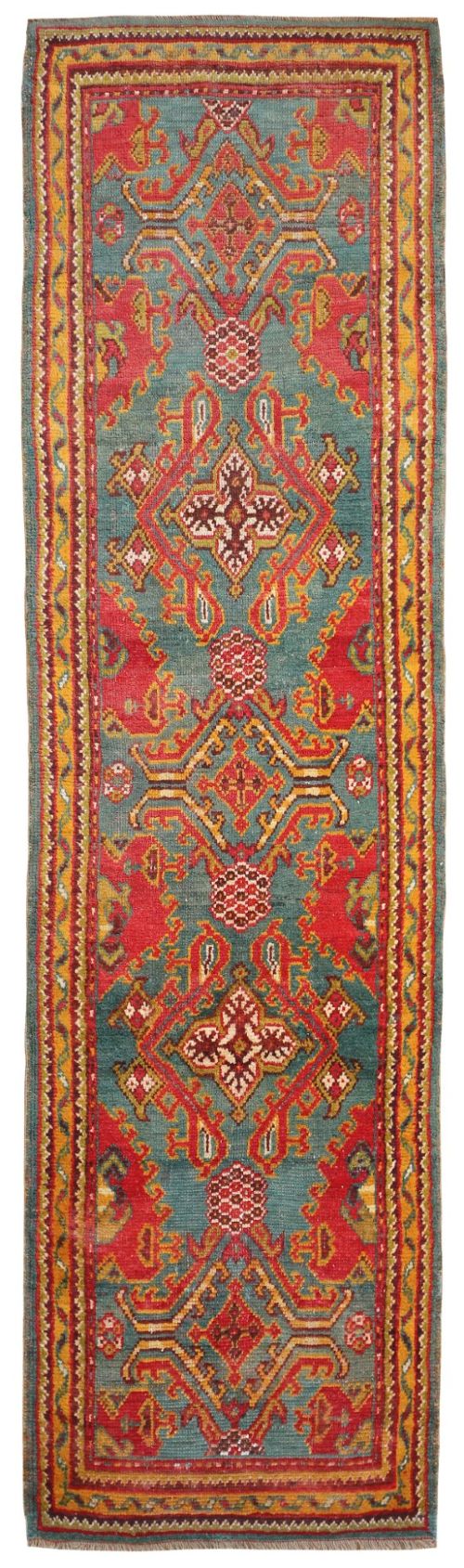



Antique Ushak Runner
These antique ushak runner pieces bring centuries of Anatolian textile tradition into long hallways with distinctive medallion designs.
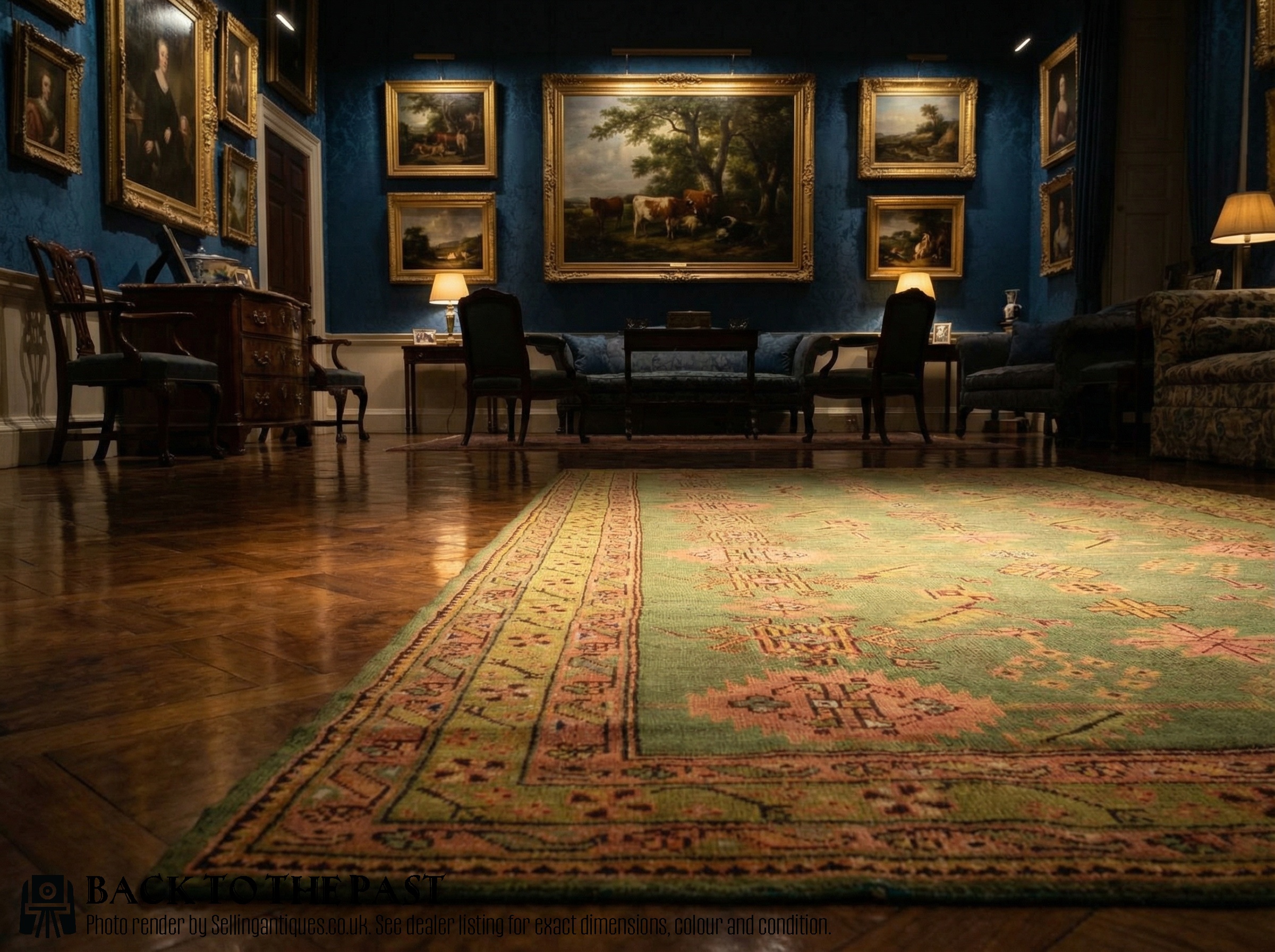
Antique Ushak Runner
An antique ushak runner offers a narrow format tailored for corridors and hallways, originating from the historic weaving centres of Anatolia. These carpets carry distinct regional motifs, including large medallion patterns and characteristic star designs set across softer colour palettes.
The selection ranges from examples produced during the late Victorian era up through the early twentieth century. Alongside standard runner formats, related formats such as kilims and rugs appear within the broader grouping.
Dating across the inventory spans from the 1880s to the 1920s, demonstrating the enduring output of these Turkish looms. Buyers frequently encounter traditional country house proportions suited to expansive architectural spaces.
Materials and construction
Weavers utilised natural sheep wool and cotton foundations, employing hand-knotted techniques that created durable textile surfaces. Certain pieces incorporate angora wool, lending a softer handle to the pile.
Natural dye stuffs provided the muted tones characteristic of these Turkish carpets, reacting over decades to develop rich patinas. Warp and weft threads of cotton gave structural stability to the elongated runner format.
Materials across the listings consist of wool, cotton, and angora wool.
Evaluating quality and condition
Quality rests in the precision of the knotting and the subtlety of the dye work across the field. Finer examples display balanced proportions within the medallion layouts and intact original borders.
Preservation of the pile depth and the integrity of the selvedges differentiate superior specimens from heavily worn alternatives. The clarity of the secondary motifs within the field further distinguishes the tier of execution.
The Antique Ushak Runner Glossary
- Ushak
- A style of carpet originating from the town of Ushak in western Turkey, known for large-scale floral and geometric designs. These textiles were widely exported to European markets from the Ottoman period onward.
- Kilim
- A flat-woven textile produced without a pile, created by tightly interweaving warp and weft strands. This technique results in a lightweight fabric used for both floor coverings and decorative hangings.
- Angora wool
- A soft fibre derived from angora goats or rabbits, sometimes utilised in these rugs to impart a lustrous sheen. It enhances the tactile quality of the pile surface.
- Selvedge
- The self-finished edge of a carpet that prevents the woven threads from unravelling. Original selvedges indicate a higher degree of preservation.
Antique Ushak Runner: Frequently Asked Questions
Where should I place an antique ushak runner?
These narrow formats suit long hallways, grand entryways, and galleries where length is required to balance architectural proportions.
Their subdued palettes complement both traditional period interiors and minimalist modern spaces without overwhelming the room.
How do I care for an antique ushak rug?
Regular gentle vacuuming without a beater bar removes trapped grit from the wool pile while protecting the cotton foundation.
Professional specialist cleaning is recommended to preserve the natural dyes and structural integrity over time.
What periods do these runners date from?
The available pieces primarily span the late nineteenth century through the 1920s, encompassing Victorian production.
Stylistic shifts across this timeframe trace the evolution of traditional Turkish workshop output.
Are these runners durable enough for daily use?
The dense wool construction and sturdy cotton warps were originally designed for heavy foot traffic in country houses.
Placing a quality underlay beneath the textile prevents slippage and reduces friction against hard flooring.