





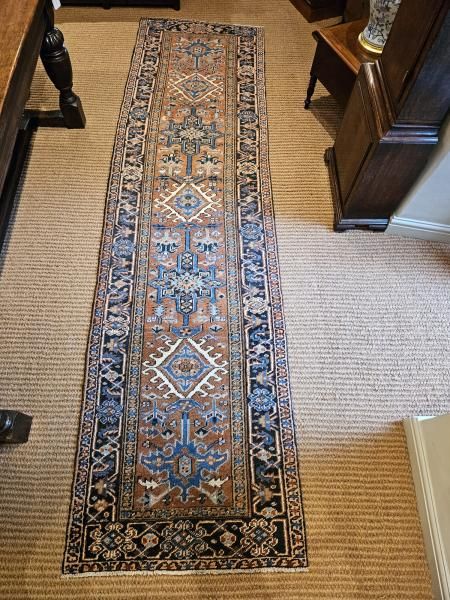
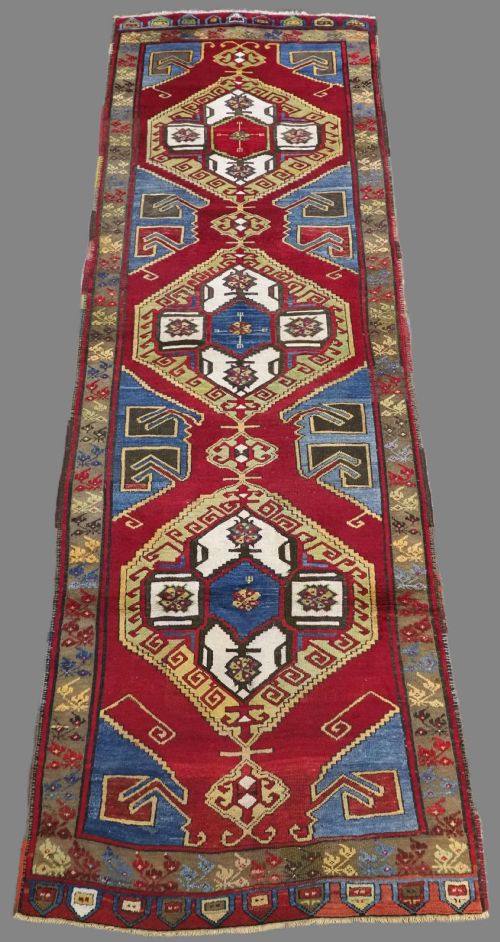

Traditional Wool Hallway Carpet
A traditional wool hallway carpet grounds a narrow domestic space with depth and pattern inherited from Persian, Caucasian, and Anatolian weaving traditions.
Traditional Wool Hallway Carpet
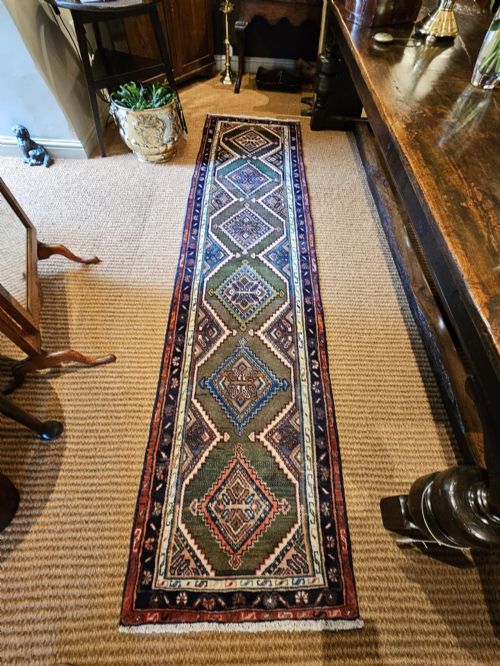
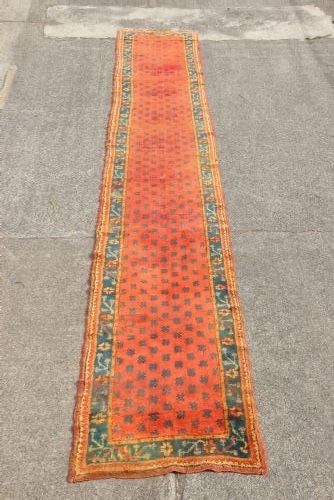
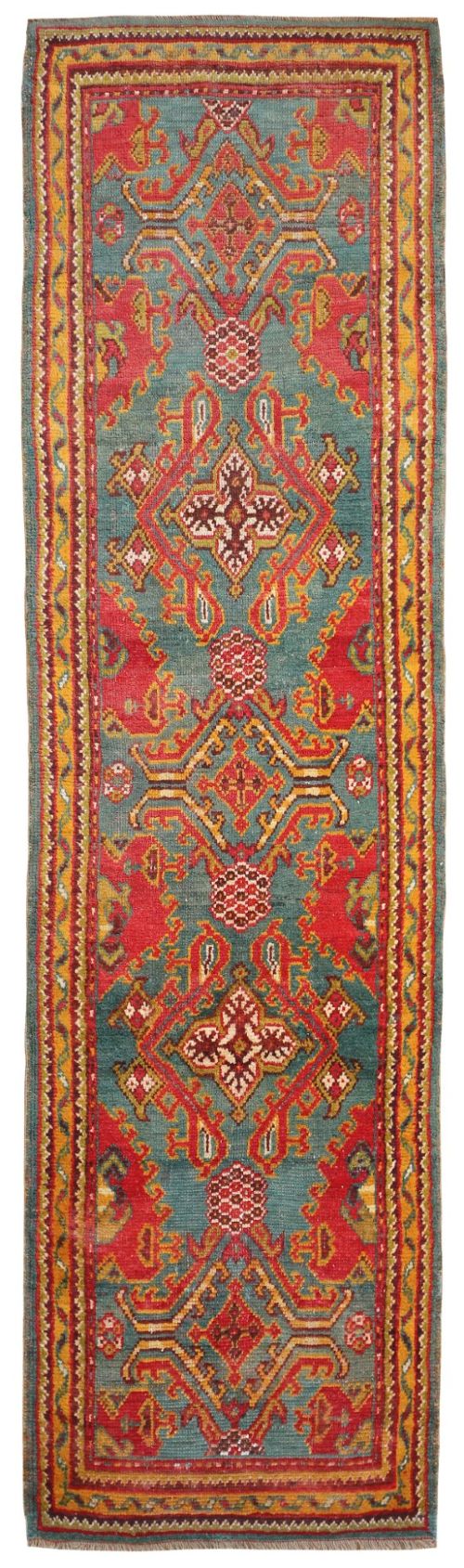
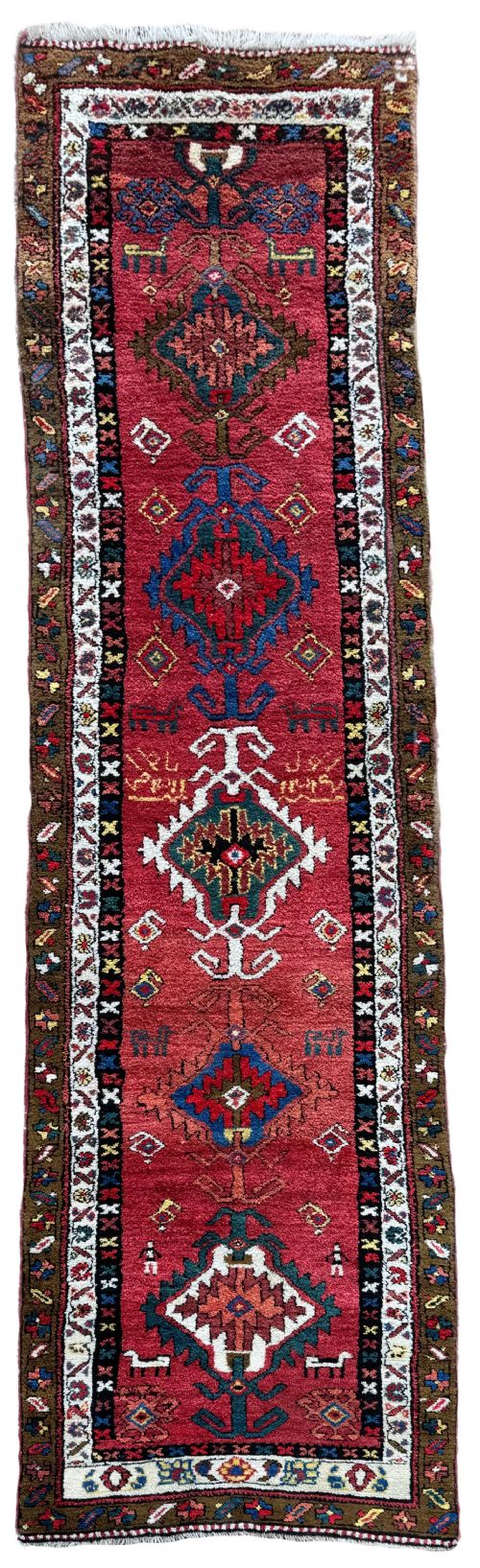
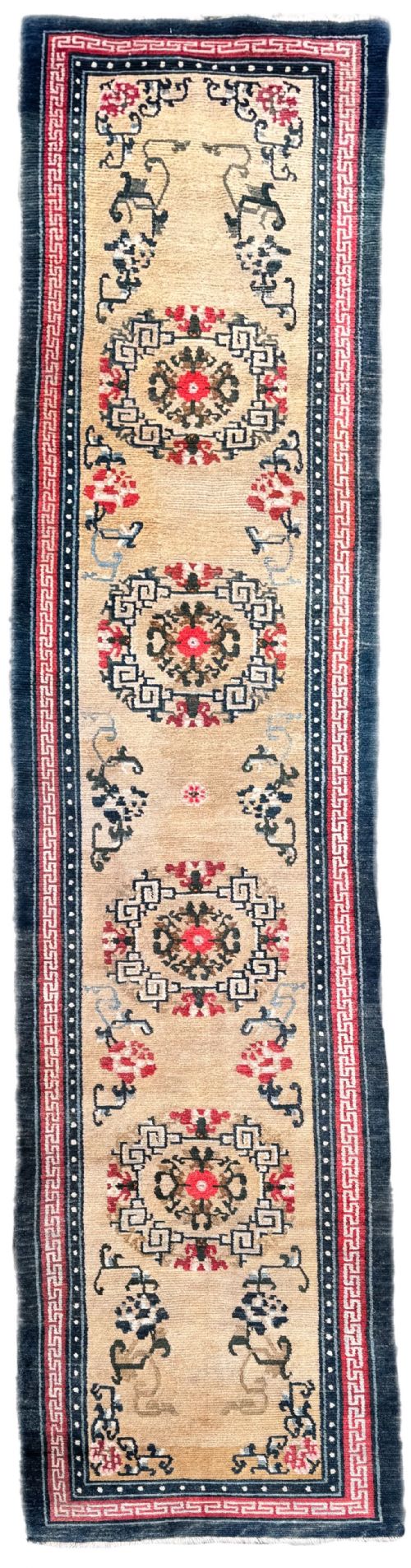
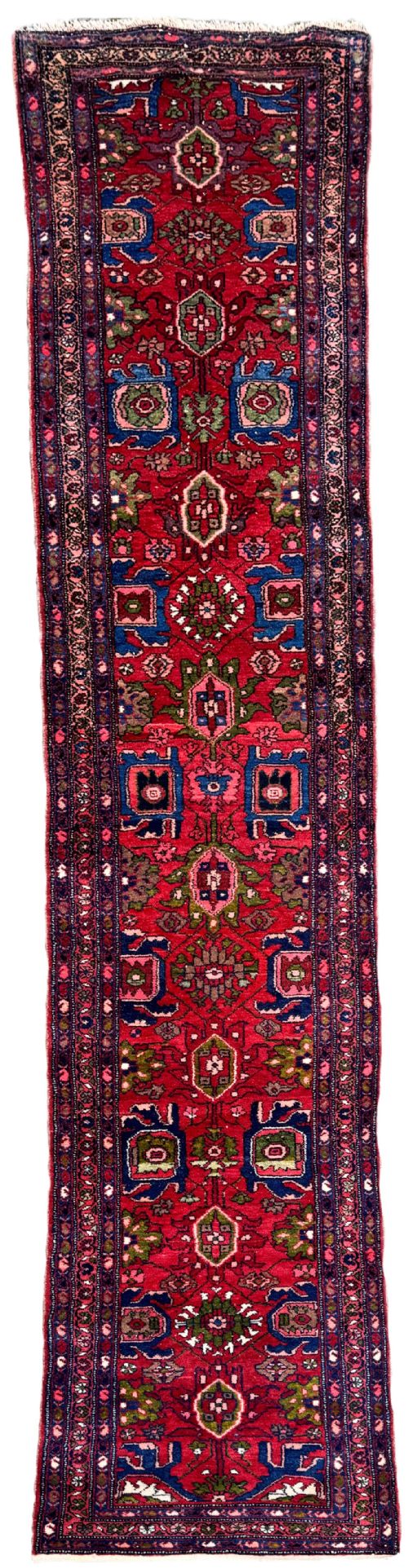
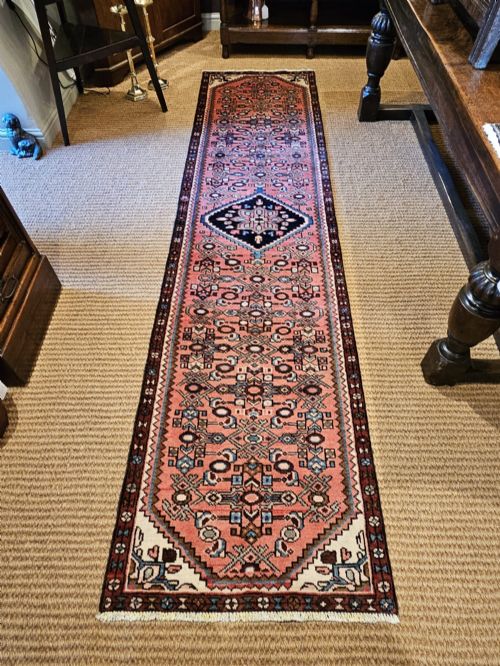
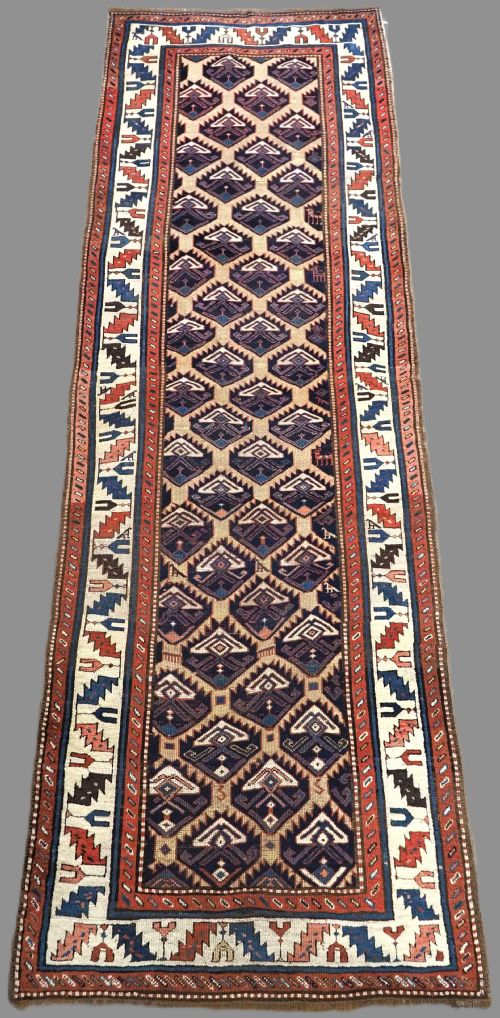
When you search for a traditional wool hallway carpet, you encounter elongated runner rugs designed specifically for long, narrow passages, halls, and landings in older homes. These pieces originate predominantly from Persian, Turkish, Caucasian, and Kurdish weaving traditions spanning the nineteenth and early twentieth centuries.
The format typically involves a long, narrow field enclosed by decorative borders, suited to withstand heavy foot traffic while providing warmth and acoustic dampening in a corridor. Examples range from compact lengths of under three metres to expansive runners exceeding nine metres in length.
How They Were Made
These floor coverings are constructed using durable wool for the pile, often paired with cotton foundations for structural stability during the handweaving process. Weavers knotted the wool pile onto warp and weft threads by hand, creating dense surfaces designed to endure decades of domestic transit.
Natural dyestuffs provided the rich palettes seen across these pieces, yielding deep blues, olives, and rich reds that mellow gracefully over time. The structural integrity relies entirely on the tightness of the knotting and the quality of the spun wool.
One remarkably persistent runner spans thirty-two feet, offering enough length to test the patience of any enthusiastic hallway decorator.
What Varies in Quality
Quality reveals itself in the fineness of the knot count and the precision of the geometric or floral design executed across the runner. Tighter weaving allows intricate motifs, such as lattice patterns and tribal medallions, to remain sharp and legible along the length of the carpet.
The handling of the wool also distinguishes superior examples, where lanolin retention keeps the pile resilient and soft underfoot rather than brittle. Structural preservation, including the original selvedges and ends, separates well-maintained survivors from heavily worn instances.
The Traditional Wool Hallway Carpet Glossary
- Runner
- A long, narrow carpet format specifically proportioned for corridors, hallways, and staircases. It guides movement through a building while protecting wooden floorboards.
- Pile
- The vertical or slanted cut loops of wool that form the upper surface of the carpet. A dense pile absorbs wear and conceals the foundation threads beneath.
- Warp
- The longitudinal threads stretched vertically on the loom before weaving commences. These stationary cords carry the tension and form the fringe at either end.
- Selvedge
- The reinforced outer edge binding the sides of a carpet to prevent fraying. Original selvedges indicate careful preservation by past owners.
- Medallion
- A symmetrical central ornament placed within the field of the rug. It serves as the focal point around which secondary motifs and borders are arranged.
Traditional Wool Hallway Carpet: Frequently Asked Questions
How do I clean a wool runner?
Gentle surface brushing and regular light vacuuming without a beater bar remove embedded grit from the wool pile safely.
Professional specialist washing remains essential for deep cleaning to protect the natural lanolin and dyes within antique textiles.
Are these runners suitable for heavy traffic?
Handwoven wool possesses inherent resilience and natural oils that resist dirt and withstand the continuous friction of footsteps in busy corridors.
Using a quality underlay beneath the carpet prevents slipping and cushions the fibres against hard subfloors.
How do I distinguish regional styles?
Caucasian and Kurdish runners typically display bold geometric medallions, stark lattice designs, and saturated primary colour palettes.
Persian and Anatolian pieces often incorporate intricate floral motifs, Herati patterns, or subtle abrash colour variations across the wool pile.
What causes uneven fading?
Uneven exposure to sunlight over decades in long hallways creates natural tonal shifts across the surface of the wool.
This gentle patination is characteristic of aged textiles and reflects the organic nature of traditional dyes.