





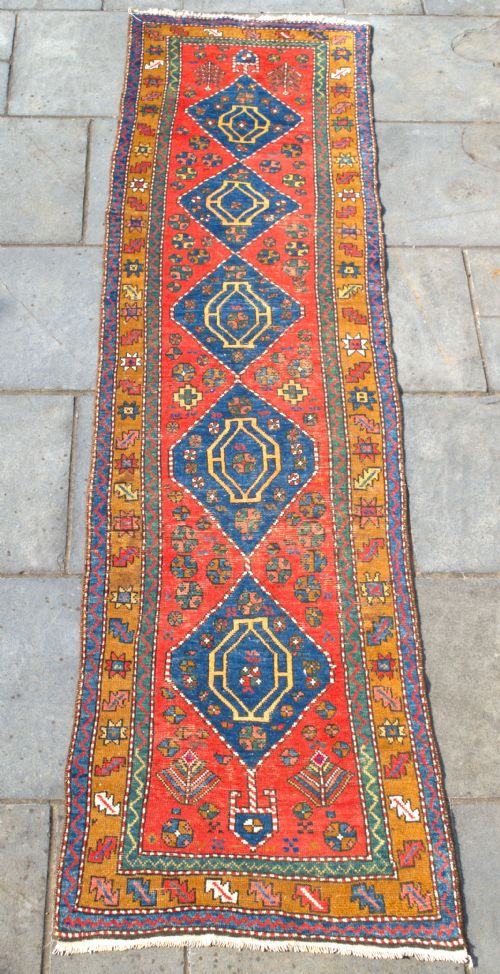


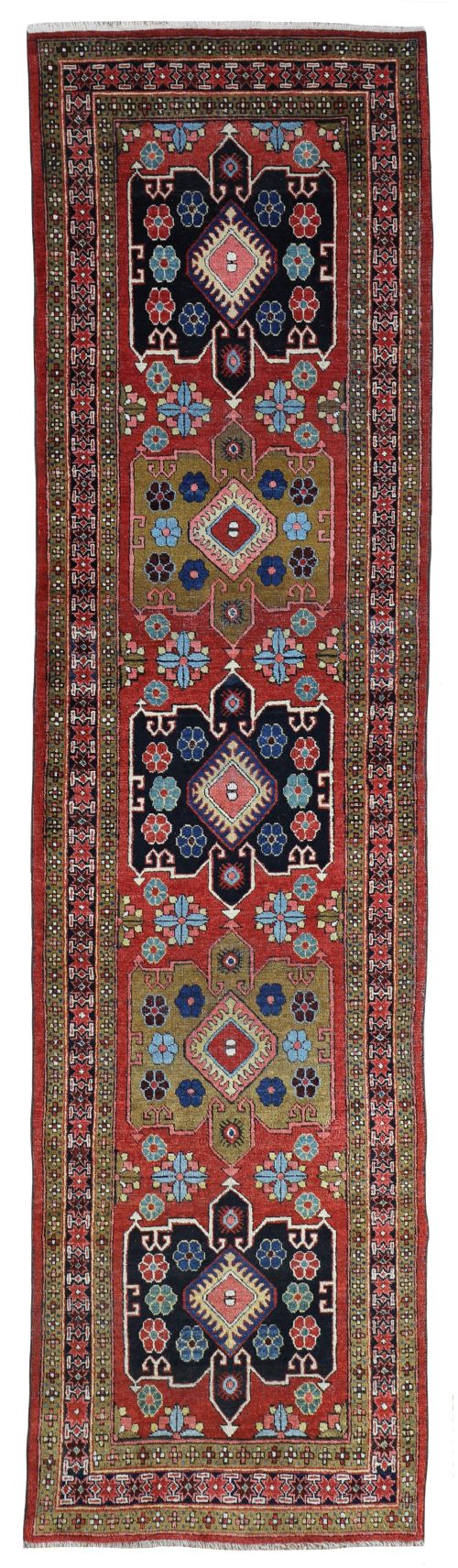


Narrow Persian Floor Runner
These narrow persian floor runner examples bring durable wool construction and traditional tribal artistry straight into long hallways.
Narrow Persian Floor Runner
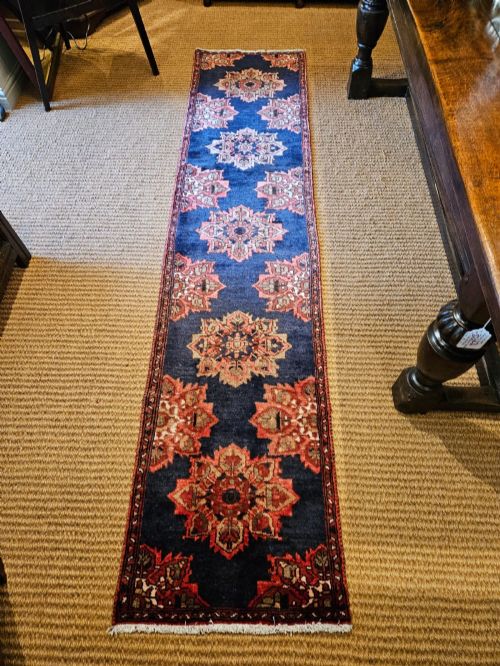
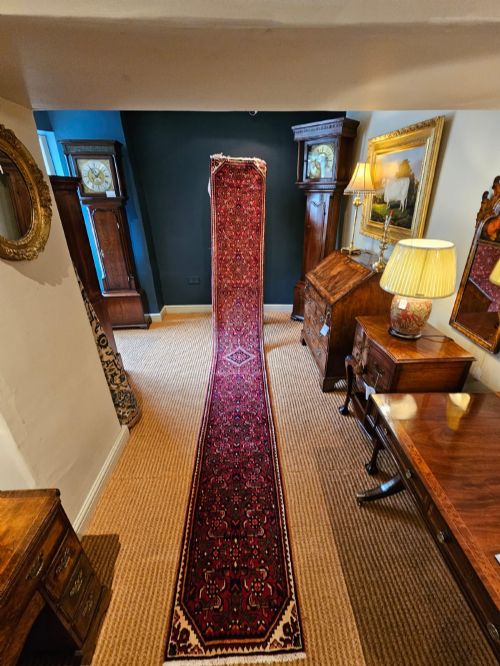
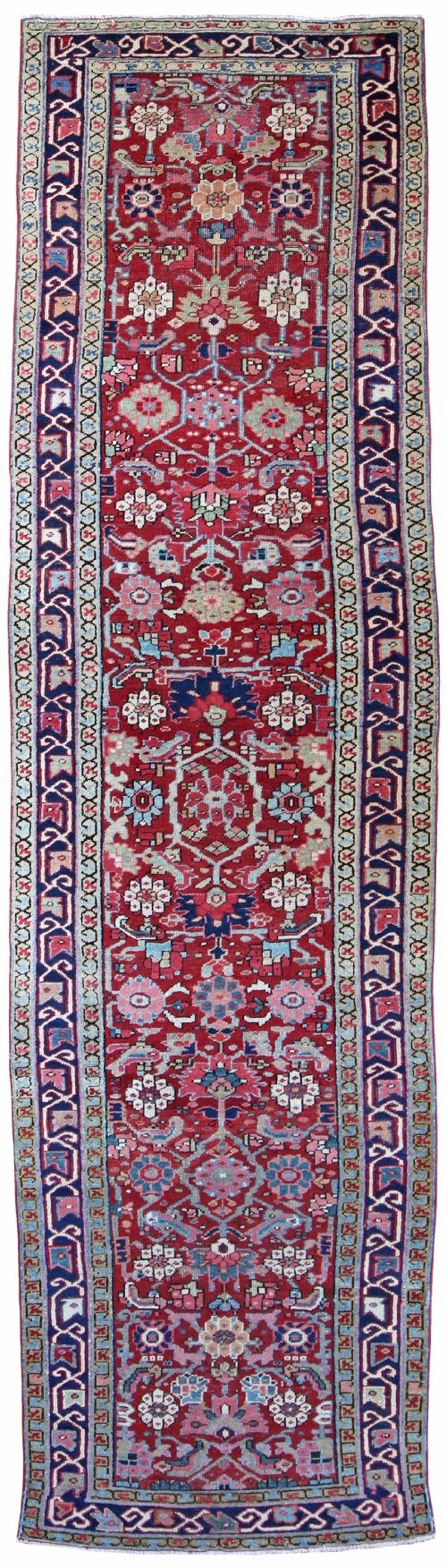
A narrow persian floor runner offers elongated proportions designed specifically for corridors, hallways, and long floor spaces. These pieces combine traditional tribal designs with resilient floor coverings that endure heavy foot traffic.
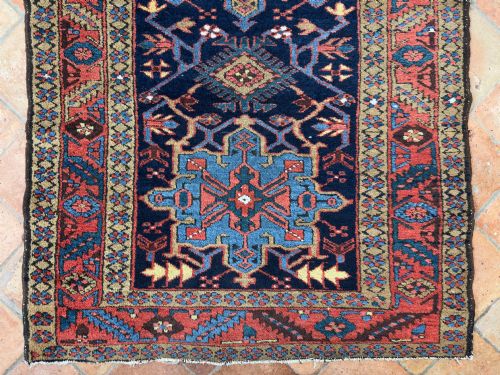
The selections span distinct weaving traditions including Heriz, Karaja, Bidjar, Hamadan, and Kurdish workshops. Most pieces emerge from the late nineteenth century through the early decades of the twentieth century, displaying notable regional characteristics.
Makers utilised traditional formats, resulting in floor coverings that measure substantially longer than they are wide. Buyers encounter varying lengths, from standard hallway proportions to exceptionally long formats reaching over ten metres.
Materials and construction methods
Weavers constructed these runners using wool pile knotted onto durable cotton foundations. This pairing of natural materials provides both structural stability and a dense surface suitable for daily domestic use.
Dyers employed natural colourants to achieve mellow red and navy blue tones that age gracefully across decades. The combination of hand-spun wool and traditional dyeing techniques produces rich visual depth within the geometric and floral motifs.
Narrow Persian Floor Runner Retail Price Guide 2026
Typical asking prices for narrow persian floor runner among the pieces listed under this phrase on Sellingantiques today, from the lower quarter to the upper quarter. They describe what is for sale here now, not the wider market.
Regional styles include Heriz, Karaja, Bidjar, Hamadan, and Kurdish tribal traditions from north-west Persia and Afghanistan.
Assessing quality in floor runners
Quality depends upon the precision of the weave and the crispness of the tribal patterns executed across the elongated field. Finer knotting density allows complex geometric medallions and Heriz motifs to appear distinct and well-defined.
Proportion and balance also distinguish superior examples, particularly in how narrow formats maintain structural integrity along their outer borders. The harmony of the natural dye palette contributes significantly to the visual standing of each piece.
The Narrow Persian Floor Runner Glossary
- Heriz
- A Persian weaving style known for bold geometric central medallions and robust structural durability. These patterns often feature strong architectural lines executed in rich red and navy blue tones.
- Bidjar
- A Persian origin associated with densely packed wool foundations that create heavy, rigid floor coverings. This tight construction method yields exceptional resilience against heavy wear.
- Karaja
- A village production centre in north-west Persia famous for geometric medallion layouts and tribal motifs. These pieces typically display straightforward, charming village aesthetics.
- Hamadan
- A vast market region in western Persia where numerous surrounding villages bring diverse runner formats for trade. These rugs incorporate varied geometric and all-over repeating patterns.
- Runner
- An elongated carpet format specifically proportioned for corridors, staircases, and hallways. This shape directs movement through narrow architectural spaces.
Narrow Persian Floor Runner: Frequently Asked Questions
Where should I place a long runner?
These pieces suit long hallways, corridors, and narrow passageways where traditional floor coverings add warmth and texture.
Their elongated proportions protect high-traffic wooden floors while defining transitional spaces in a home.
How do I clean an antique wool runner?
Gentle surface vacuuming without a beater bar removes loose dirt from the wool pile safely.
Professional specialist cleaning remains necessary for deeper maintenance to protect the natural dyes and cotton foundation.
Are these runners made of pure wool?
The pile consists of natural wool, which provides a resilient and comfortable surface underfoot.
Foundations underneath utilise cotton threads to maintain structural stability along the long format.
How do I tell Heriz and Bidjar runners apart?
Heriz runners display bold geometric medallions with prominent architectural corners and distinct primary colours.
Bidjar runners feature heavier, denser packing that creates a stiffer handle and traditionally tight knotting.