
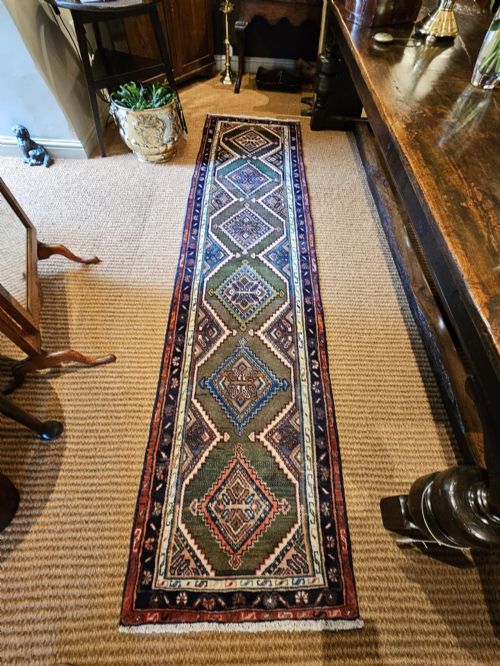

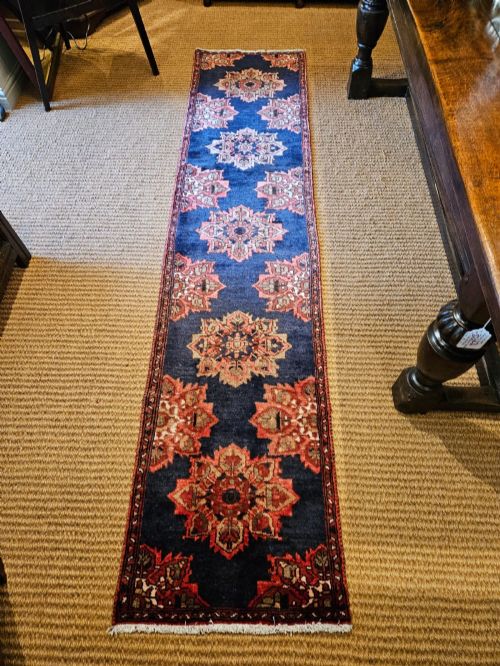
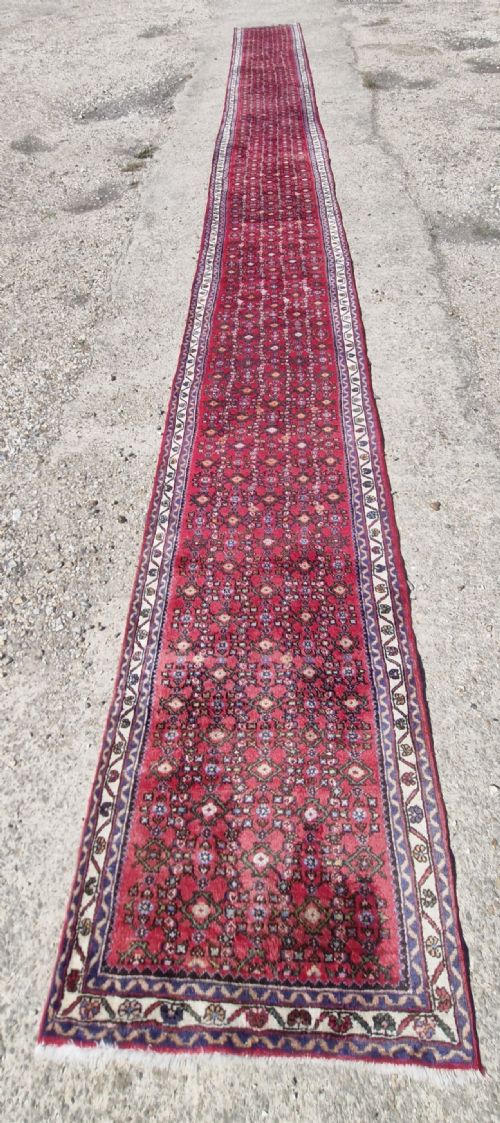
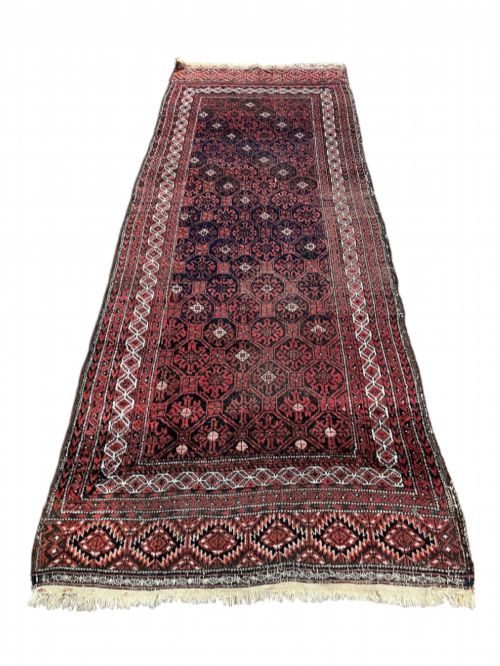
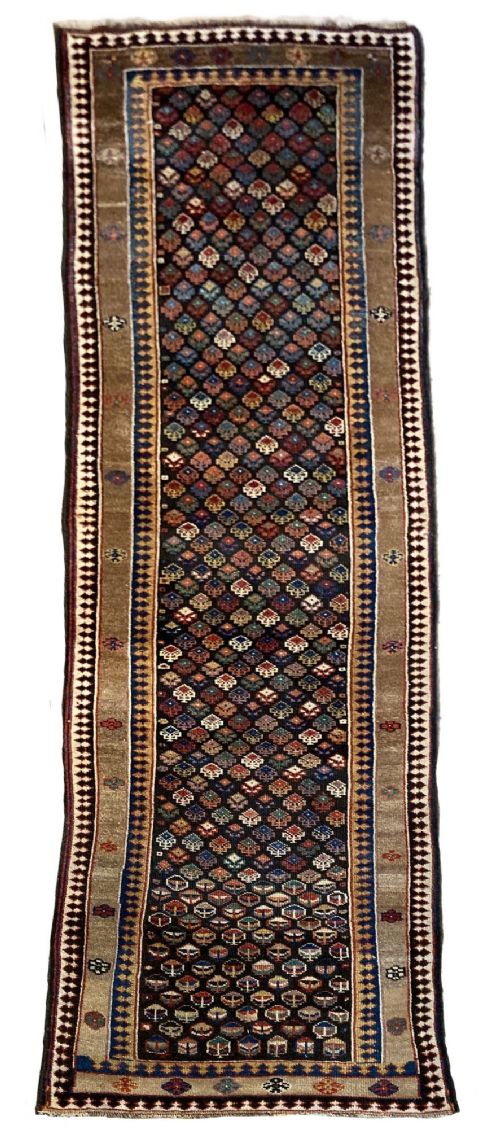


Long Narrow Tribal Rug
A long narrow tribal rug brings corridor floors alive with village geometry and centuries of nomadic hand-knotting traditions.
Long Narrow Tribal Rug
A long narrow tribal rug serves as a hallway runner or gallery floor covering, stretching across domestic walkways with elongated proportions. Buyers seeking a long narrow tribal rug encounter antique examples originating from Persian, Turkish, Caucasian, and Moroccan weaving traditions.
The selections span the late nineteenth century through the early decades of the twentieth century, including pieces attributed to Kurdish, Heriz, Hamadan, and Serab groups. These textiles fulfill utilitarian corridor requirements while displaying distinctive regional village aesthetics.
Materials and construction methods
Makers constructed these runners primarily using wool, hand-spun wool, and cotton foundations, occasionally incorporating camel hair for natural tone variations. Artisans knotted the pile by hand onto sturdy warps, creating durable floor coverings designed for heavy foot traffic.
Weavers utilised local dyes to colour the wool, yielding saturated palettes dominated by reds, blues, and earthy neutrals. The combination of resilient animal fibres and dense knotting accounts for the survival of these textiles across generations.
The listings span pieces dated from the nineteenth century up to nineteen-sixty, featuring wool, cotton, and camel hair materials.
Evaluating quality and execution
Quality rests upon the fineness of the knotting and the crispness of the geometric design execution across the elongated format. Pieces exhibiting tight structural foundations and well-balanced proportions demonstrate superior weaving skill.
The integrity of the wool pile and the harmony of the natural dye palette distinguish finer village examples from standard production. Artisanal command over traditional motifs elevates individual runners within their specific tribal grouping.
The Long Narrow Tribal Rug Glossary
- Runner
- A long, narrow carpet format traditionally utilised in hallways, corridors, and on staircases. These pieces measure significantly longer than they are wide.
- Kilim
- A flat-weave carpet produced without a pile by tightly interweaving warp and weft strands. This technique creates a lightweight, reversible textile with sharp geometric patterns.
- Warp
- The vertical foundation threads stretched lengthwise on a loom before knotting begins. Weft threads are subsequently beaten across these structural cords.
- Hand-spun wool
- Yarn spun manually using a drop spindle or wheel rather than industrial machinery. This process yields irregular yarn thicknesses that absorb natural dyes with subtle tonal variations.
Long Narrow Tribal Rug: Frequently Asked Questions
Where should I place a long narrow tribal rug?
These runners suit narrow architectural spaces such as hallways, entryways, and gallery landings. Their elongated dimensions guide movement down corridors while protecting wooden floorboards.
Positioning them away from excessive moisture preserves the antique wool fibres. Underlays help secure the flat profile against slipping on smooth flooring.
How do I care for an antique wool runner?
Regular gentle vacuuming without a rotating brush roll prevents dust accumulation within the wool pile. Professional cleaning by specialists in antique textiles maintains the integrity of the natural dyes.
Rotating the runner periodically ensures even exposure to foot traffic and sunlight. Prompt attention to spills prevents staining on hand-knotted surfaces.
What defines tribal rug geometry?
Village and nomadic weavers constructed designs from memory using repeating geometric medallions, stylized animals, and angular floral motifs. These abstract symbols reflected regional heritage rather than formal court aesthetics.
Asymmetrical details often appear in genuine tribal weaving, distinguishing them from standardised factory carpets. Each group utilised specific colour palettes and border arrangements.
How can I date an older runner?
Dating relies on assessing the dye palette, wool characteristics, and structural wear patterns consistent with nineteenth and early twentieth-century production. Natural colour variation often points to earlier dyeing methods before synthetic alternatives became widespread.
Sellers estimate age by examining edge finishes, foundation materials, and stylistic markers associated with specific weaving regions.