


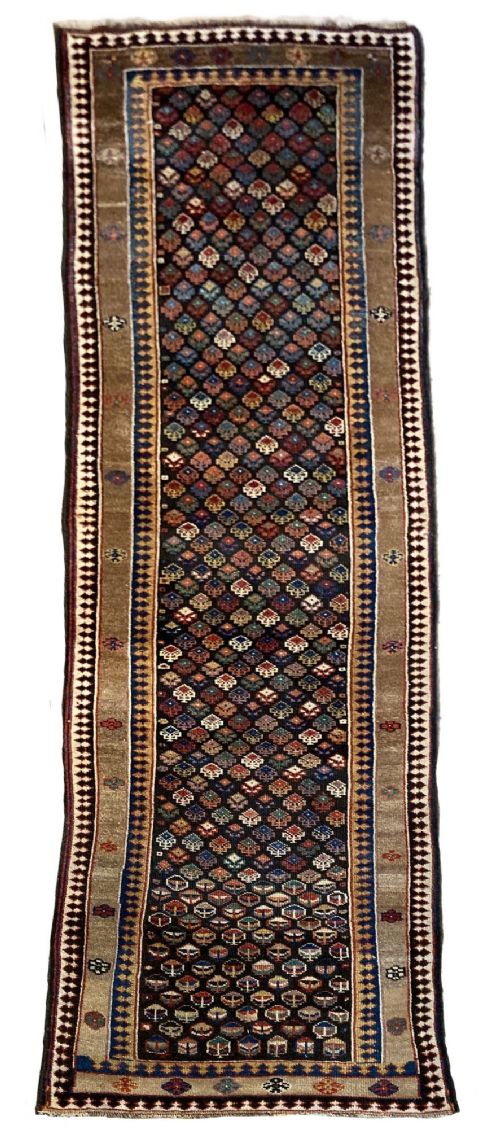


Blue Persian Hall Runner
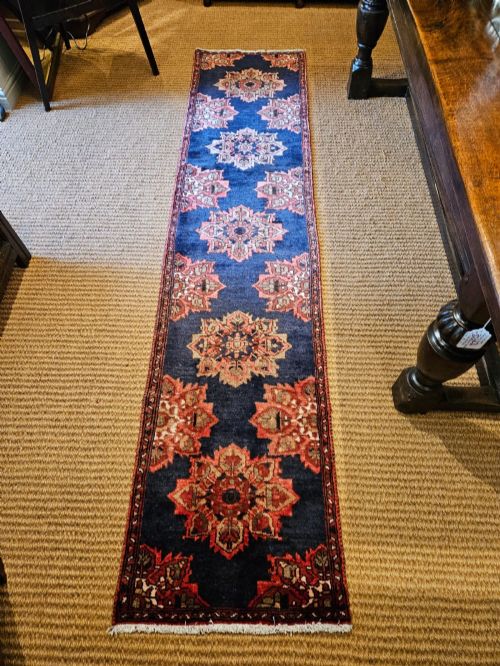
A blue persian hall runner brings the deep indigo tones and elongated geometry of nineteenth and early twentieth century weaving directly into a narrow space.
Blue Persian Hall Runner
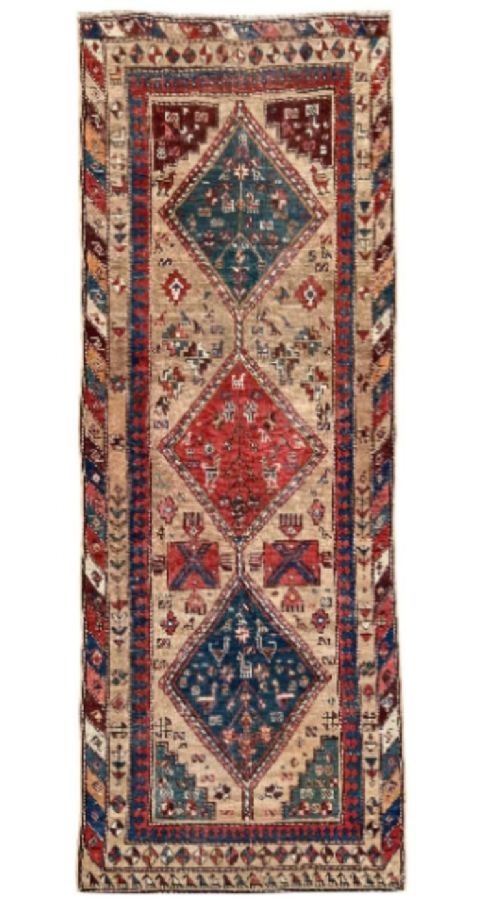
When someone searches for a blue persian hall runner, they encounter narrow floor coverings traditionally woven in the villages and tribal regions of Persia and the wider Caucasus and Anatolia. These pieces span from the late nineteenth century into the early decades of the twentieth century, presenting elongated proportions suited to corridors and hallways.
Materials and construction
These runners are constructed using hand-knotted wool pile secured onto sturdy cotton or wool warps and wefts. The natural resilience of village-spun wool allows these textiles to endure heavy foot traffic in corridors over generations.
Dyes derived from natural sources provide the characteristic deep blue grounds and contrasting red, ivory, and brown accents seen across these historical weavings. The tension of the hand-tying creates a dense, durable handle that lies flat along a hallway floor.
Blue Persian Hall Runner Retail Price Guide 2026
Typical asking prices for blue persian hall runner among the pieces listed under this phrase on Sellingantiques today, from the lower quarter to the upper quarter. They describe what is for sale here now, not the wider market.
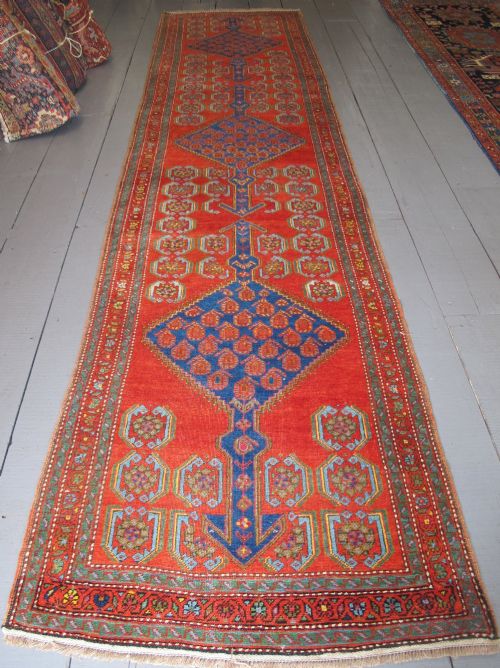
Available formats range from compact village pieces to monumental narrow runners exceeding ten metres in length.
Distinctions in quality
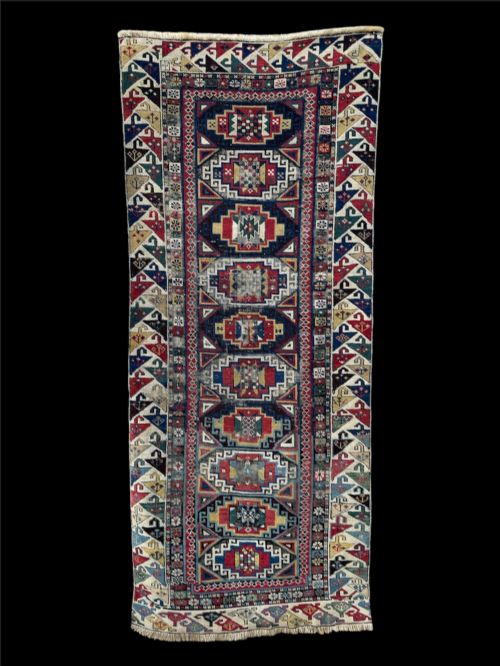
Quality in these runners rests upon the crispness of the tribal drawing and the saturation of the indigo palette. Tightly packed knots yield a clearer rendition of geometric motifs, medallion patterns, and stylised floral designs.
The integrity of the original wool selvages and the preservation of the outer border geometry distinguish finer survivals. Uniformity in width across long metreages also separates standard village pieces from exceptional masterworks.
The Blue Persian Hall Runner Glossary
- Runner
- A long, narrow carpet format specifically designed for corridors, hallways, and stairs. These pieces typically measure three to four times longer than they are wide.
- Pile
- The upright woolen yarn that forms the surface texture of the rug, created by individual knots tied around the warp threads. The height and density of this layer dictate the feel underfoot.
- Warp
- The foundational vertical threads running the entire length of the rug upon which the knots are tied. Cotton is frequently utilised for this structural skeleton in Persian village weaving.
- Weft
- The horizontal threads passed back and forth between rows of knots to bind the structure laterally. Visible wefts often show distinct colours unique to specific tribal workshops.
- Selvage
- The reinforced outer edge finishing of a rug that prevents the side cords from unravelling. Original wool bindings indicate a well-preserved historical textile.
- Medallion
- A central symmetrical ornament set into the field of the rug. This focal motif anchors the geometry of traditional runner designs.
Blue Persian Hall Runner: Frequently Asked Questions
How do I place a long runner in a narrow hall?
Measure the clear floor space carefully, leaving an even border of exposed timber or stone on all sides. Centre the runner to allow doors to swing freely over the pile.
Ensure an appropriate underlay is placed beneath the textile to prevent sliding on hard hallway surfaces. This protects the historic foundation from unnecessary friction during daily use.
How do I clean an antique wool runner?
Gently vacuum the surface using a low suction setting without a rotating beater brush. This removes embedded dust particles without pulling at the hand-knotted pile.
Professional specialist cleaning is recommended for deep maintenance or stain removal. Water saturation can destabilise natural dyes and historic foundations if not handled correctly.
How can I tell a Kurdish runner from a Heriz piece?
Kurdish pieces often display expressive, geometric field patterns and occasionally figurative tribal motifs woven with rich, saturated indigo and dark wools. Their construction tends to feel organic and slightly irregular in width.
Heriz runners generally exhibit bolder, more architectural medallion layouts with precise angles and characteristic geometric corner spandrels. The palette frequently pairs deep navy blues with terracotta and ivory.
Are these runners durable enough for everyday corridors?
The hand-spun wool and dense knotting of nineteenth and early twentieth century village rugs provide robust natural strength. These textiles were originally made for demanding domestic environments.
Placing quality underlay beneath the runner absorbs impact and distributes foot traffic evenly. This simple step preserves the wool pile and structural integrity for decades to come.