

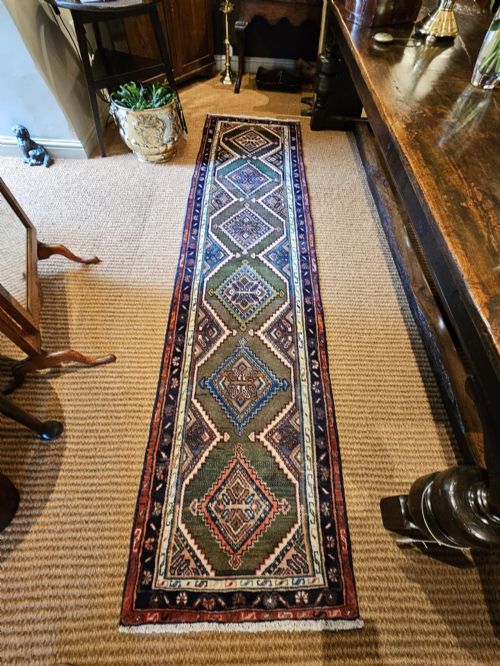

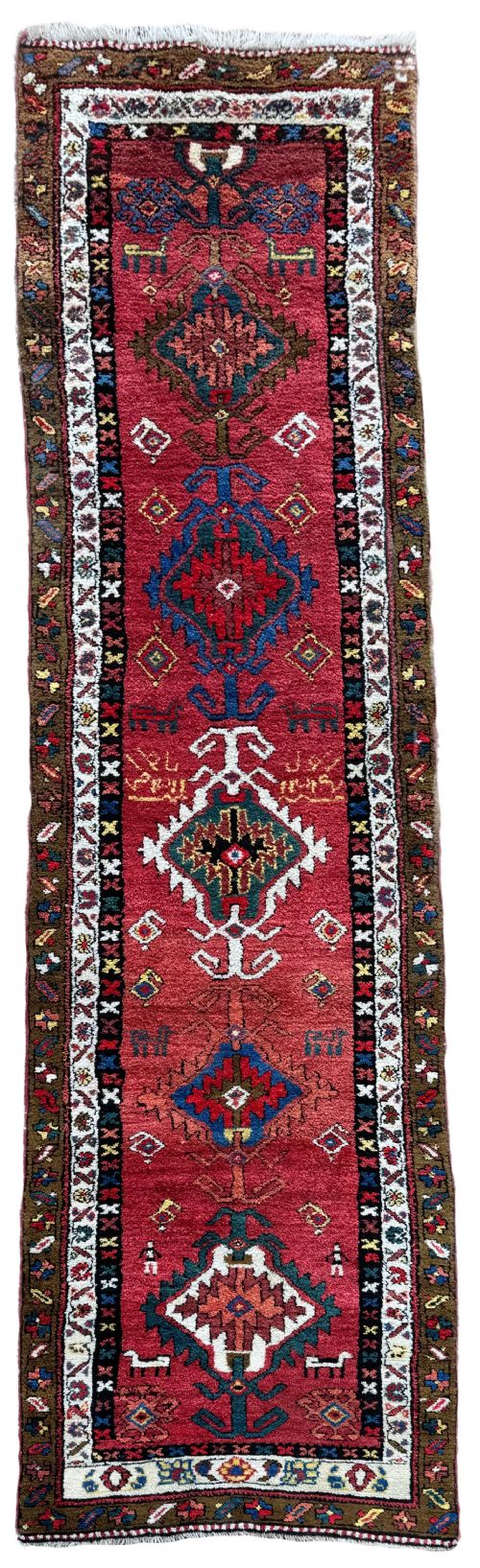
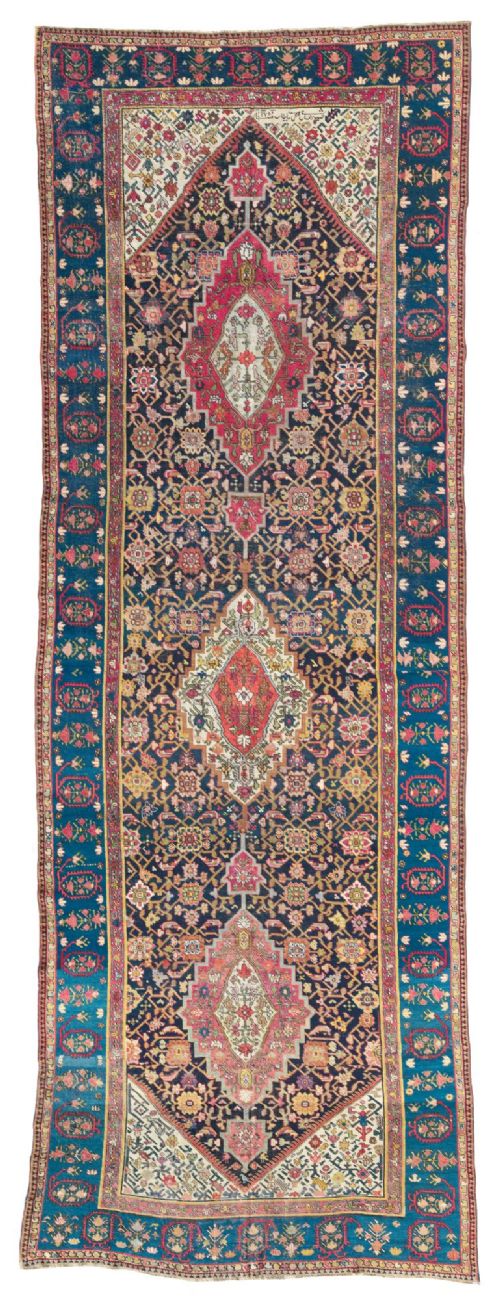
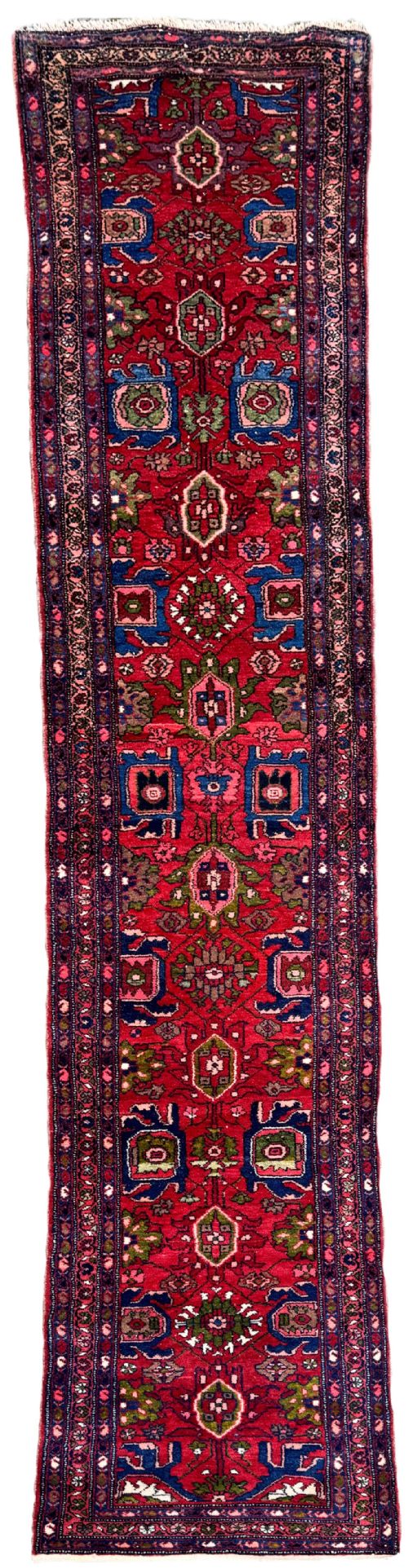
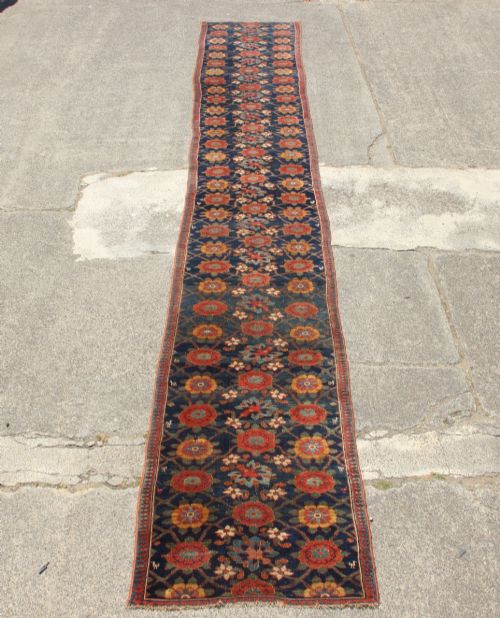
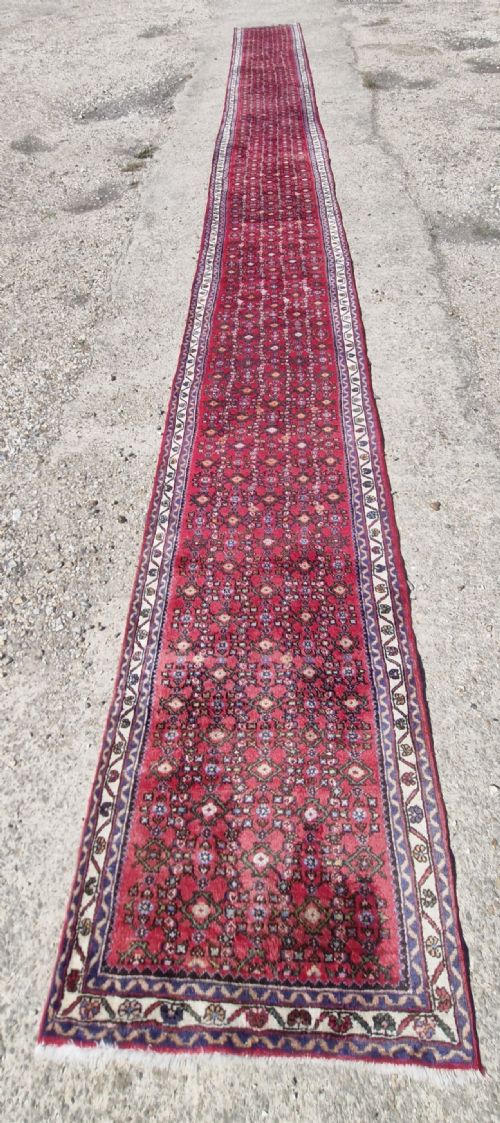
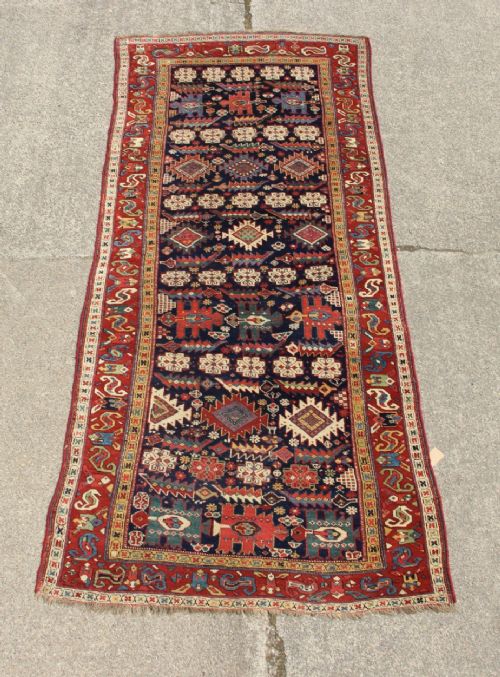
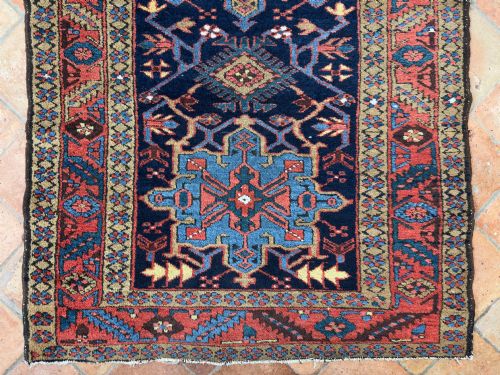

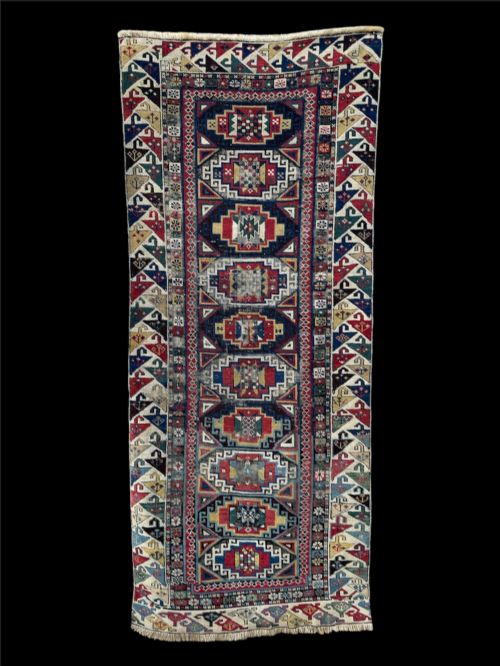
Persian Corridor Runner Carpet
A persian corridor runner carpet brings linear history into a hallway, offering narrow proportions woven by tribal and village hands.
Persian Corridor Runner Carpet
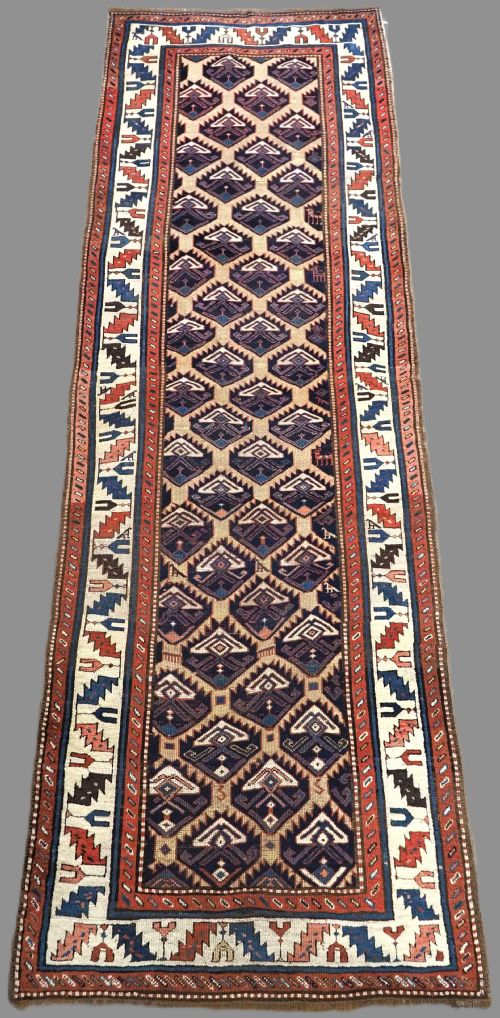
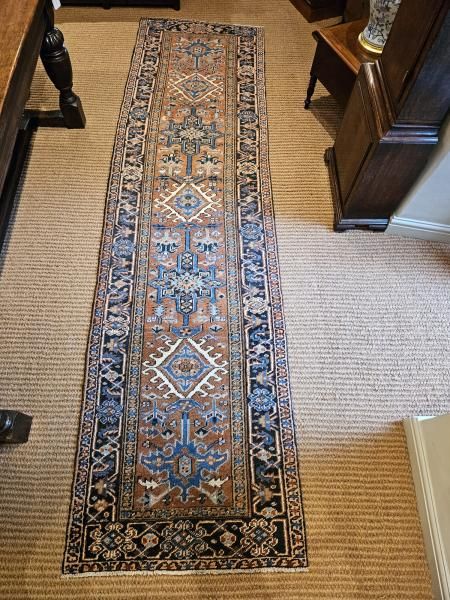
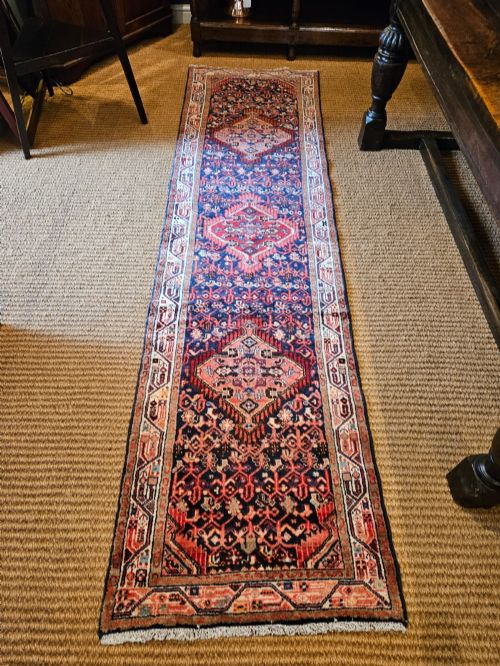
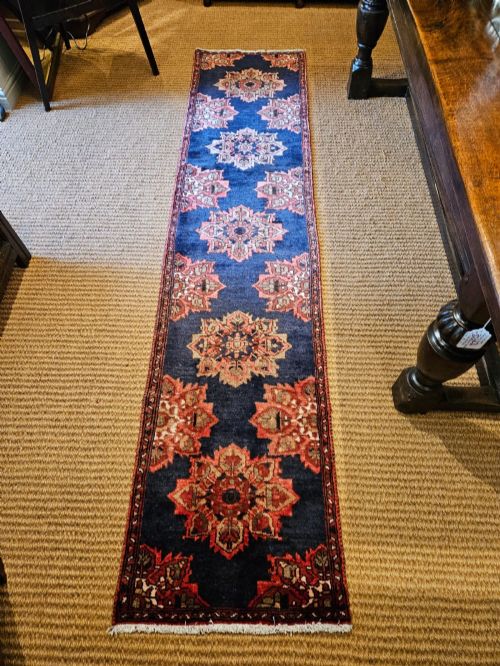
A persian corridor runner carpet spans extended lengths designed specifically for narrow hallways, landings, and galleries. These elongated floor coverings appear frequently from nineteenth and early twentieth century periods, originating across Persian and Caucasian weaving traditions.
Makers utilised specific tribal designations such as Kurdish, Heriz, Hamadan, and Bakshaish to structure geometric or field patterns. Buyers encounter narrow proportions that direct movement through domestic spaces while displaying deep saturated pigments and traditional motifs.
Construction and Materials
Weavers constructed these long carpets using foundation warps of cotton or wool paired with hand-spun wool pile. Natural dyeing methods yielded durable colours that softened gracefully over decades of household wear.
The density of the knotting and the rigidity of the wool foundation determine how straight and flat a long narrow format rests upon floorboards.
Listings feature pieces dated from the nineteenth century through the 1960s, constructed predominantly from wool and cotton.
Assessing Quality
Quality rests upon the fineness of the knot count and the stability of the natural wool materials. Superior examples maintain straight parallel edges despite extreme lengths, whereas lesser pieces exhibit significant lateral distortion.
The clarity of tribal geometric motifs and the depth of hand-spun wool pile distinguish workshop weaving from coarser village production.
The Persian Corridor Runner Carpet Glossary
- Kelleh
- A large format carpet that is longer than a standard rug but wider than a corridor runner. This format serves spacious central floors rather than narrow passageways.
- Runner
- A long narrow textile proportioned for hallways and staircases. It guides foot traffic through domestic corridors.
- Hand-Spun Wool
- Yarn processed manually on a spindle rather than via industrial machinery. This method introduces subtle thickness variations that absorb natural dye unevenly.
- Pile
- The vertical tufts of wool that form the soft upper surface of the carpet. It protects the structural foundation from friction.
Persian Corridor Runner Carpet: Frequently Asked Questions
Where should I place a runner carpet?
These narrow textiles suit long hallways, narrow landings, and gallery spaces where linear dimensions complement architectural proportions.
They protect high-traffic wooden floorboards while defining circulation paths through large country houses or period properties.
How do I care for antique wool runners?
Vacuum gently using suction attachments without rotating brush bars to protect the fragile hand-spun wool pile from excessive friction.
Rotate the textile periodically to distribute foot traffic evenly across the length of the corridor.
What is the difference between Kurdish and Heriz runners?
Kurdish pieces display looser tribal geometry with varied village symbolism, often woven with heavy wool foundations.
Heriz examples present structured medallion geometry and firmer structural density originating from north-west workshops.
How do I determine the age of an old runner?
Examine the palette of the wool pile for signs of natural dyes that mellowed gradually before synthetic colours entered regional production.
Structural irregularities along the selvedges often indicate traditional village manufacture prior to standardised twentieth-century looms.