



Vintage Oushak Floor Rug
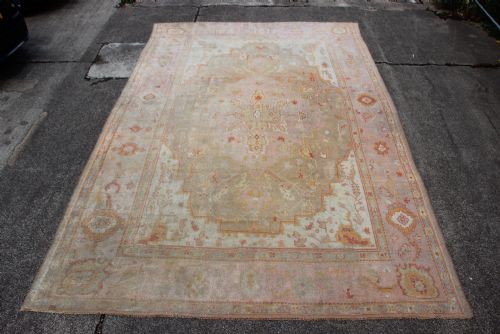
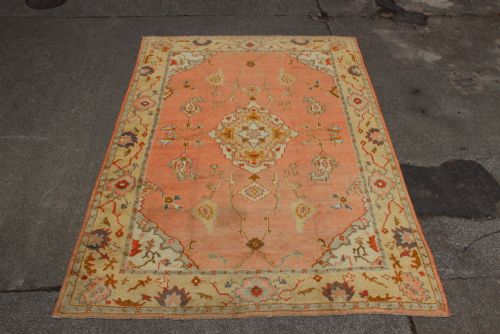
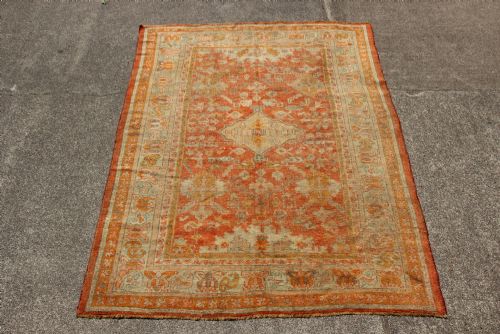
A vintage oushak floor rug brings softened Ottoman geometry and muted warmth to a room through centuries-old Turkish weaving traditions.
Vintage Oushak Floor Rug
A vintage oushak floor rug represents large-scale decorative carpets and smaller area rugs originating from western Turkey, spanning the late nineteenth and early twentieth centuries. These pieces carry Ottoman and Anatolian design lineages, often showing large medallion patterns or pale, faded fields.
The selections here run from room-sized carpets down to runners and kilims, dated across periods from the Victorian era to the nineteen-twenties. Buyers searching for a vintage oushak floor rug typically encounter generous dimensions suited for anchoring major living spaces.
Materials and Construction
These textiles rely principally on wool and cotton foundations, occasionally incorporating softer angora wool to impart a distinct handle and gentle surface sheen. Artisans knotted these materials by hand on traditional vertical looms in western Turkish weaving centres.
Dyers utilised natural organic sources to achieve the soft pastel colours, ivory grounds, and unusual green fields characteristic of the region. The resulting pile provides both durability for heavy floor use and a supple drape.
Vintage Oushak Floor Rug Retail Price Guide 2026
Typical asking prices for vintage oushak floor rug among the pieces listed under this phrase on Sellingantiques today, from the lower quarter to the upper quarter. They describe what is for sale here now, not the wider market.
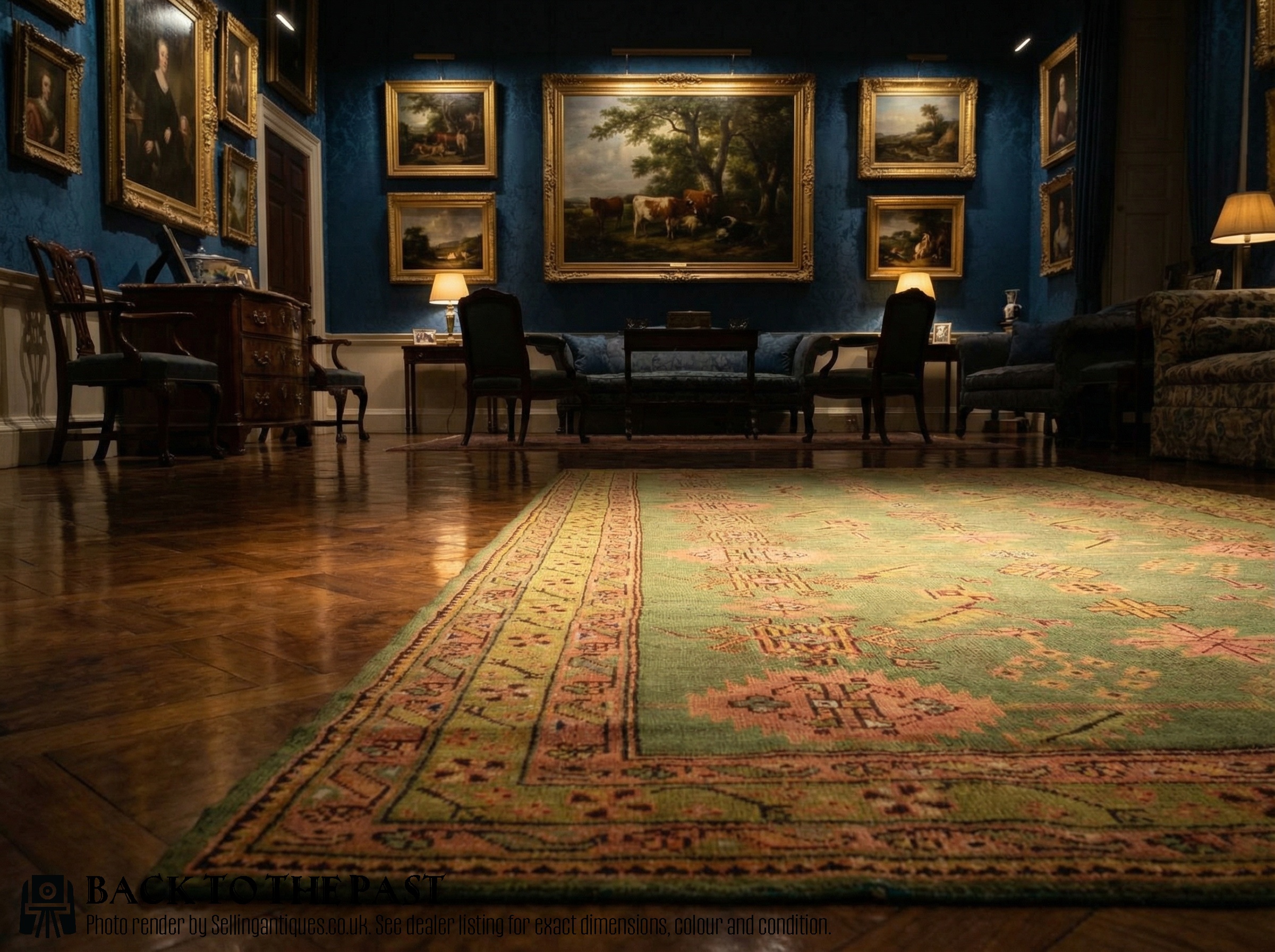
Several carpets feature scarce green fields, offering a playful departure from the usual ivory and pastel tones.
Evaluating Quality and Execution
Quality in these carpets rests on the harmony of the faded palette, the crispness of the Anatolian or Ottoman motifs, and the integrity of the wool pile. Finer examples display balanced proportions within large-scale medallions and sophisticated handling of secondary borders.
The choice of fibre also influences the character of the piece, with select items employing angora wool for added softness. Preservation of the original edges and balanced wear across the cotton foundation further separate standard examples from finer works.
The Vintage Oushak Floor Rug Glossary
- Oushak
- A traditional style of carpet originating from the town of Usak in western Turkey. These pieces are known for oversized floral motifs and soft, muted colour palettes.
- Kilim
- A flatwoven carpet or rug produced without a pile. These pieces offer a lighter weight and distinct geometric Anatolian designs.
- Ghiordes
- A historic weaving centre in western Turkey associated with knotted pile carpets. Pieces from this tradition often share aesthetic ties with neighbouring Oushak designs.
- Kula
- A town in western Anatolia known for distinct regional rug production. Items from here typically feature specific pastel colour schemes and traditional local patterns.
- Medallion
- A large central decorative motif found in the field of many carpets. This focal design element anchors the surrounding Ottoman symmetry.
Vintage Oushak Floor Rug: Frequently Asked Questions
How do I style a vintage oushak floor rug?
These carpets suit both traditional interiors and modern minimalist rooms because their faded palettes and large-scale patterns act as a neutral anchor. Place them in living spaces or reception areas where the soft colours complement surrounding wood and upholstery.
Allow the rug to define a central seating zone by floating furniture largely over the field. Their generous proportions help balance high ceilings and polished timber floors.
What is an Angora Oushak?
An Angora Oushak incorporates softer angora wool into the pile construction, yielding a silkier handle and a distinct surface sheen. These particular pieces often display a more lustrous finish compared to standard wool carpets.
The inclusion of angora fibre changes the way the pale pastel colours reflect light across the room. They represent a specific variation within late nineteenth-century Turkish weaving.
How do I date these Turkish carpets?
Dating relies on stylistic markers, structural analysis, and comparative evidence from nineteenth-century Victorian production up to the nineteen-twenties. Earlier pieces often display denser knotting and specific Ottoman floral distributions.
Changes in natural dye usage towards the end of the nineteenth century also help narrow down the period of manufacture. Examining the cotton and wool foundation provides further clues to the decade of origin.
Are these rugs suitable for high-traffic areas?
The durable wool pile and cotton foundations designed for these floor coverings allow them to withstand regular household use. Their sturdy construction handles foot traffic well while maintaining a supple drape.
Regular rotation ensures even wear across the field over the decades. Proper placement on a quality underlay protects the foundation fibres from unnecessary friction.