




Yellow Ground Porcelain
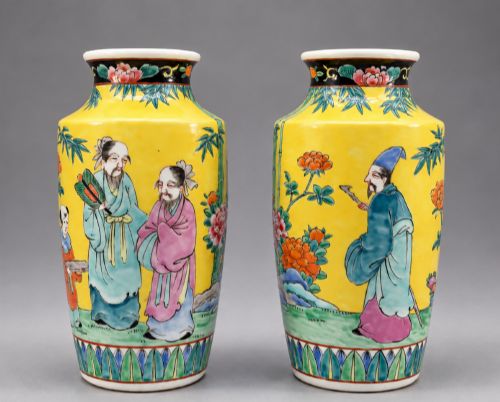
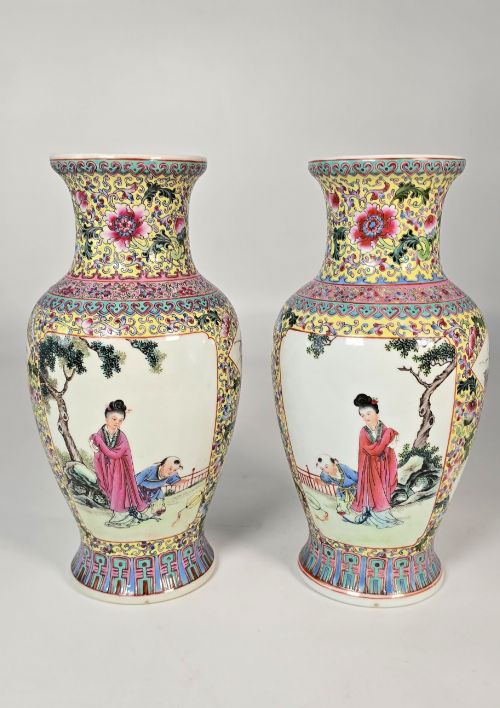
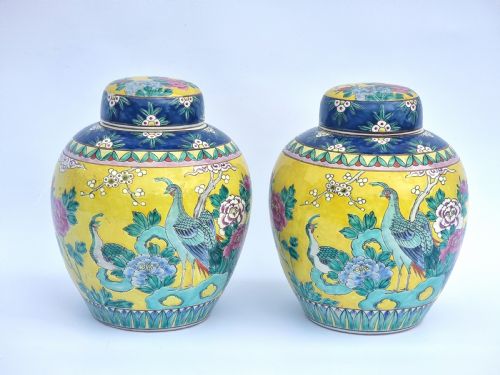
Yellow ground porcelain brings brilliant lemon and chrome hues to your interior, offering pieces like Chinese ginger jars, Georgian teacups and imposing floor vases.
Yellow Ground Porcelain
Yellow ground porcelain centres on ceramics where a striking yellow colour dominates the background or glaze, creating a vibrant canvas for painted decoration. When you search for yellow ground porcelain, you encounter items ranging from Georgian tea wares to substantial twentieth-century Chinese vases and cachepots.
The selections available here lean heavily towards Chinese production from the nineteenth century and the Chinese Republic period, alongside European houses such as Chamberlain Worcester, Royal Doulton, and Mason's. Forms vary widely, taking the shape of ginger jars, chargers, monumental floor vases, and table lamps.
The style spans Chinoiserie, Rococo Revival, and Art Deco aesthetics, demonstrating how diverse makers adopted this bright palette across different eras. Many pieces incorporate intricate overglaze enamel painting depicting birds, flowers, and figures against the rich yellow backdrop.
Materials and methods
Makers achieved the distinct background colour by applying specialised yellow glazes or overglaze enamels directly to fired porcelain bodies. In many examples, gold leaf accents or intricate enamel detailing were added on top of this yellow field.
Surface decoration frequently involved hand painting, as seen in ginger jars and tea wares bearing detailed bird and floral motifs. European factories like Worcester and Derby combined traditional porcelain paste with coloured grounds and gilt highlights, while Chinese workshops utilised layered enamel techniques.
Fancy birds stare out from ginger jars and teacups, proving that nineteenth-century artisans possessed a magnificent sense of drama.
Distinctions in quality
Quality rests upon the crispness of the enamel work, the evenness of the yellow ground, and the delicacy of the underlying porcelain body. Superior pieces display finely controlled brushwork in motifs such as fancy birds and floral panels, whereas lesser examples show heavier, less precise application.
The depth and consistency of the glaze dictate visual appeal, with premium items maintaining a smooth, luminous finish free of heavy pooling or dull patches. Maker attribution and historical significance also elevate certain pieces, distinguishing standard decorative wares from exceptional collector items.
Chamberlain Worcester·Royal Doulton·Derby·Dresden
The Yellow Ground Porcelain Glossary
- Yellow ground
- A ceramic surface featuring a predominant yellow glaze or enamel background. This bright field serves to highlight contrasting painted scenes or floral medallions.
- Overglaze enamel
- Pigments applied over the fired and glazed ceramic body and fixed in a second, lower-temperature kiln firing. This technique allows for a brilliant range of colours including greens, pinks, and reds.
- Cachepot
- An ornamental flowerpot cover designed to hold a plain plant pot. These ceramic vessels often feature decorative yellow grounds and painted panels.
- Charger
- A large decorative plate or platter intended for display rather than table service. They frequently showcase elaborate painted motifs and bold background colours.
- Chinoiserie
- A European artistic style reflecting Chinese motifs and techniques. Makers in England and Europe adopted this aesthetic on porcelain bodies.
Yellow Ground Porcelain: Frequently Asked Questions
How do I clean antique porcelain?
Wash pieces gently by hand using lukewarm water and mild soap, avoiding harsh scrubbing or dishwashers. Dry them thoroughly with a soft, lint-free cloth to protect surface enamels and any gold leaf.
Take extra care with items that have been adapted as table lamps or fitted with fabric elements. Keep moisture away from wiring and older repairs to preserve the material.
Are these items safe for daily use?
Most antique porcelain pieces featuring delicate overglaze enamels and gold leaf are best suited for display rather than heavy dining use. Enamels can wear down over time with regular washing and cutlery contact.
Teacups and saucers from Georgian or Victorian periods function well for occasional gentle use, but decorative chargers and large vases should remain strictly ornamental.
How do I date a yellow ground vase?
Examine the base for maker marks, factory stamps, or reign marks that indicate the period of production. stylistic clues such as the form of the piece and the palette also provide clear chronological boundaries.
Compare the quality of the paste and enamel work against known examples from periods like the Chinese Republic era or nineteenth-century European factories.
Can I convert lamp bases back into vases?
Many large floor and table lamps started life as vases before receiving electrical fittings. Reverting them is technically possible, though drilling holes for wires often alters the original vessel permanently.
Most collectors choose to appreciate them in their converted functional state, as these adaptations frequently date back decades and form part of the item's history.