



Yellow Famille Rose
Yellow famille rose brings together vibrant enamel palettes and striking ceramic forms that instantly brighten a room.
Yellow Famille Rose
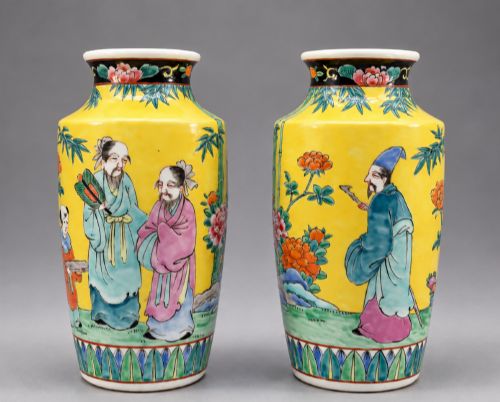
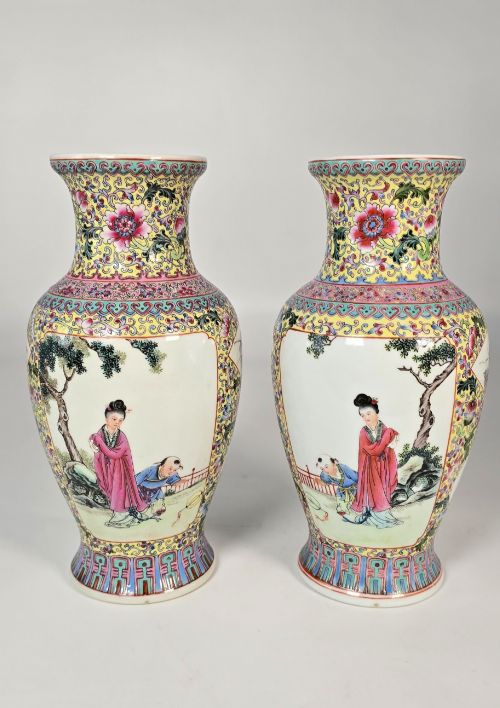
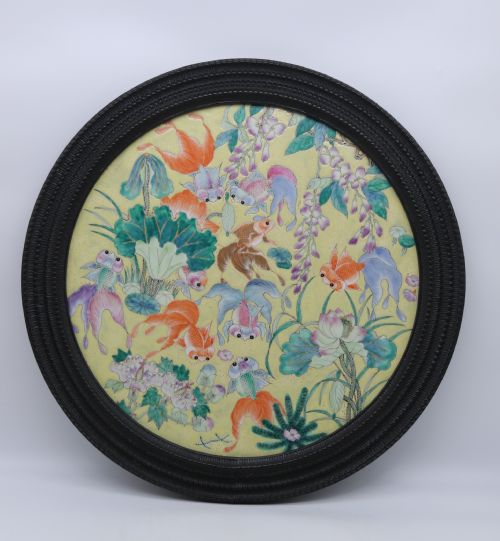
When you search for yellow famille rose, you encounter ceramics defined by an opaque pink enamel alongside bright yellow grounds, primarily originating from the nineteenth century and the Chinese Republican period. These pieces span significant floor vases, moon flasks, snuff bottles, and framed wall panels, showcasing detailed hand painting.
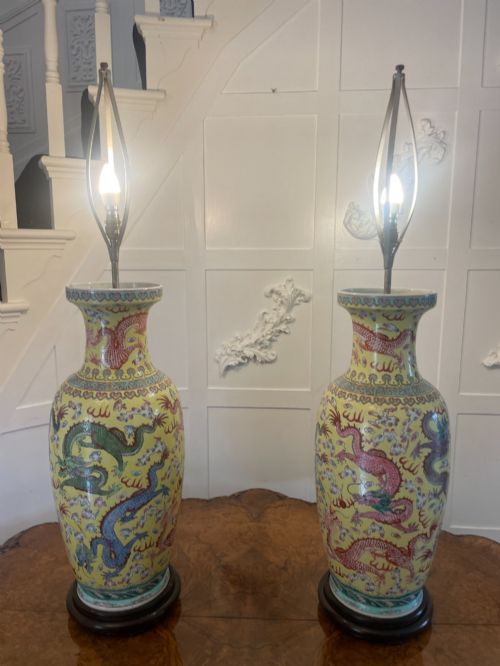
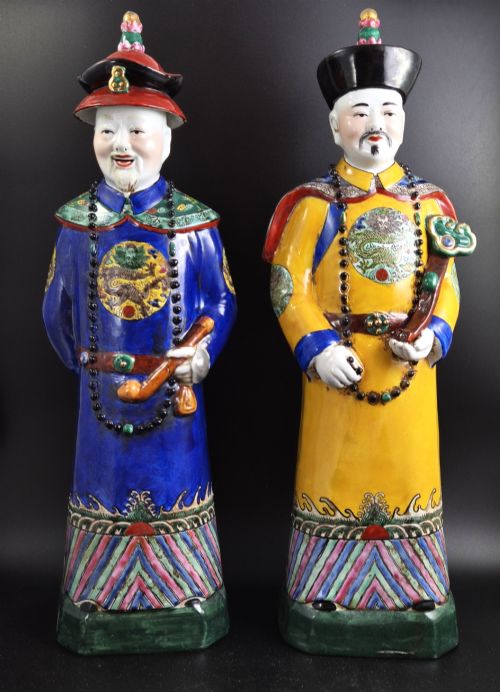
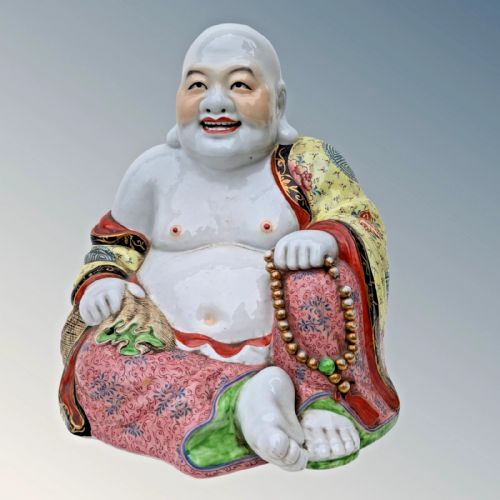
The objects appearing on this page lean heavily towards large decorative vases and figural works, often produced as pairs. You will also find table lamps adapted from traditional porcelain bodies, alongside smaller cabinet items like snuff bottles.
The aesthetic bridges Qing Dynasty traditions and later Republican period artistry, combining formal court styles with accessible export wares. Each object demonstrates the enduring appeal of contrasting pink and yellow enamel tones on high-fired porcelain.
Materials and construction
The foundation of yellow famille rose is hard-paste porcelain, shaped into vessels or figures and coated in a smooth glaze before firing. Artisans then applied overglaze enamels by hand, using the characteristic pink and yellow pigments that define the palette.
Vitreous enamel and traditional glaze layers interact to create varied surface textures, from flat matte finishes to rich, glossy colour fields. Selected pieces incorporate brass fittings or custom woodwork, particularly items converted into table lamps.
Yellow Famille Rose Retail Price Guide 2026
Typical asking prices for yellow famille rose among the pieces listed under this phrase on Sellingantiques today, from the lower quarter to the upper quarter. They describe what is for sale here now, not the wider market.
Listings feature items spanning the nineteenth century through the 1940s, encompassing both Qing Dynasty styles and the Chinese Republican period.
Judging the work
Quality in yellow famille rose rests on the precision of the hand painting and the evenness of the yellow ground colour. Superior examples display crisp detail in figural or aquatic scenes and careful application of the overglaze enamels without blurring.
The weight, proportion, and structural integrity of the porcelain body further separate standard export pieces from monumental display items. Consistency in the glaze and the clarity of the enamel pigments reveal the skill behind the workshop.
The Yellow Famille Rose Glossary
- Famille rose
- A palette of opaque overglaze enamels introduced in Chinese porcelain during the Qing Dynasty, distinguished by its characteristic pink colour derived from colloidal gold.
- Overglaze enamel
- Pigments applied to a previously fired and glazed ceramic body, requiring a subsequent low-temperature kiln firing to fuse the colours to the surface.
- Moon flask
- A flattened circular porcelain vessel with a short neck and two loop handles, often resting on a small oval base.
- Republican period
- The era in Chinese history following the fall of the Qing Dynasty in 1911, spanning several decades of diverse ceramic production.
- Snuff bottle
- A small container designed to hold powdered tobacco, typically fitted with a tiny spoon and a tight stopper.
Yellow Famille Rose: Frequently Asked Questions
How do I clean yellow famille rose porcelain?
Dust these porcelain surfaces gently with a soft, dry cloth to protect the delicate overglaze enamels from abrasion.
Avoid using chemical cleaners or immersing antique pieces in water, as harsh substances can damage the enamel pigments.
Can I use these vases as lamps?
Many yellow famille rose vases were adapted as table lamps during the twentieth century, often using brass fittings.
Check whether the ceramic body was drilled for wiring during conversion, as this detail influences the original state of the piece.
How do I spot a Republican period piece?
Chinese Republican period ceramics often display innovative painting styles, lighter porcelain bodies, and varied reign or studio marks.
Compare the brushwork on panels and vases with nineteenth-century examples to understand the shift in decorative techniques.
What defines a yellow ground?
The yellow ground refers to the dominant yellow enamel applied across the exterior surface of the porcelain vessel as a backdrop for famille rose roundels or floral motifs.
An evenly saturated yellow field highlights the contrasting pinks and greens of the surrounding enamel decoration.