
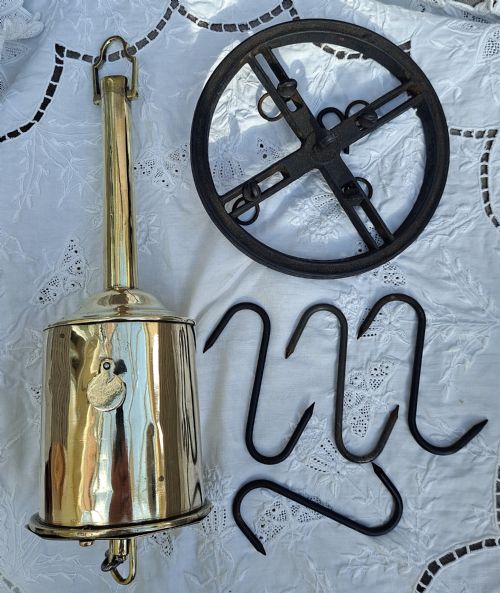
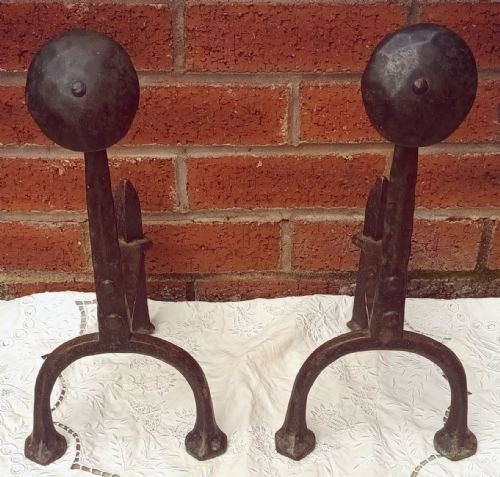
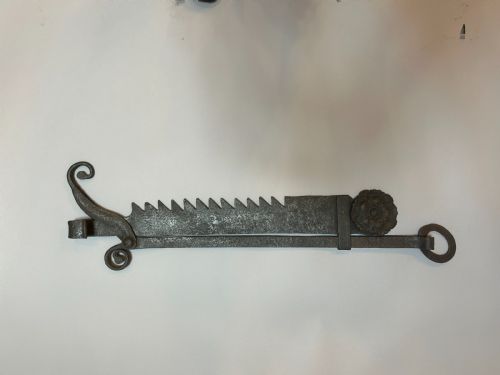
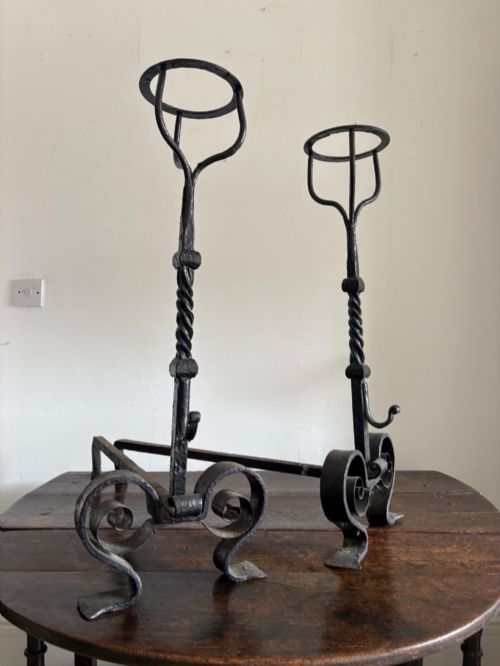
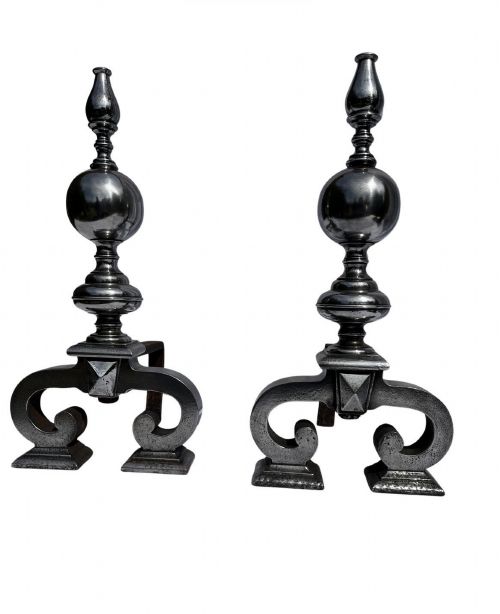
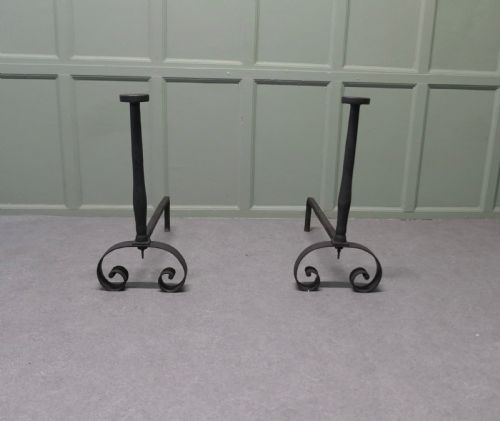

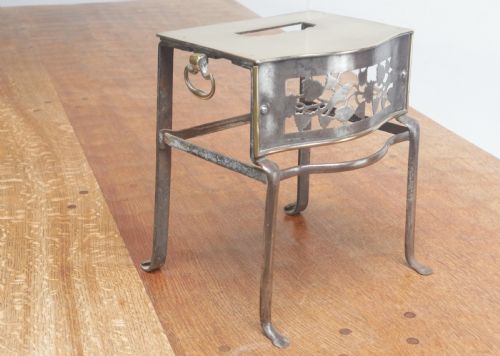
Wrought Iron Hearth Accessory
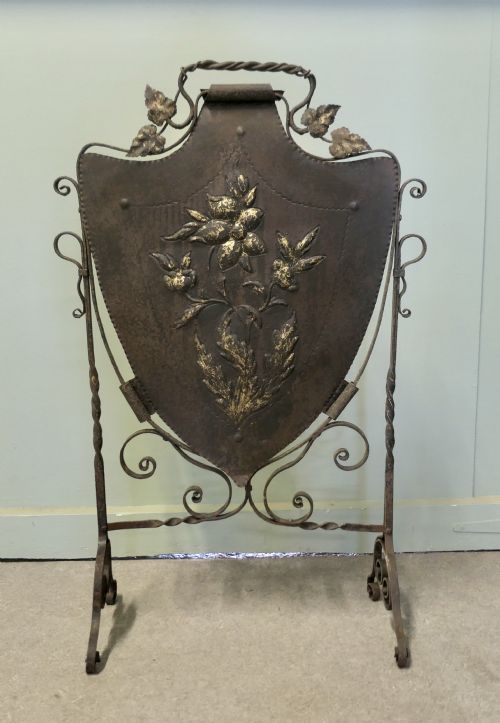
These wrought iron hearth accessory pieces anchor a fireplace with honest metalwork, combining functional utility and enduring style.
Wrought Iron Hearth Accessory
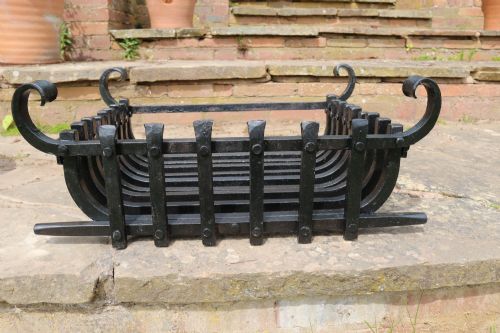
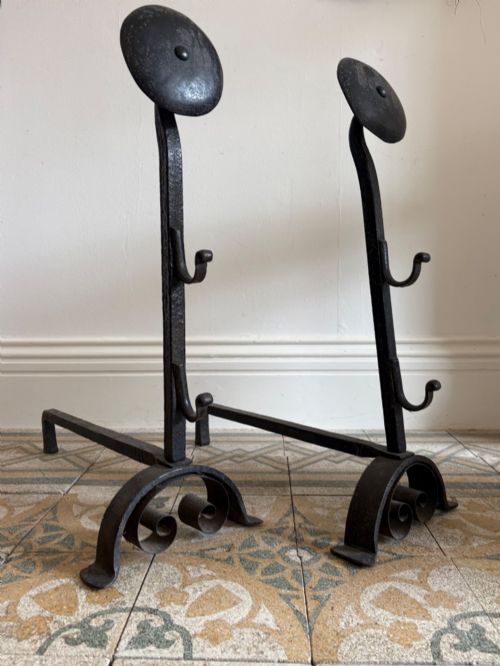
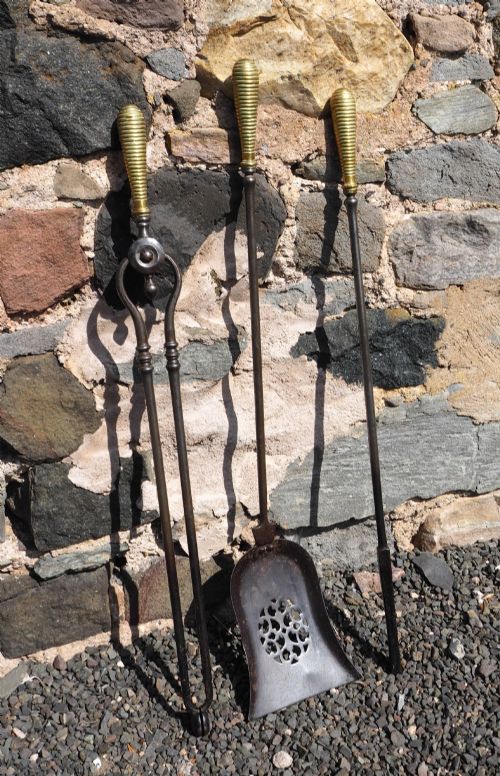
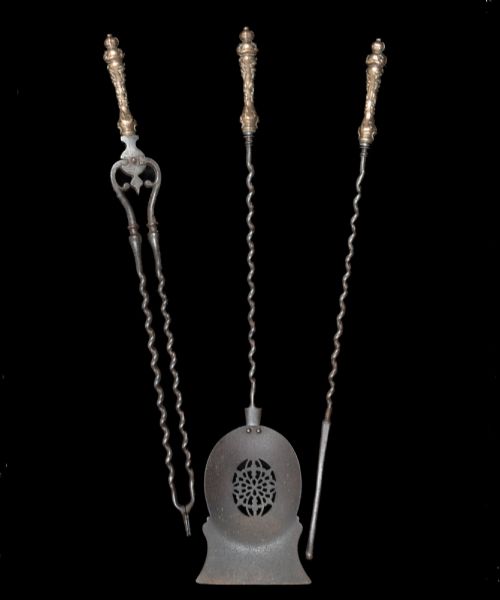
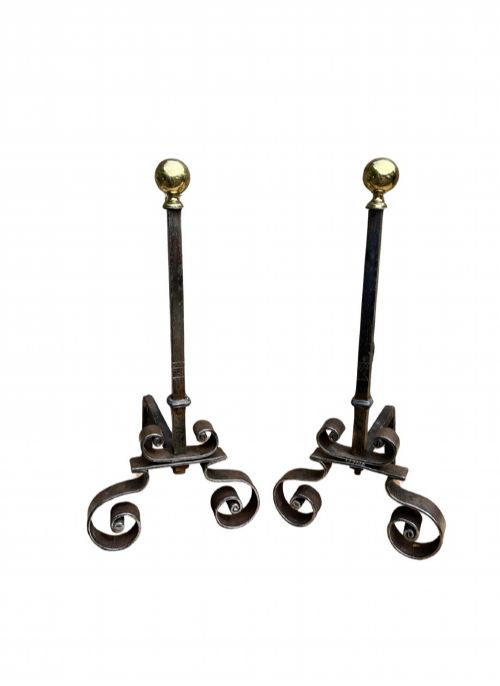
A wrought iron hearth accessory spans functional items such as fire baskets, andirons, fire dogs, footmen, and companion tool sets built for open fires. The selection most commonly includes heavy pairs of andirons and fire dogs alongside robust baskets and companion tool sets.
Makers shaped these utilitarian objects during the Georgian, Victorian, and Arts and Crafts periods, incorporating styles from Gothic Revival to French Country. Pieces range from monumental nineteenth-century English andirons to smaller country-house footmen and log bins.
Originating primarily from English and French workshops, these items served daily domestic tasks involving coal, logs, and embers. Surviving examples reflect the practical needs of period hearths through sturdy construction and straightforward design.
Materials and methods of construction
Blacksmiths shaped wrought iron and steel manually, utilising forging techniques that produced durable bars, scrolls, and legs capable of withstanding intense heat. Many items combine wrought iron frames with cast iron fire baskets or steel tool shafts.
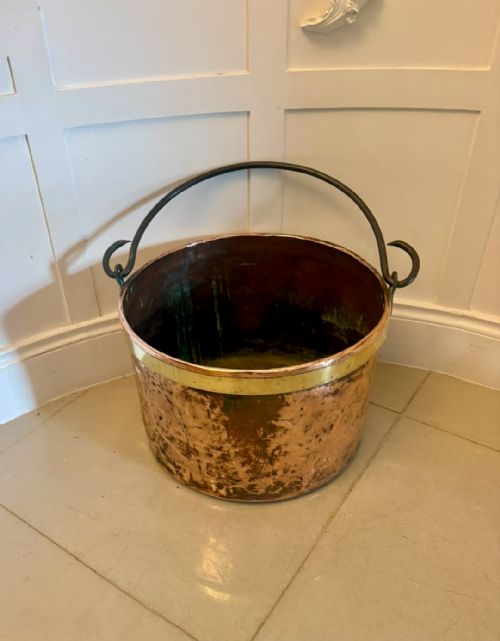
Makers introduced contrasting metals such as brass and copper for log bins, coal buckets, and decorative accents, pairing polished surfaces with matte iron frameworks. Rivets, hand-forged joints, and welded elements secured the heavy components together.
Some nineteenth-century iron sets include pipe lighters and ember tongs designed specifically for lighting pipes by the hearth.
Distinctions in construction and design
Subtleties in hand-forged detail separate standard utilitarian ironwork from finer decorative pieces, visible in the symmetry of scrolls and the weight of the metal. Heavier gauge iron and substantial scale denote pieces intended for large country-house hearths.
The integration of mixed materials, such as polished steel and brass mounts fixed to iron bases, indicates higher execution standards. Maker involvement and regional stylistic interpretations also influence the standing of individual hearth components.
John Linwood of Birmingham
The Wrought Iron Hearth Accessory Glossary
- Andiron
- A horizontal metal support raised on legs, designed to hold logs in an open fireplace. Also known as a fire dog, these are frequently found in matched pairs.
- Fire Basket
- A metal grate structured to hold coal or wood above the hearth floor. These often incorporate cast iron elements within an iron frame.
- Footman
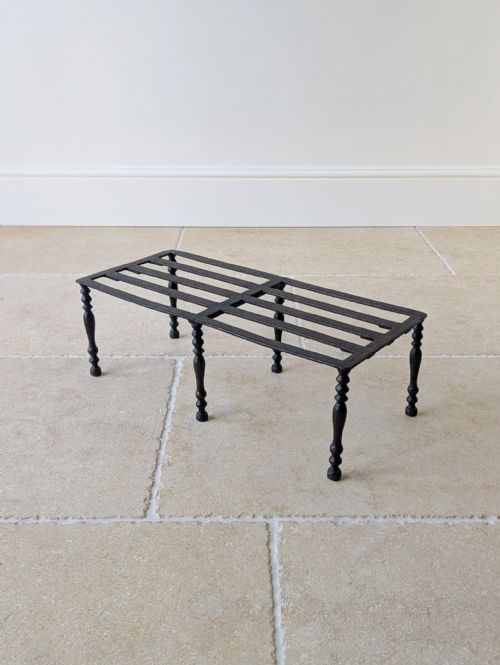
- A low metal stand placed near the hearth to keep food or kettles warm. Georgian examples usually feature steel tops and sturdy iron legs.
- Chimney Crane
- A pivoting arm installed inside a large chimney to swing pots over the fire. These heavy iron mechanisms date back to the eighteenth century.
- Fender
- A low metal guard placed around the hearth to contain ash and embers. They appear in iron, steel, and brass configurations.
Wrought Iron Hearth Accessory: Frequently Asked Questions
What are wrought iron hearth accessories used for?
These pieces assist with managing wood and coal fires, supporting logs, and holding companion tools near the hearth.
Items like andirons elevate fuel for better airflow, while tool sets and baskets handle daily maintenance.
How do I identify a Georgian andiron?
Georgian andirons typically exhibit restrained forms, straightforward forging, and materials like wrought iron or brass.
They reflect eighteenth-century domestic design priorities through robust construction without excessive ornamentation.
Are these pieces suitable for active fireplaces?
Most items are constructed from heavy wrought iron, steel, or cast iron designed for exposure to heat.
Their sturdy materials allow them to function in active hearth settings just as they did historically.
What defines Arts and Crafts hearth pieces?
Arts and Crafts pieces emphasise visible hand-forging, honest construction methods, and minimal applied decoration.
They often feature simple lines in wrought iron, sometimes paired with hammered copper.