


Firewood Bucket
A firewood bucket serves to hold logs by the hearth, combining everyday practicality with the warmth of aged metal and timber.
Firewood Bucket
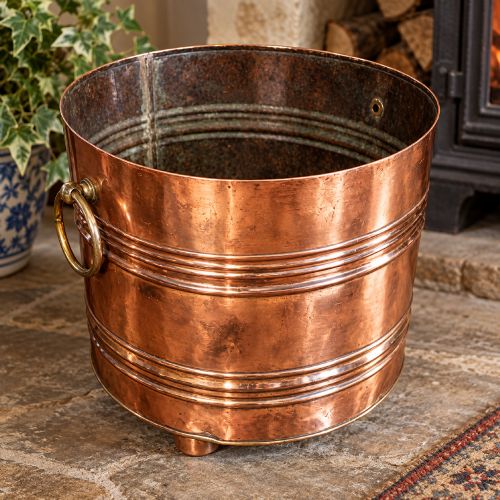
A firewood bucket provides a sturdy container for storing logs beside the fireplace, drawing on utilitarian forms from past centuries. Buyers examining this page encounter pieces originating primarily from the nineteenth century, including Victorian examples alongside rustic country and Arts and Crafts designs.
Materials and construction methods
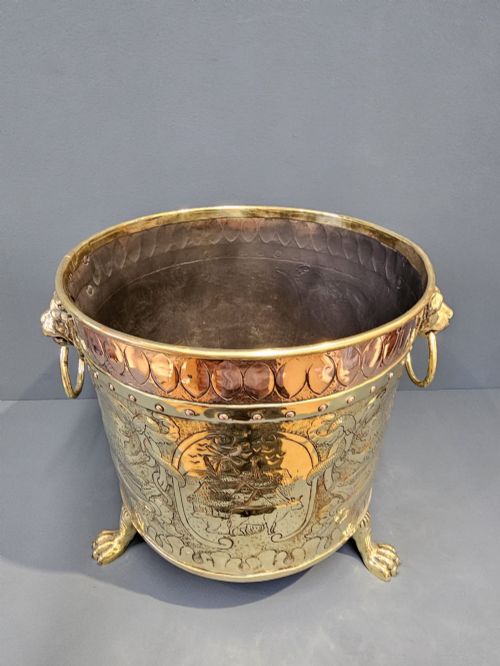
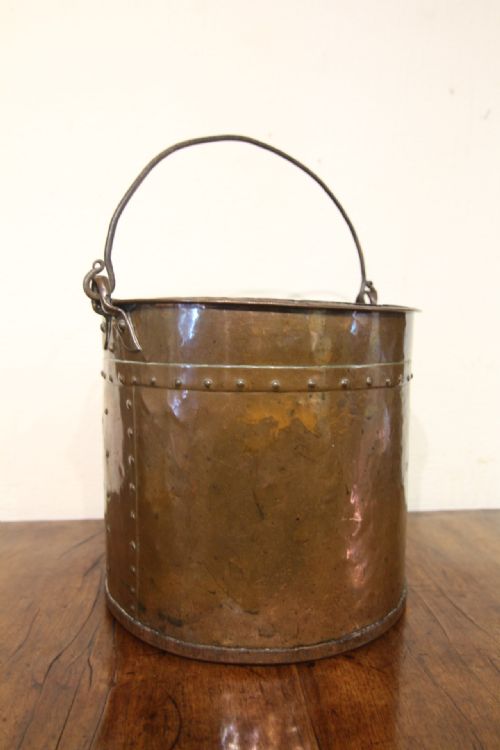
Maker techniques rely heavily on sheet metal manipulation, joining copper and brass bodies with visible rivets and securing them with wrought iron handles or copper bands. Many vessels feature hand-embossed surface decoration, particularly within Victorian and Arts and Crafts examples.
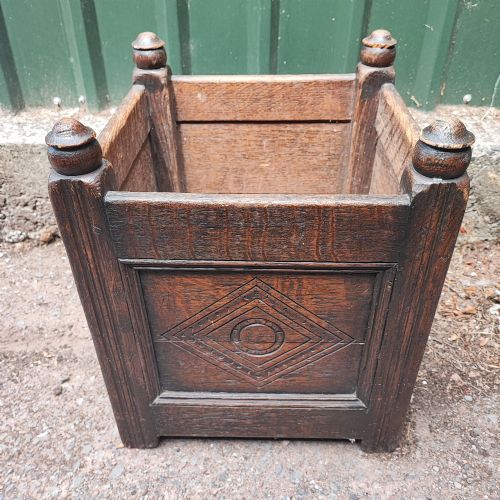
Timber versions utilise solid oak assembled with traditional joinery to withstand the weight of heavy timber logs. Iron elements appear as structural frames, swing handles, and riveted supports that reinforce the softer copper and brass bodies.
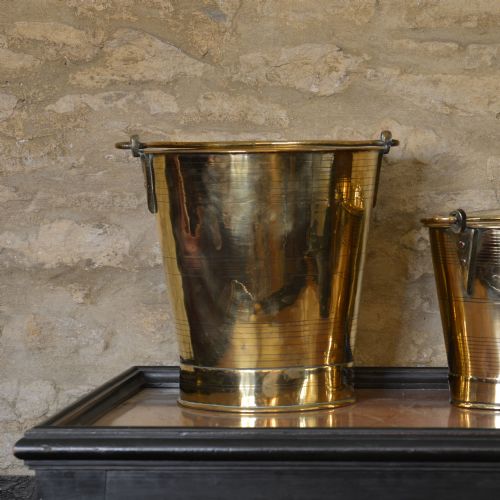
Listings demonstrate that nineteenth-century copper and brass dominate the selection of firewood containers, complemented by Arts and Crafts designs.
Distinctions in craftsmanship and condition
Quality rests in the weight of the metal, the integrity of the riveted joints, and the crispness of any hand-embossed surface detail. Superior examples retain their original iron swing handles, structural frames, and honest patination without excessive thinning of the copper or brass walls.
Lighter utilitarian vessels and later mass-produced pieces lack the substantial gauge metal and careful hand-finishing found in the best nineteenth-century work. Originality of components, such as matching brass bands and uncompromised bases, elevates a piece above standard utility items.
Henry Loveridge
The Firewood Bucket Glossary
- Dinanderie
- The traditional craft of working brass, copper, and bronze into decorative vessels and utilitarian objects. This medieval term applies to beaten and chased metal items produced in European workshops.
- Cauldron
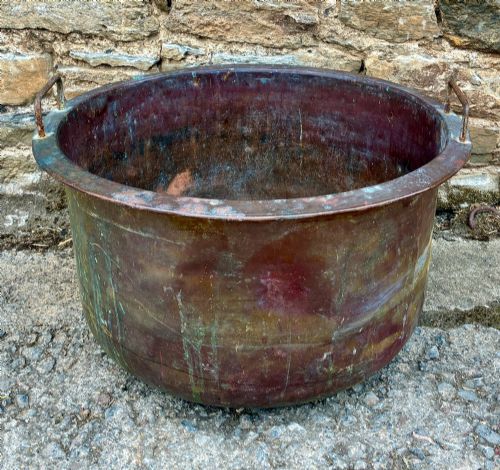
- A large round metal vessel featuring a swing handle, originally used over an open fire but later adopted for holding fuel logs. These pieces typically display heavy riveted construction.
- Coal helmet
- A specialised scuttle shaped with an elevated mouth designed for pouring fuel cleanly into a grate. The form combines a sloped body with a secure rear handle.
- Jardiniere
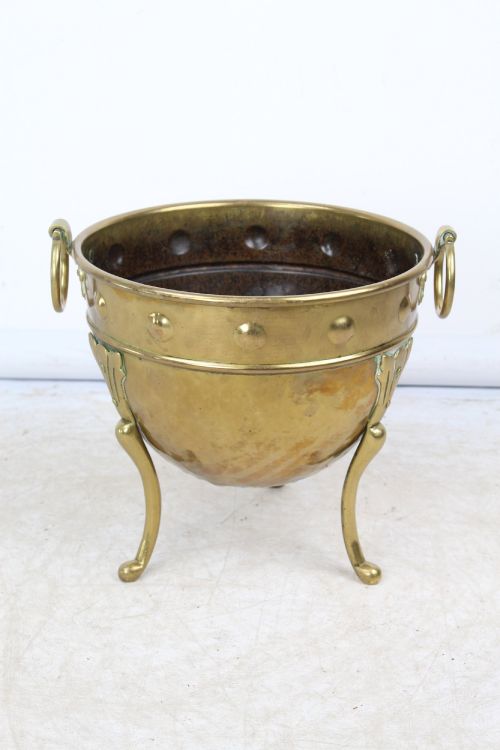
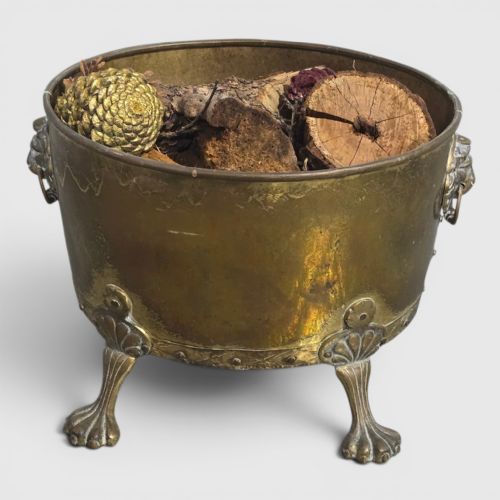
- An ornamental pot or container intended for holding plants, frequently repurposed as a fireside log bin. These items often feature decorative brass bands or embossed surfaces.
- Repoussé
- A metalworking technique where the artisan hammers the metal from the reverse side to create a raised design on the front. This method appears frequently on Victorian decorative metalwork.
Firewood Bucket: Frequently Asked Questions
What metals were used for firewood buckets?
Makers relied principally on copper and brass for sheet metal vessels, often combining them with wrought iron for handles, frames, and structural rivets.
Timber also appears in the form of solid oak for traditional log boxes designed to sit directly on the floor.
How do I date an antique metal bucket?
Dating relies on examining manufacturing techniques, such as hand-beated surfaces, heavy riveted joints, and the specific style of the iron swing handles. Victorian and nineteenth-century pieces display distinct decorative motifs like embossed brass bands and Arts and Crafts detailing.
Standardised machine production and lighter gauges generally point toward later twentieth-century manufacturing.
Can these buckets be used for plants?
Many copper and brass vessels function equally well as indoor plant holders or garden planters, a dual purpose reflected in their period descriptions as jardinières.
Owners should check for watertight integrity before placing live plants directly inside unlined metal containers.
How should I clean aged copper and brass?
Most collectors prefer to leave the natural dark patination and accumulated age intact rather than polishing the metal to a bright shine.
Gentle dusting with a dry cloth preserves the historical surface without removing the character earned over centuries of use.