

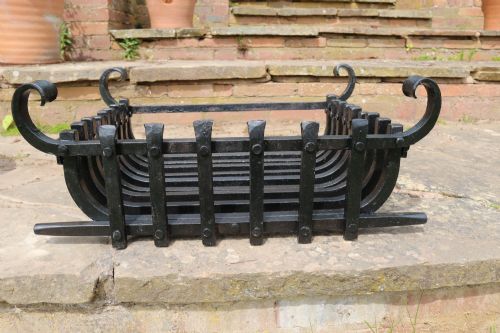


Arts and Crafts Log Basket
These arts and crafts log basket pieces combine functional hearth metalwork with characteristic period design, built to hold winter fuel by the fire.
Arts and Crafts Log Basket
When you search for arts and crafts log basket items, you encounter utilitarian hearth furniture designed during the Victorian and early twentieth century. The selection ranges from copper and brass bins to wrought iron fire baskets and oak carriers.
You are most likely to meet copper log buckets and bins mounted in iron frames or standing alone with hand-hammered details. These pieces date from the nineteenth century through the 1930s and serve as substantial fireplace accessories.
The forms extend to coal scuttles, log carriers, and fire grates reflecting Arts and Crafts and Art Nouveau aesthetics. Their origins lie in British workshops and retail houses of the period.
How they were made
The construction relies heavily on sheet copper and brass shaped by hand, often paired with robust wrought iron frames and fittings. Iron provides structural strength for handling heavy loads of wood, while copper and brass offer warm reflective surfaces near the hearth.
Arts and Crafts Log Basket Retail Price Guide 2026
Typical asking prices for arts and crafts log basket among the pieces listed under this phrase on Sellingantiques today, from the lower quarter to the upper quarter. They describe what is for sale here now, not the wider market.
Listings feature items spanning from the Victorian era up to 1930, utilising copper, oak, and wrought iron.
What varies in quality
The distinction between standard utility items and finer pieces rests on the weight of the metal and the subtlety of hand-worked surfaces. Heavier copper gauges and carefully forged iron frames indicate superior construction intended for daily domestic use.
Design integration also sets examples apart, where structural ironwork and decorative metal bodywork complement each other harmoniously. Authenticity of materials and period manufacturing methods determine the standing of each piece.
Liberty London
The Arts and Crafts Log Basket Glossary
- Arts and Crafts
- A design movement promoting hand craftsmanship and traditional materials over industrial mass production. This style influences the form and decoration of many hearth accessories.
- Wrought iron
- Iron beaten and shaped by hand while hot, yielding a fibrous structure and distinct texture. It provides durable frames for copper and brass bins.
- Coal scuttle
- A container specifically designed for holding and carrying coal to a fireplace, often sharing forms with wood buckets. These vessels typically feature hinged lids or swinging handles.
- Fire basket
- An open metal grate designed to hold burning fuel within a fireplace opening. They often incorporate decorative ironwork reflecting medieval or vernacular styles.
Arts and Crafts Log Basket: Frequently Asked Questions
What materials make up these log baskets?
The listings show items constructed primarily from copper, brass, wrought iron, and oak. Galvanised metal and zinc also appear in specific utilitarian pieces.
These materials were chosen for their durability and heat resistance near active fireplaces.
How do I date an arts and crafts log bin?
Dating relies on stylistic clues, construction methods, and materials recorded from the nineteenth century to the 1930s. Art Nouveau influences and hand-beaten copper surfaces point toward the turn of the century.
Later pieces from the 1930s often feature simpler iron framing and more industrial assembly techniques.
Were these pieces used for coal or wood?
Many vessels served a dual purpose for both coal and logs, depending on household fuel requirements. Descriptions often interchange terms like coal scuttle, log bin, and coal bucket.
Their sizing and robust metal construction accommodated dense solid fuels.
How do I care for antique copper and iron?
Regular dusting and gentle cleaning preserve the natural patina accumulated on the metal over decades of use. Avoid abrasive polishes that strip away historical surface character.
Iron frames benefit from occasional light oiling to prevent active corrosion in damp environments.