

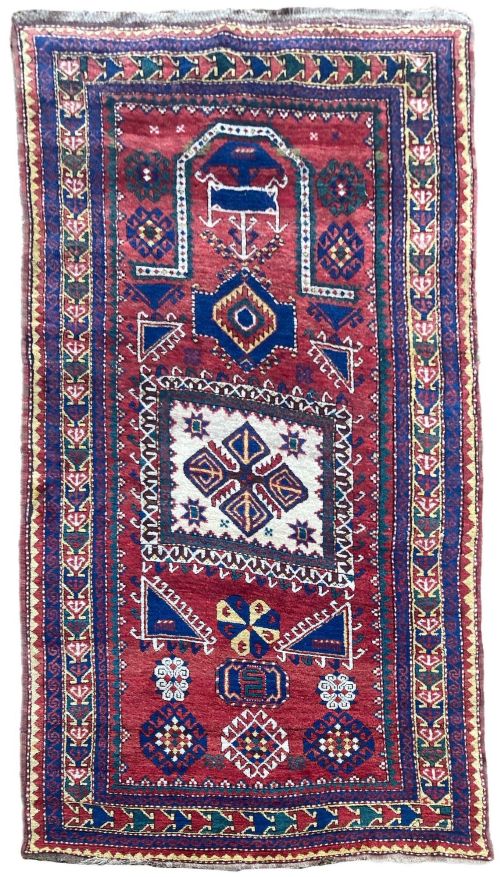

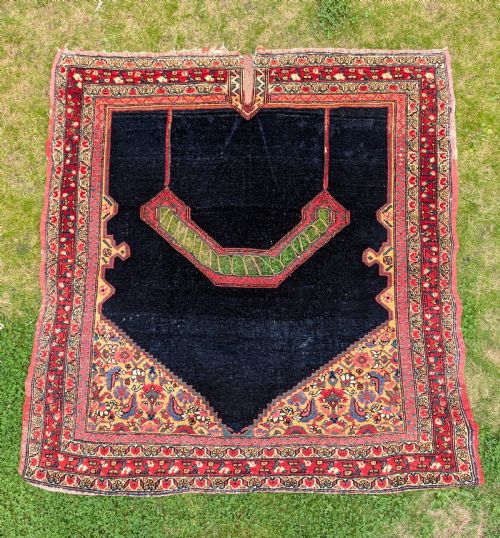
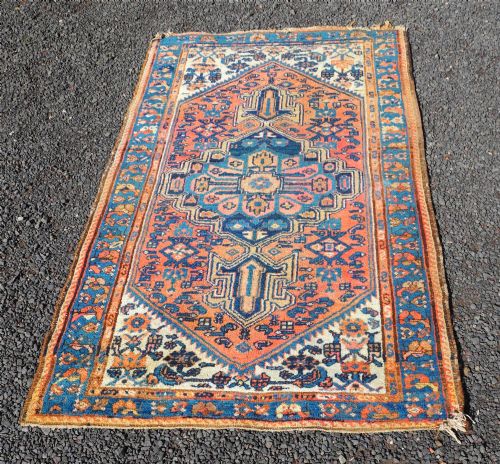
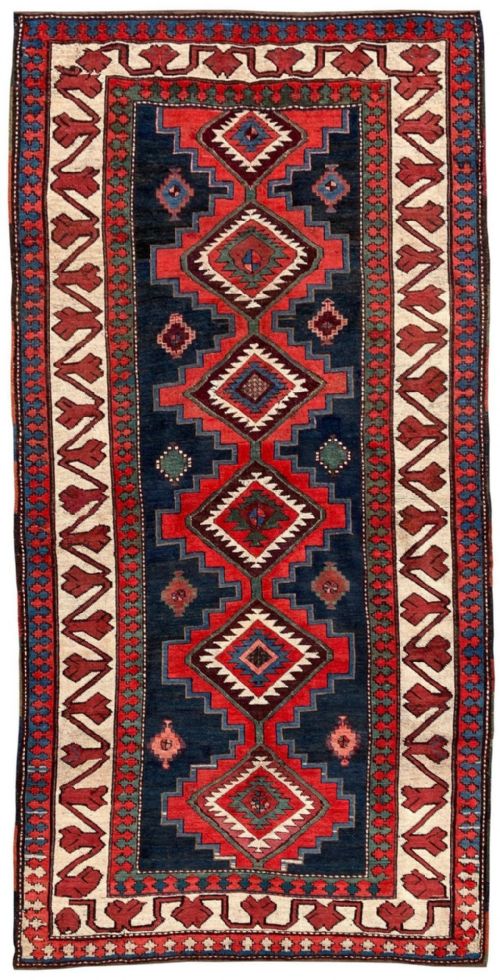
Woven Wool Tribal Rug
A woven wool tribal rug brings the geometry of nomadic craft and centuries of village weaving directly onto your floor.
Woven Wool Tribal Rug
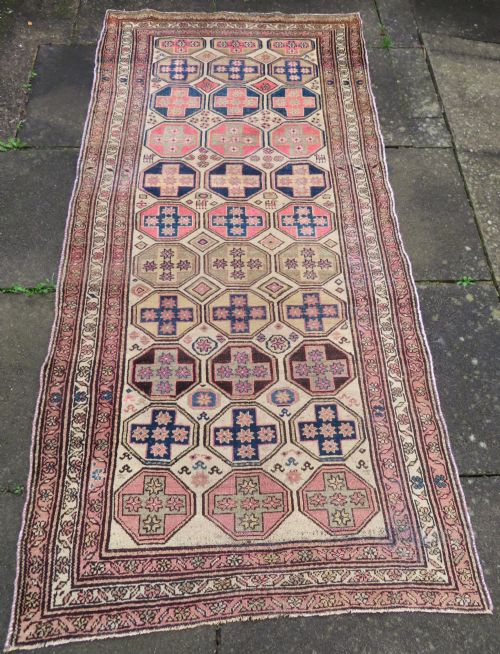
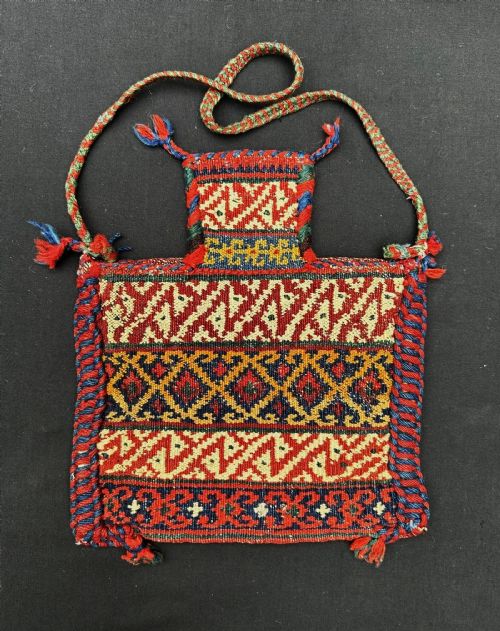
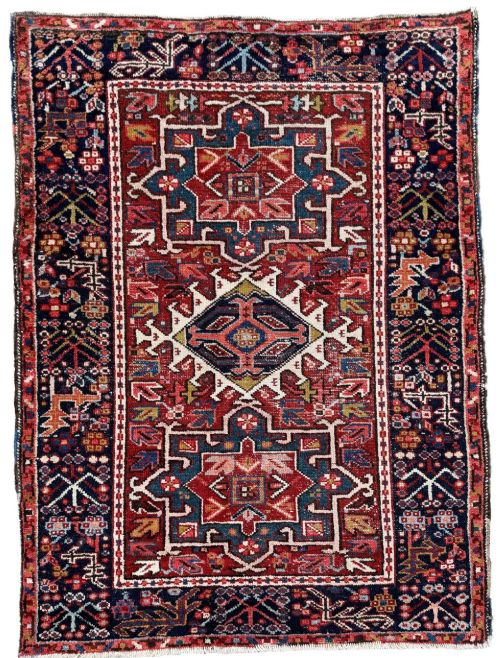
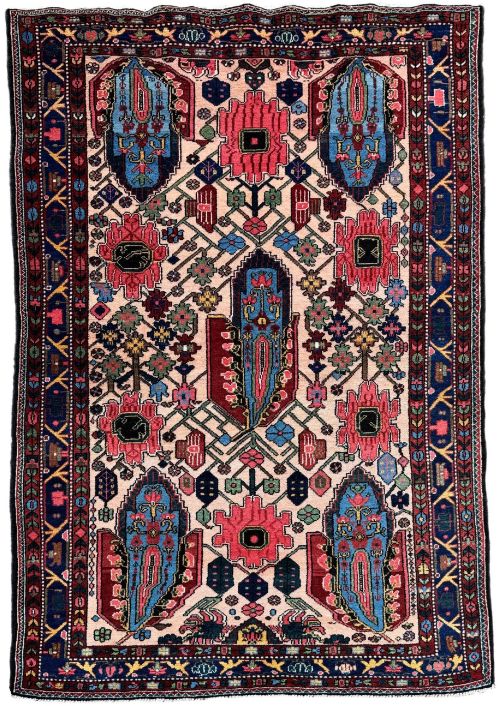
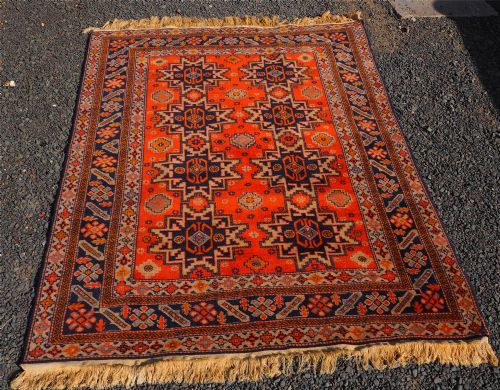
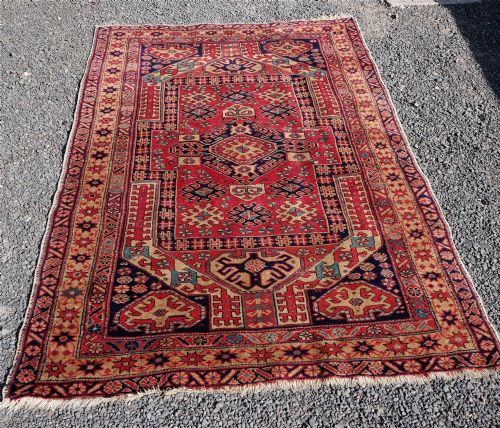
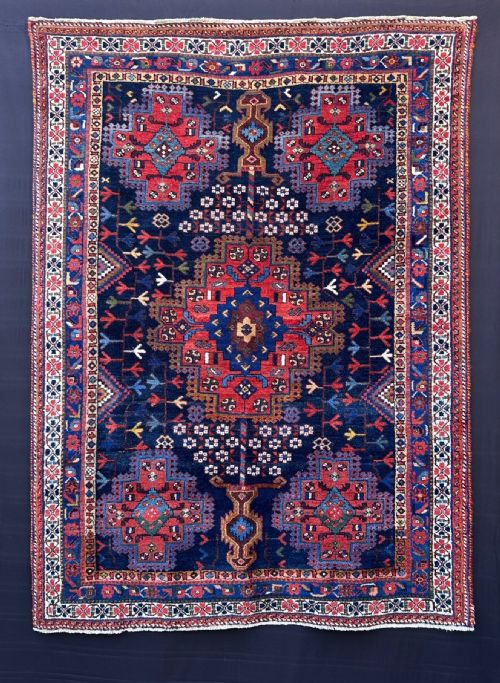
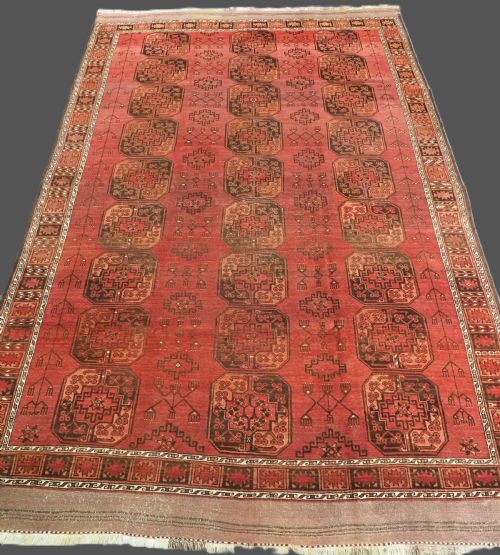
A woven wool tribal rug encompasses floor coverings and practical domestic textiles produced by nomadic and village groups across Persia, the Caucasus, Anatolia, and Central Asia. These pieces range from substantial main carpets and prayer rugs to smaller utility items like saddle bags, storage bags, and salt bags.
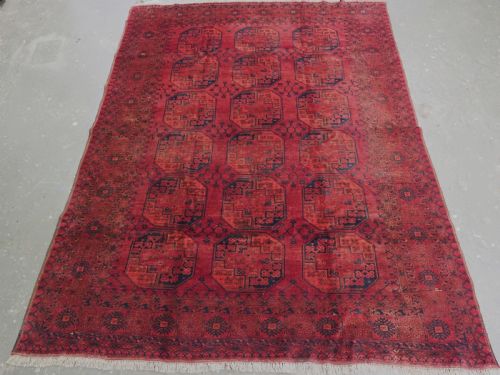
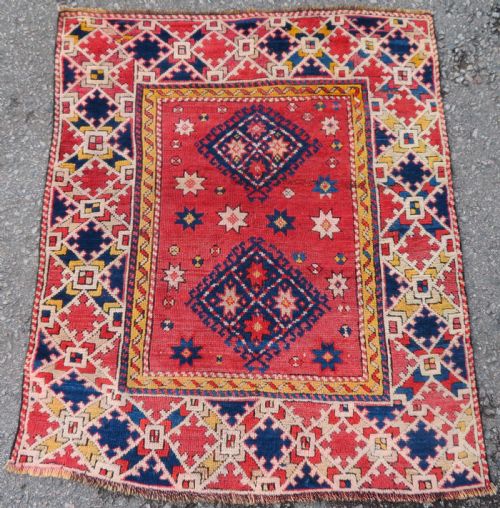
The most common examples encountered in this selection originate from specific regional traditions, including Kazak, Afshar, Bakhtiar, Khamseh, and Ersari Turkmen groups. Each regional weaving tradition carries distinct design vocabularies rooted in tribal identity and practical utility.
Dated pieces span from the late nineteenth century through to the early decades of the twentieth century, capturing a period when traditional vegetable dyes and hand-spun materials remained standard practice before synthetic industrial dyes became widespread.
Materials and Construction
These textiles rely predominantly on hand-spun wool for the pile and structure, often paired with cotton foundations in specific regional workshops or later village productions. Artisans utilised natural dyes derived from local plants and minerals to achieve deep red, blue, and earthy tones that age with considerable character.
Beyond standard pile carpets, construction methods include flatwoven kilim techniques and supplementary weaves used for utilitarian items such as spindle bags and saddle covers. Artisans occasionally integrated decorative elements like glass beads and cowrie shells into specific bags and trappings.
Nomadic weavers packed these portable textiles onto animals, meaning your floor rug once doubled as camel luggage.
Assessing Quality and Execution
Quality in these textiles rests upon the precision of the knotting or weaving, the purity of the wool, and the stability of the natural dyes used across the field. Tighter structures and well-balanced proportions separate finer tribal room-size carpets from simpler utilitarian grain sacks.
The integrity of the original borders, the vibrancy of the colour palette, and the preservation of secondary elements like kilim ends dictate the standing of a piece within its regional class.
The Woven Wool Tribal Rug Glossary
- Pile
- The vertical or slanted soft surface of a rug formed by the cut ends of knots tied to the warp and weft threads. This creates the tactile surface of the textile.
- Warp
- The stationary longitudinal threads stretched tightly on the loom over which the weft and knots are woven. It forms the structural skeleton of the rug.
- Weft
- The horizontal threads passed across the warp threads after each row of knots to bind the structure together. In flatweaves, the weft creates the visible pattern itself.
- Kilim
- A flatwoven textile produced without a raised pile by tightly interweaving warp and weft strands. These are utilised both as floor coverings and functional storage pieces.
- Medallion
- A central ornamental design motif placed in the middle of the carpet field. It frequently appears as a geometric or octagonal focal point in tribal weaving.
Woven Wool Tribal Rug: Frequently Asked Questions
What is a tribal rug?
A tribal rug is a textile woven by nomadic, semi-nomadic, or village artisans rather than urban commercial manufactories. These pieces reflect local heritage through traditional geometric patterns and regional colour palettes.
They served functional roles in daily nomadic life, ranging from floor coverings and tent dividers to animal trappings and storage receptacles.
How do I care for wool rugs?
Regular gentle vacuuming without a rotating power brush helps remove grit from the wool pile without damaging the foundation threads. Professional cleaning suited for antique textiles should be utilised periodically.
Keeping the rug out of direct, harsh sunlight preserves the natural dyes and prevents the wool fibres from drying out over time.
Where were these rugs made?
The pieces originate across a broad geographic expanse spanning Persia, the Caucasus region, Anatolia, and Central Asia. Specific groups such as the Afshar, Kazak, and Ersari Turkmen maintained distinct weaving centres and nomadic routes.
Local materials and regional motifs help attribute pieces to specific provinces like Kerman or Khorassan.
How can I date an old rug?
Dating relies on structural analysis, wool quality, dye analysis, and stylistic markers specific to the late nineteenth and early twentieth centuries. Natural colour variations and hand-spun textures often indicate older periods before industrial materials entered common use.
Specific regional designs and historical markers help narrow down the decade of production.