
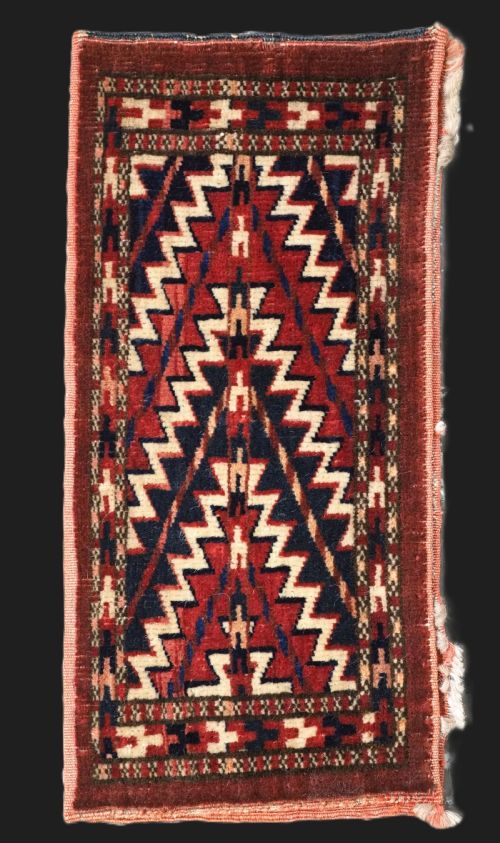


1900s Turkmen Rug
These 1900s turkmen rug examples bring Central Asian tribal artistry into a room with rich red colour and bold geometric patterns.
1900s Turkmen Rug
A 1900s turkmen rug represents the textile traditions of Central Asian tribal makers working in wool around the turn of the twentieth century. These pieces encompass room-size main carpets, smaller scatter rugs, and specific tribal formats such as chuval faces, torba faces, and spindle bags.
The varieties met on this page span several specific tribal groups identified in the titles, including Yomut, Ersari, Tekke, and Kizil Ayak weaves. Alongside these, buyers encounter related tribal expressions such as Dali kilims and Baluch rugs displaying traditional Turkmen guls.
Tribal weaving of this period serves both domestic and decorative functions, originating from nomadic and village workshops. Their survival demonstrates the durability of traditional Central Asian craftsmanship preserved from the year 1900.
How they were made
Every 1900s turkmen rug is constructed from wool, utilising natural dyes to achieve deep warm red colour palettes and ivory grounds. The materials reflect pastoral nomadic life, relying on locally sourced animal fibres that take rich vegetal colours.
Weaving techniques range from fine pile carpets to plain weave backs and kilim structures. Specialised formats involve intricate face designs and structure, such as the kepse gul and octagonal gul motifs characteristic of the region.
Listings exclusively feature pieces dated to the year 1900, constructed from wool and natural dyes.
What varies in quality
The distinction between examples rests upon the fineness of the weave and the clarity of the tribal motifs. Tighter knotting and precise execution of complex gul designs elevate certain pieces above standard production.
Preservation of the original wool pile and the depth of the natural dyes determine the visual impact of each carpet. Scale also influences character, varying from small spindle bags and torba faces to large country house size carpets.
The 1900s Turkmen Rug Glossary
- Gul
- The repeated octagonal medallion motif central to Turkmen carpet design. Each tribe traditionally utilised distinct gul patterns to signal identity and heritage.
- Torba
- A small hanging bag used for domestic storage within a yurt or tent. These pieces feature decorated face panels displaying tribal designs.
- Chuval
- A large tent bag face produced by nomadic weavers. They typically display multiple rows of guls executed in wool.
- Ensi
- A tribal door hanging used in nomadic dwellings. These textiles feature distinct cross-panel layouts.
- Kilim
- A flat-woven textile produced without a pile. These pieces rely on interlocking weft techniques to create geometric patterns.
1900s Turkmen Rug: Frequently Asked Questions
What is a Turkmen main carpet?
A main carpet is a large floor covering produced for domestic use by tribal weavers. These substantial formats display repeated primary guls across the central field.
They represent the major output of nomadic workshops from the period around 1900.
How do I identify a Yomut rug?
Yomut weavings are distinguished by specific tribal motifs and structures, often featuring diamond-shaped or octagonal guls. Their palette frequently incorporates deep madder reds alongside distinctive minor ornamentations.
These pieces reflect the northern nomadic traditions of the Turkmen people.
Where were Ersari carpets made?
Ersari carpets originate from the regions along the Amu Darya river basin in Central Asia. The makers utilised warm red grounds and varied geometric layouts.
Their production includes both room-size carpets and smaller domestic items like torba faces.
Are these rugs made with natural dyes?
The listings record the use of natural dyes combined with wool construction. These traditional colorants produce the deep warm red tones characteristic of early twentieth-century tribal weaving.
Vegetal dyes age gracefully, developing rich patinas over decades of use.
What is a torba face?
A torba face is the decorative front portion of a small nomadic storage bag. They were hung inside tents to hold personal possessions.
These panels display concentrated examples of tribal design within a compact format.