


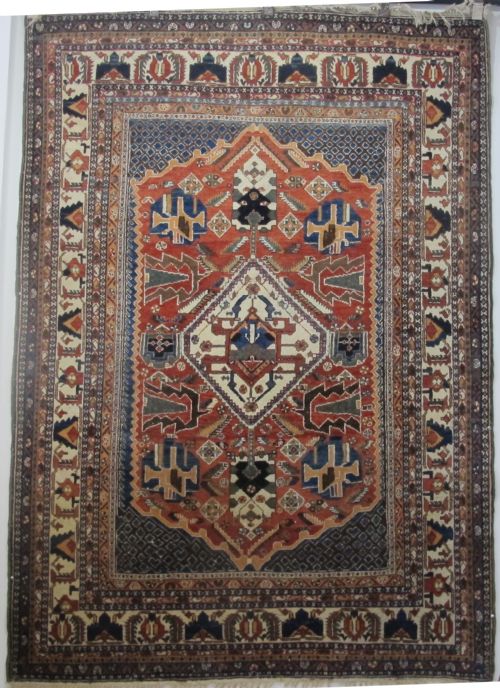


Qashqai Khamseh Rug
A qashqai khamseh rug brings genuine South Persian tribal character into a room through rich hand-spun wool and traditional motifs.
Qashqai Khamseh Rug
When you search for a qashqai khamseh rug, you are looking at hand-knotted tribal floor coverings from South Persia created by nomadic weavers. These pieces frequently overlap with Luri and Shiraz regional traditions, reflecting shared tribal imagery and weaving methods.
The pieces on this page range from small bag face rugs to large area rugs and carpets. Common visual elements include medallion patterns, tree of life compositions, and figurative motifs such as pomegranates, peacocks, and chickens.
Dating primarily from the late nineteenth century through the early twentieth century, these nomadic textiles embody the traditional designs passed down through generations of tribal makers.
How they were made
The makers relied entirely on wool, utilising hand-spun wool to create durable foundations and deep pile textures that soften with age. This local material gives each nomadic carpet its characteristic substantial handle and resilience.
Natural dyes provide the enduring colour palette found across these pieces, ageing gracefully over decades of use. The interaction of these traditional dyestuffs yields the varied tonal shifts observed in the wool.
Listings span the nineteenth century through 1920, predominantly employing natural dyes and hand-spun wool.
What varies in quality
Quality in these tribal weavings rests primarily on the fineness of the knotting and the clarity of the design execution. Tighter knot structures allow intricate motifs like birds and trees to appear crisp and well-defined.
The integrity of the wool and the depth of the natural dye palette also distinguish superior examples. Rich, well-preserved colour and supple hand-spun material separate the finest tribal carpets from simpler utilitarian pieces.
The Qashqai Khamseh Rug Glossary
- Bag face
- The front panel of a nomadic storage bag, woven with a dense pile and often preserved as a small rug.
- Kelleh
- A long, narrow carpet format traditionally used in Persian domestic interiors.
- Medallion
- A central ornamental design motif placed in the field of the rug.
- Nomadic
- Produced by tribal groups moving seasonally, influencing the portable size and robust materials of the weaving.
- Tree of life
- A symbolic botanical motif representing growth and eternity, frequently rendered in tribal designs.
Qashqai Khamseh Rug: Frequently Asked Questions
How do I clean an old tribal rug?
Gentle surface brushing and occasional professional specialist cleaning are best for preserving natural wool pile.
Avoid immersion washing or harsh chemical treatments that can damage traditional natural dyes.
Are these rugs suitable for high traffic?
Hand-spun wool and sturdy tribal construction make these pieces remarkably durable for everyday floor use.
Using an appropriate underlay helps protect the foundation fibres from excessive wear.
How do I date a tribal carpet?
Dating relies on examining the wool characteristics, the organic nature of the natural dyes, and structural construction details.
Stylistic elements like specific medallion layouts also provide clues to the approximate period of creation.
What is a bag face rug?
Bag faces are the decorative front panels cut from larger nomadic storage sacks used in daily camp life.
These smaller pieces often feature particularly dense knotting and concentrated tribal designs.