
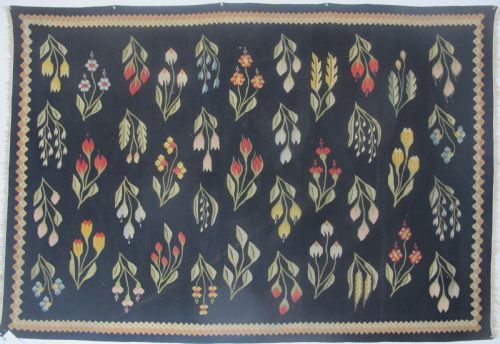
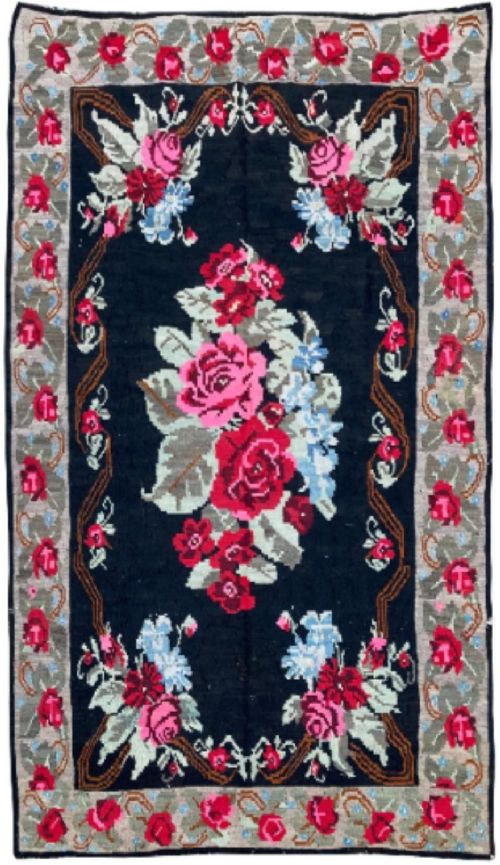
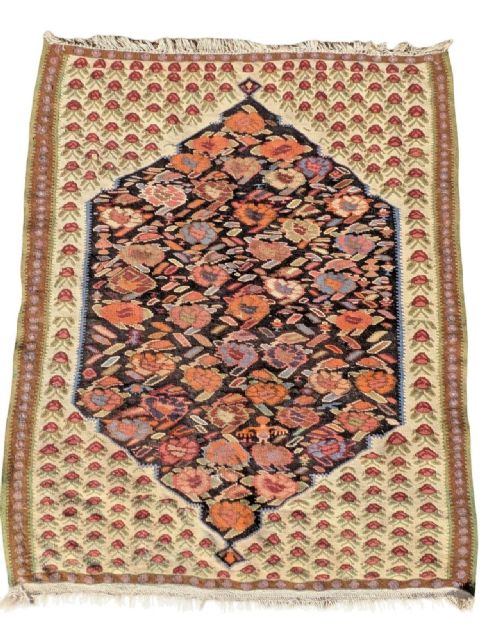
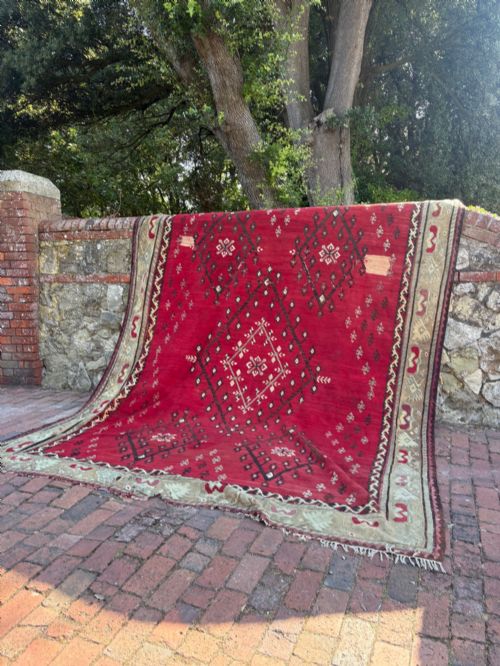




Woven Flatweave Carpet
When you search for a woven flatweave carpet, you seek an interlocking textile that brings historical tribal design directly onto your floor.
Woven Flatweave Carpet
A woven flatweave carpet encompasses pileless floor coverings and utility textiles originating from traditional weaving cultures across the Caucasus, Anatolia, Persia, Central Asia, and Eastern Europe.
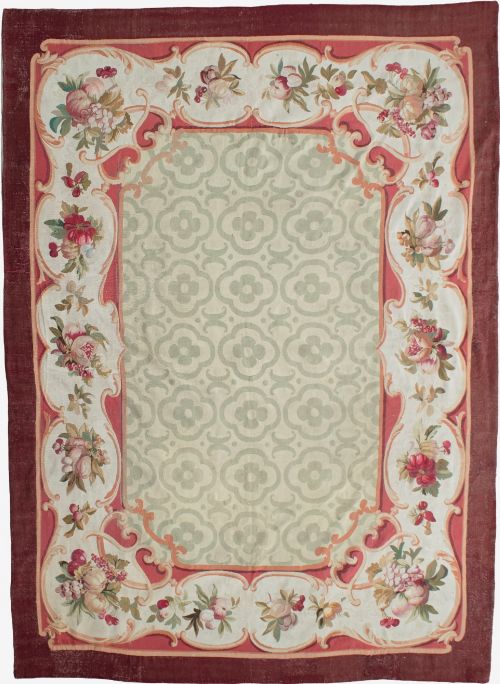
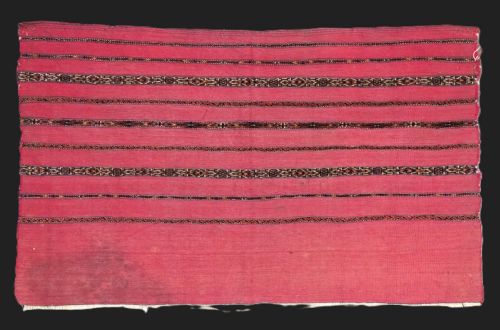
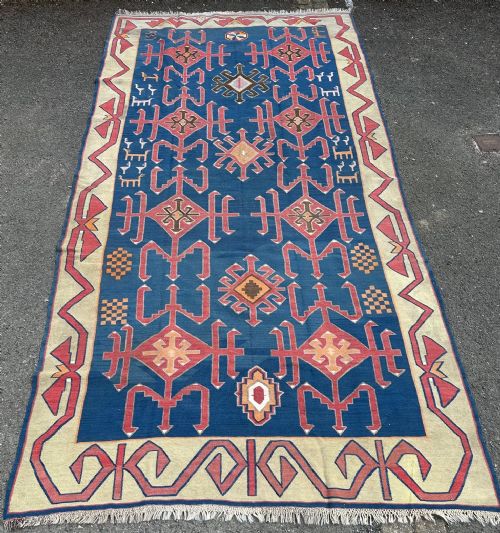
You will frequently encounter regional formats such as Turkish kilims, Caucasian Shirvan and Karabagh pieces, Turkmen chuvals, and Bessarabian tapestries dating from the nineteenth and early twentieth centuries.
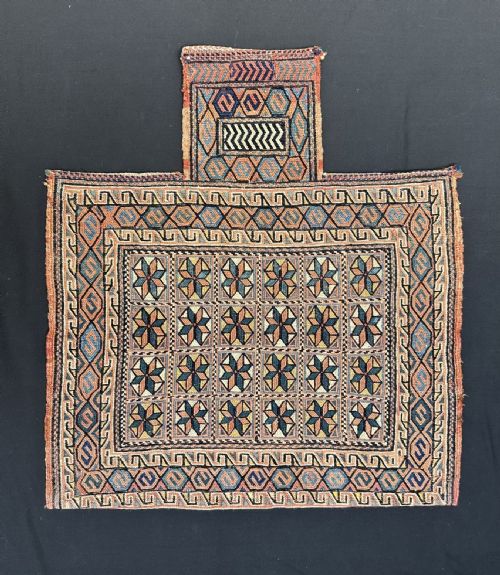
The selection ranges from large room-sized carpets and runners to smaller tribal panels, salt-bags, and sofreh eating cloths produced by nomadic and village makers.
Materials and construction methods
These textiles rely predominantly on hand-spun wool and cotton, utilised in warp-faced or slit-tapestry weave structures that omit a knotted pile.
Weavers employed natural dyes to achieve rich colour palettes, often working on horizontal or vertical looms in structured banded designs, geometric motifs, or floral patterns.
Listings feature pieces spanning the nineteenth century through the 1940s, utilising wool, cotton, and natural dyes.
Factors that define quality
Quality rests upon the tightness of the weave, the precision of the geometric or floral geometry, and the depth achieved through natural dye use.
Finer structural integrity, intact original borders, and the preservation of hand-spun materials elevate specific examples above standard utility pieces.
The Woven Flatweave Carpet Glossary
- Kilim
- A flat-woven carpet or rug produced in countries of the former Ottoman Empire, Persia, and Central Asia. These textiles are made by tightly interweaving warp and weft strands to create a smooth surface without pile.
- Chuval
- A large face-bag used by Turkmen nomads for storage inside a yurt. They display intricate guls and banded designs.
- Sofreh
- A spread or cloth used for meals or dough preparation among nomadic groups such as the Baluch. They often feature minimalist geometric field patterns.
- Soumak
- A flat-weaving technique utilising a wrapping stitch over the warp threads to produce a thicker, durable textile with a braided appearance on the face.
Woven Flatweave Carpet: Frequently Asked Questions
How do flatweaves differ from pile rugs?
Flatweaves lack the raised vertical yarn surface found in knotted pile carpets, presenting a thinner, smooth profile instead. This construction makes them lighter and reversible.
They rely entirely on the tension and patterning of the woven foundation threads for their visual impact.
Where were these textiles made?
Production centres span across the Caucasus, Anatolia, Central Asia, and Eastern Europe, encompassing regions such as Shirvan, Daghestan, and Bessarabia. Specific tribes like the Yomut, Qashqai, and Afshar also produced distinct local styles.
Each geographical area developed characteristic colour palettes and geometric or floral motifs.
How do you care for an antique flatweave?
Protect antique flatweaves by using a quality underlay to prevent sliding and reduce friction against hard floors. Vacuum gently with suction only, avoiding rotating brush heads.
Keep them away from direct, prolonged sunlight to preserve the natural dyes.