







Balkan Wool Flatweave
These balkan wool flatweave pieces are woven textiles that bring rich folk traditions and bold geometric patterns into modern living spaces.
Balkan Wool Flatweave
A balkan wool flatweave brings centuries of regional weaving traditions into domestic interiors through purposeful floor coverings. These textiles appear as kilim rugs and carpets, categorised by distinct regional identities spanning traditional balkan folk art and ottoman balkan influences.
The pieces on this page are predominantly antique productions originating from the late nineteenth century and the early decades of the twentieth century. Buyers encounter formats ranging from standard area rugs to large room sizes suited for expansive floor spaces.
How they were made
Weavers construct each balkan wool flatweave using interlaced warp and weft threads without a piled surface, yielding a flat structure. Natural wool provides the durable foundation for these textiles, often combined with cotton elements.
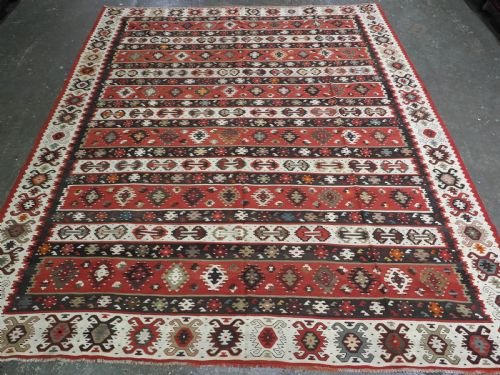
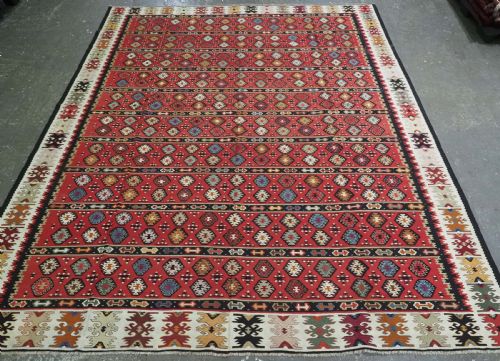
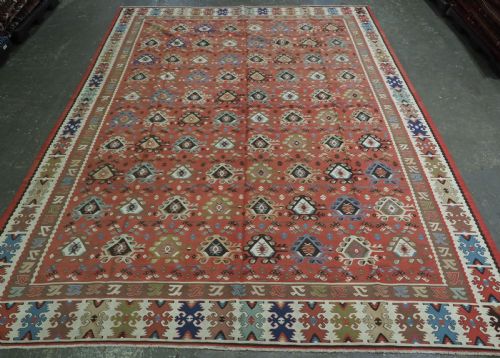
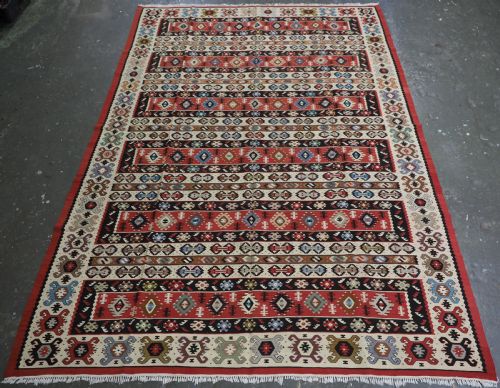
The production relies on traditional hand-weaving techniques that permit sharp geometric motifs and complex banded patterns. Artisans utilise dyed wool yarns to achieve classic designs such as flowering trees, repeat medallions, and lattice arrangements.
Dated examples span from eighteen sixty through to nineteen thirty.
What varies in quality
The visual strength of a balkan wool flatweave depends on the clarity of the design and the richness of the dye palette. Pieces demonstrating warm soft colours or pastel hues exhibit distinct visual depth compared to standard examples.
Structural integrity distinguishes different examples within this category, particularly concerning the crispness of the repeat design or banded layout. Large room size formats maintaining structural balance command attention for their scale and proportion.
The Balkan Wool Flatweave Glossary
- Kilim
- A flat woven textile produced without a pile by tightly interweaving warp and weft strands. This technique results in a reversible rug with a smooth surface.
- Flatweave
- A general term for rugs and carpets created through weaving rather than knotting pile. These textiles lie flat on the floor and remain light in weight.
- Balkan Folk Art
- Design traditions originating from southeastern Europe that incorporate local motifs and geometric patterns. These styles reflect the cultural heritage of the region.
- Medallion
- A central ornamental motif placed within the field of a rug or carpet. This focal design often repeats across larger formats.
- Banded Design
- A pattern arrangement featuring horizontal bands or stripes running across the width of the textile. Such layouts organise the visual field into distinct sections.
Balkan Wool Flatweave: Frequently Asked Questions
Where were these flatweaves made?
These textiles originate from the Balkan region, encompassing areas associated with traditional Ottoman Balkan and regional folk weaving centres.
The specific pieces derive from historical production hubs linked to towns and districts known for distinctive kilim traditions.
How do I care for a wool flatweave?
Regular gentle vacuuming without a beater bar removes surface dust and debris from the flat woven structure.
Professional cleaning suited for antique textiles preserves the wool fibres and maintains the stability of the natural dyes.
What sizes are available?
The selection includes standard area rugs alongside large room size pieces designed for extensive floor layouts.
Dimensions vary according to the original purpose of the textile and the space it was woven to occupy.
What motifs appear on these rugs?
Common motifs include flowering trees, repeat medallions, lattice patterns, and structured horizontal bands.
These designs reflect traditional Balkan and Ottoman visual vocabulary passed down through generations of weavers.