

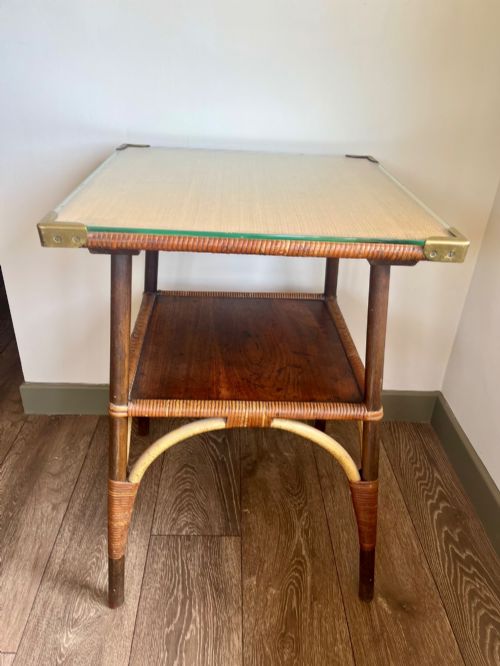
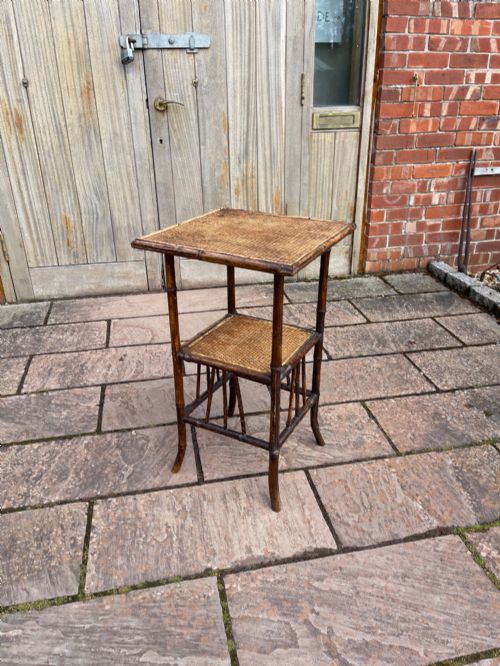


Woven Cane Table
A woven cane table brings natural texture and lightness into a room, combining practical surfaces with organic materials found across the Victorian and Edwardian periods.
Woven Cane Table
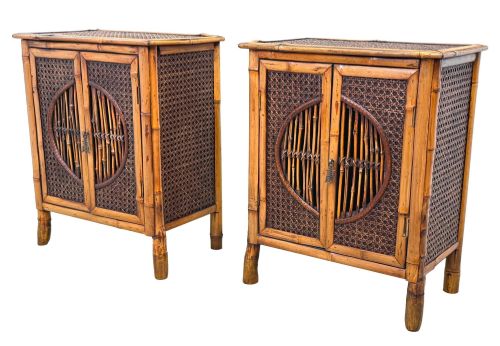
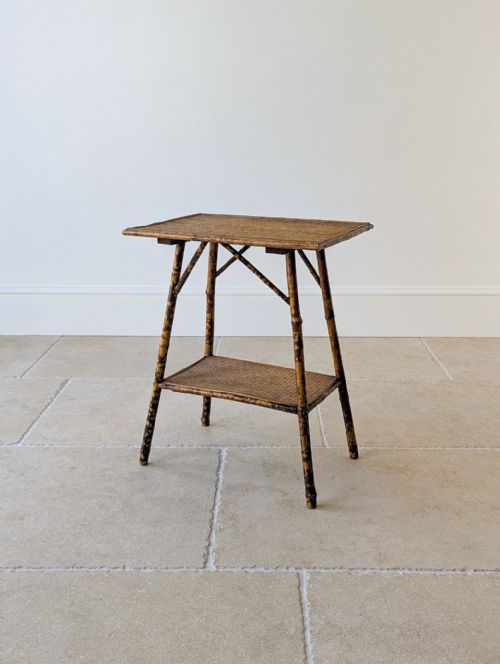
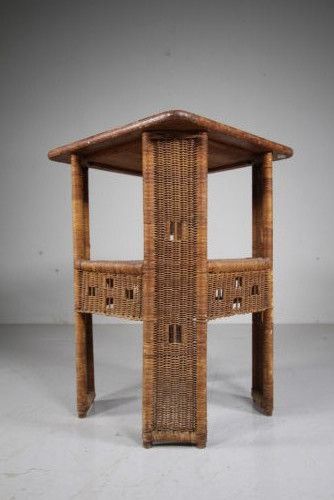
A woven cane table is typically encountered as a side table, occasional table, or coffee table spanning the nineteenth and early twentieth centuries. These pieces appear in styles ranging from the Aesthetic Movement and Arts and Crafts to Victorian industrial designs and French Regence influences.
Makers utilised bamboo, rattan, wicker, and woven reed alongside traditional hardwoods such as mahogany, satinwood, and oak. Some examples integrate brass and metal elements to provide structural support or decorative contrast.
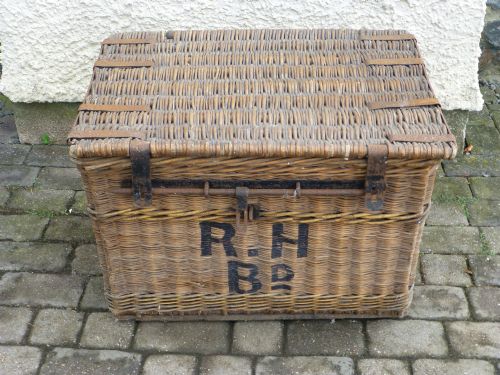
The selection includes compact occasional pieces as well as larger industrial trunks and log baskets repurposed for modern living as coffee tables. Many items reflect distinct regional origins and design movements, including Anglo Indian interpretations and works by known English makers.
Materials and construction methods
Construction relies heavily on pliable natural materials such as cane, rattan, and bamboo bent and joined to form lightweight yet resilient frames. Artisans paired these flexible vegetable fibres with sturdy wooden framing elements in mahogany, oak, or ebonised timber.
Surface details involve careful weaving techniques using reed and wicker to create textured panels for tabletops, shelves, and seating surfaces. Metal and brass components frequently secure joints or provide corner bracing on utilitarian trunks and industrial tables.
Styles represented include the Aesthetic Movement, Arts and Crafts, Victorian industrial, and French Regence.
Assessing quality and craftsmanship
Quality in a woven cane table is determined by the tightness and regularity of the weaving across the cane, rattan, or reed panels. Superior pieces maintain structural rigidity in their bamboo or hardwood frames without excessive sagging or looseness in the joined elements.
The refinement of decorative carving and the selection of secondary timbers, such as satinwood or ebonised finishes, separate standard utility items from sophisticated artistic expressions of the Aesthetic Movement and Edwardian eras.
Dryad of Leicester
The Woven Cane Table Glossary
- Cane
- A material derived from the outer bark of the rattan palm, split and woven into flexible, durable surfaces for furniture tops and panels.
- Rattan
- A climbing palm with strong, pliable stems used extensively for framing and weaving in nineteenth and twentieth-century occasional furniture.
- Aesthetic Movement
- A late nineteenth-century design style emphasising visual beauty and artistic expression over narrative content, often incorporating Japanese-inspired bamboo and ebonised finishes.
- Occasional table
- A small, versatile table designed for intermittent use around a room, commonly produced in bamboo, cane, and various woods during the Victorian and Edwardian periods.
Woven Cane Table: Frequently Asked Questions
What is a woven cane table?
A woven cane table is a piece of furniture featuring woven plant-based materials like cane, rattan, or reed combined with wood or bamboo frames. These tables were produced in various forms such as side tables, occasional tables, and coffee tables throughout the nineteenth and early twentieth centuries.
They reflect diverse stylistic influences, including the Aesthetic Movement and Arts and Crafts design principles. Their construction makes them both lightweight and visually textured.
How do I care for a woven cane table?
Caring for these tables involves keeping them away from extreme moisture and direct heat sources that can dry out and snap natural fibres. Gentle dusting with a soft brush helps maintain the woven surfaces without damaging the material.
Occasional light conditioning can help keep rattan and cane supple. Ensuring the supporting wooden or bamboo frame remains stable protects the woven areas from undue tension.
How do I date a woven cane table?
Dating relies on examining the construction methods, materials, and stylistic markers associated with specific periods like the Victorian and Edwardian eras. Pieces showing Aesthetic Movement characteristics or specific maker marks often point to particular decades around the turn of the twentieth century.
The integration of industrial elements or specific woods like satinwood and ebonised bamboo also assists in placing a piece within the nineteenth or early twentieth century.
Where were woven cane tables used?
These tables served as versatile furniture items in drawing rooms, conservatories, and parlours during the Victorian and Edwardian periods. Their light weight allowed them to be easily moved around domestic spaces for serving tea or holding decorative objects.
In modern settings, smaller occasional tables and repurposed trunks function well as side tables or coffee tables in living areas. They add organic texture and historical character to contemporary interiors.