
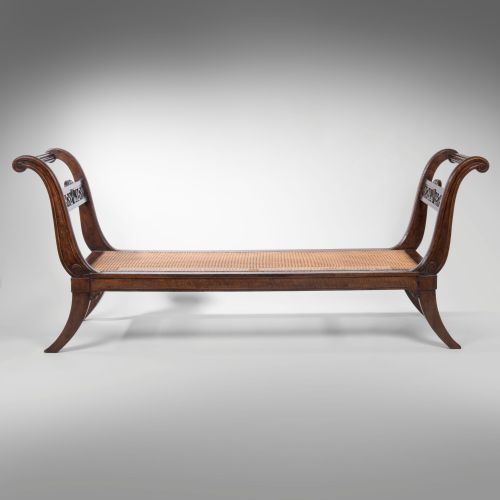
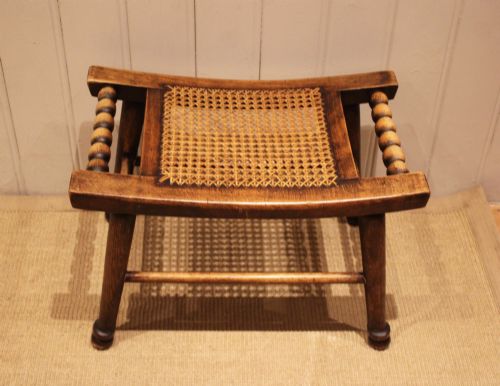


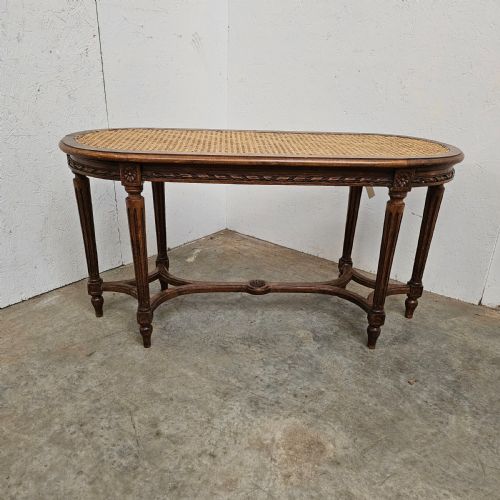


Brown Caned Stool
A brown caned stool brings tactile texture and sturdy charm to any room, offering versatile seating or a perch for tired feet.
Brown Caned Stool
A brown caned stool combines a timber frame with a woven seating surface, appearing across periods from the Georgian era through to the early twentieth century. These pieces serve multiple purposes in a home, functioning as footstools, window seats, and low benches.
The selections available here showcase a rich variety of forms, including X-frame window seats, long footstools, and folding library steps that double as seating. Oak, mahogany, and beech frames predominate, often paired with traditional woven cane tops.
Buyers seeking a brown caned stool will encounter regional and stylistic influences ranging from rustic farmhouse to Grand Regency. Certain items incorporate bamboo or bent beechwood, demonstrating the diverse interpretations of this practical domestic form.
How they were made
Frames are constructed from hardwoods such as mahogany, oak, and beech, shaped through traditional turning, carving, and joinery techniques. Selected examples incorporate brass details or structured bamboo framing to support the design.
The seating areas utilise woven cane or bergere work, threaded meticulously through holes drilled in the wooden rails. This method yields a resilient yet flexible surface that supports the sitter while maintaining a lightweight profile.
Current selections feature timber frames in mahogany, oak, beech, and bamboo, paired with traditional woven cane.
What varies in quality
Quality rests upon the crispness of the timber carving and the tightness of the cane weave. Finer examples display precise joinery in the frame and an even, rhythmic pattern across the woven surface.
The Brown Caned Stool Glossary
- Bergere
- A closed-arm upholstered armchair or stool featuring woven cane panels. This French style brings lightness to heavy timber frames.
- Cane
- Strips of peeled rattan woven into geometric patterns for seats and backs. It provides breathable elasticity to wooden furniture.
- X-frame
- A structural base formed by two intersecting diagonal members resembling the letter X. This classical support appears frequently on window seats and benches.
- Metamorphic
- Furniture designed to transform from one object into another, such as an armchair converting into library steps. These clever pieces reflect inventive nineteenth-century domestic engineering.
Brown Caned Stool: Frequently Asked Questions
Where should I place a brown caned stool?
These pieces fit naturally at the foot of a bed, beneath a window, or beside a fireside chair. Their compact footprint allows them to move easily between rooms as extra seating.
In a hallway, a longer bench version provides a convenient spot for putting on shoes while introducing natural texture to the space.
How do I clean woven cane seats?
Dust the woven surface gently using a soft brush or a vacuum attachment on low suction. Keeping the cane slightly hydrated with a damp cloth prevents it from becoming brittle over time.
Avoid soaking the material, and allow it to dry thoroughly after any gentle cleaning to protect the natural fibres.
What periods do these stools come from?
The pieces span several centuries, including Georgian, Regency, and nineteenth-century eras, alongside twentieth-century interpretations. Each period imparts distinct moulding profiles and wood selections to the frame.
Stylistic revivals such as Jacobean and French chateau influences also appear among the selections.
Are caned stools sturdy enough for daily sitting?
Traditional cane work possesses natural spring and strength designed to support regular use. The tight weave distributes weight evenly across the wooden rail frame.
For heavy daily service, selecting a sturdy hardwood frame like oak or mahogany ensures lasting stability.