


Vintage Mahogany Footstool
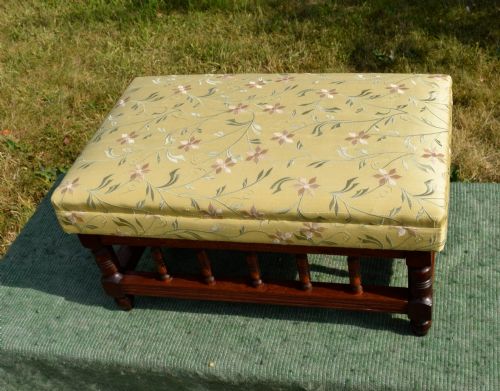
These vintage mahogany footstool examples bring classic low seating and footrests to a room, offering solid timber frames paired with varied historic textiles.
Vintage Mahogany Footstool
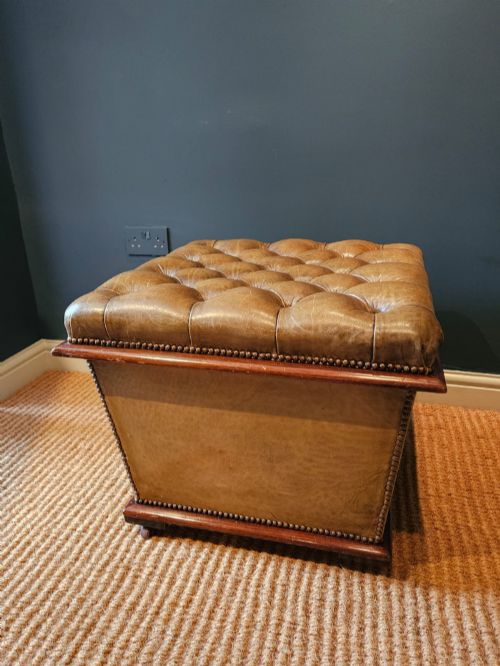
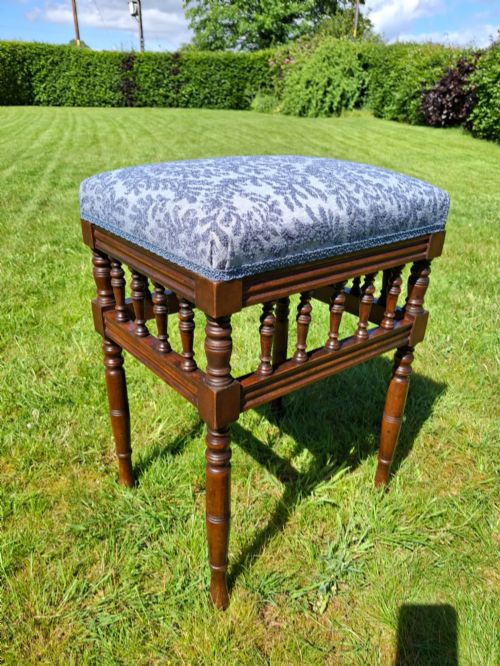
A vintage mahogany footstool is a low timber furnishing designed to support seated feet or provide extra low seating within a room. When you examine this selection, you encounter forms ranging from simple upholstered benches to grander ottomans and specialised gout stools.
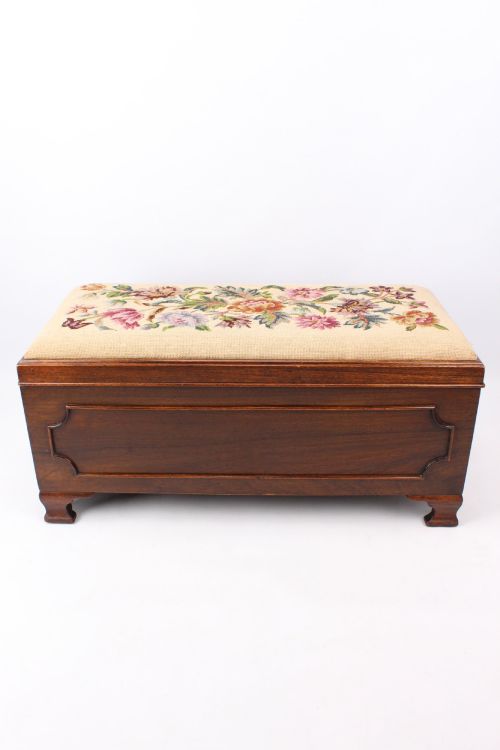
The pieces span multiple decades and stylistic revivals, with Victorian and Edwardian examples appearing alongside Georgian revival interpretations and nineteenth-century designs. Makers utilised dense tropical hardwood to create sturdy frames that often support needlework, leather, or tapestry covers.
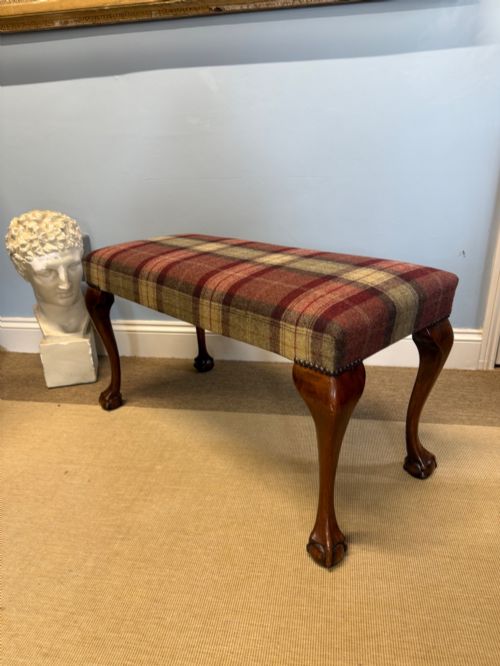
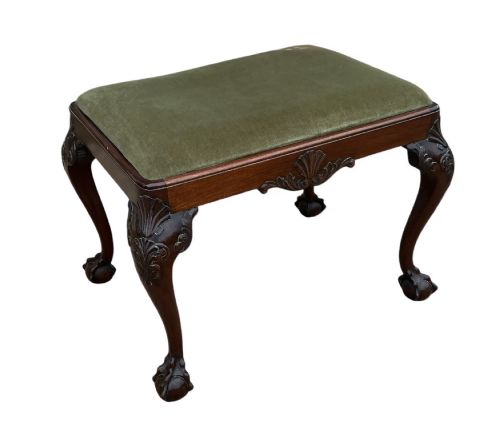
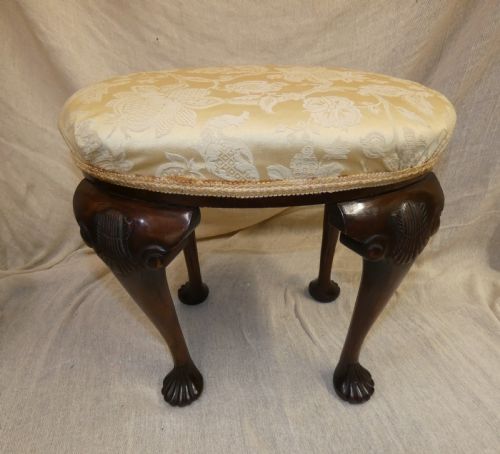
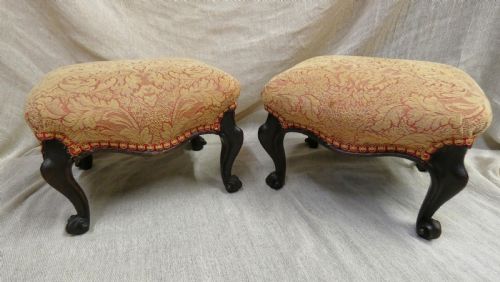
Buyers frequently find variants equipped with cabriole legs, cross stretchers, or concealed storage compartments beneath hinged tops. These low furnishings function equally well before a fireside armchair or placed at the foot of a dressing table.
How they were made
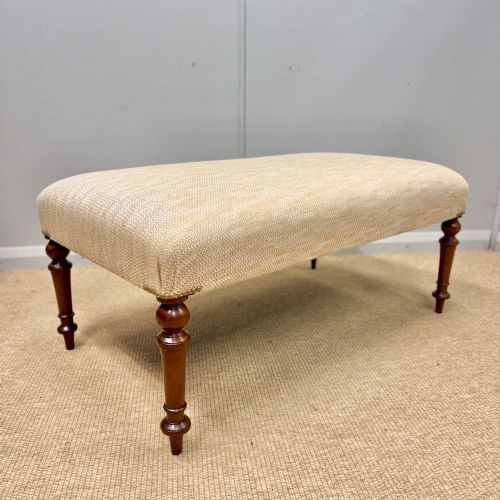
Cabinetmakers constructed the primary framework using solid mahogany, shaping the timber into straight legs, curved cabriole supports, or framed bases. Brass hardware occasionally reinforces joints or acts as castors on larger ottoman variants.
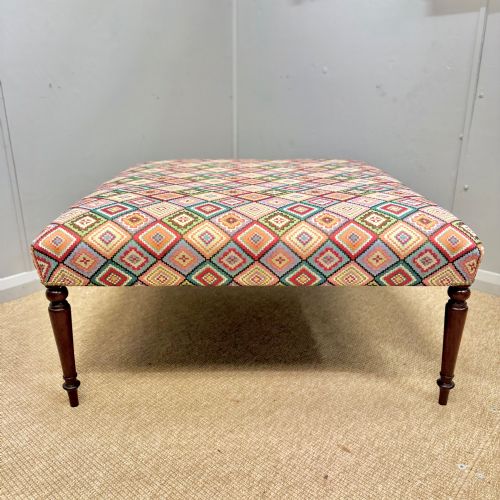
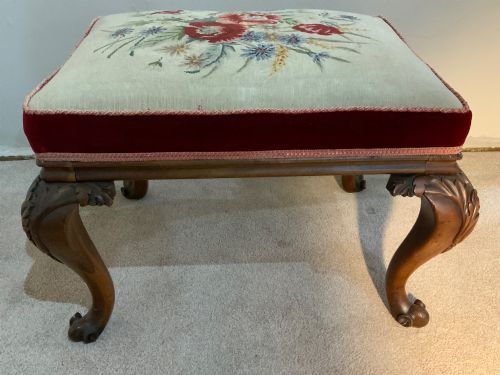
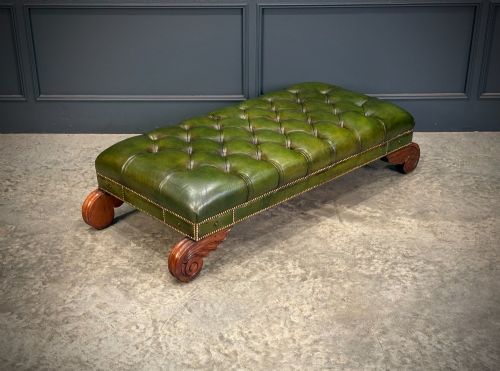
Upholstery techniques varied widely according to the period, employing traditional stuffing beneath top layers of wool, velvet, leather, Kilim, or antique tapestry. Needlework seat covers and buttoned leather finishes required skilled hand-stitching directly onto the wooden frame or drop-in base.
Listings feature mahogany frames paired with brass, leather, wool, velvet, tapestry, and textile materials across the nineteenth and early twentieth centuries.
What varies in quality
Quality in these items rests upon the crispness of the timber carving and the structural integrity of the mahogany frame. Superior examples display thoughtful joinery, such as cross stretchers or well-fitted cabriole legs that distribute weight evenly.
The secondary material standard distinguishes finer pieces, particularly the choice of upholstery fabric, whether hand-stitched tapestry, supple buttoned leather, or woven Kilim. Original textile coverings and branded maker details elevate a piece well beyond standard utility grade.
Howard & Sons·Liberty & Co·Hallett & Sons·Thonet
The Vintage Mahogany Footstool Glossary
- Cabriole leg
- A furniture leg featuring a double curve, typically arching outward and then tapering inward to a pad or claw foot. This design appears frequently on eighteenth-century and revival seating.
- Gout stool
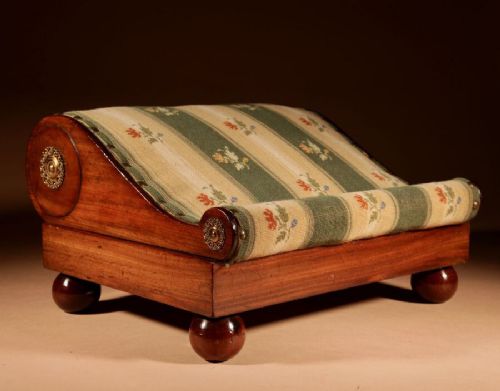
- A specialised adjustable footrest designed to elevate and comfort limbs affected by joint ailments. These items often feature pivoting mechanisms.
- Ottoman
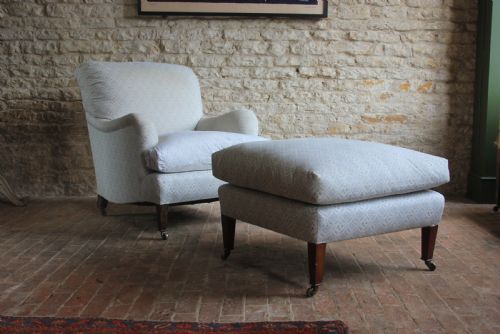
- A low, upholstered seat or footstool lacking a back or arms, sometimes constructed with internal storage. Large country house variants often double as blanket chests.
- Kilim
- A flatwoven textile originating from the Middle East or Southeastern Europe. These durable flatweaves frequently cover nineteenth-century footstool tops.
- Cross stretcher
- Wooden bracing members connecting the legs of a stool near the floor to add structural rigidity. They are common on dressing table stools and benches.
Vintage Mahogany Footstool: Frequently Asked Questions
What is a gout stool?
A gout stool is an adjustable wooden footrest designed to support and elevate aching legs at a comfortable angle.
These specialised pieces often include pivoting mechanisms that allow the user to alter the inclination without leaving the armchair.
How do I style a footstool?
You can position a low timber footstool directly in front of a fireside armchair or place a larger ottoman at the end of a bed.
They also function effectively as impromptu seats near dressing tables or alongside low salon chairs.
Are these stools comfortable?
Comfort depends entirely on the underlying padding and the specific textile used for the top surface.
Many period variants feature dense stuffing beneath buttoned leather, wool, or tapestry, providing firm support for resting feet.
How do I date a footstool?
Dating relies on observing the timber characteristics, leg shapes, and the style of the upholstery fabric.
Victorian and Edwardian pieces often display distinct revival motifs or turn-of-the-century manufacturing traits distinct from earlier Georgian work.