
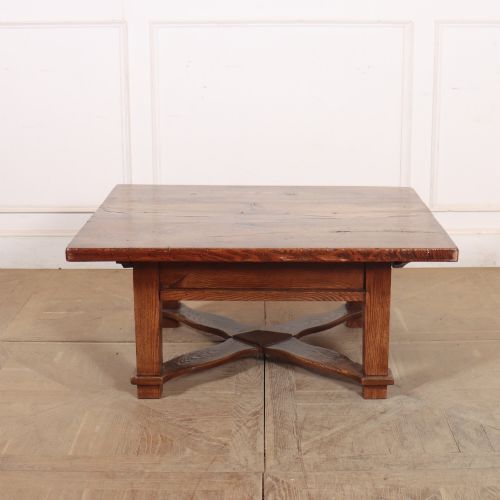


Square Low Coffee Table
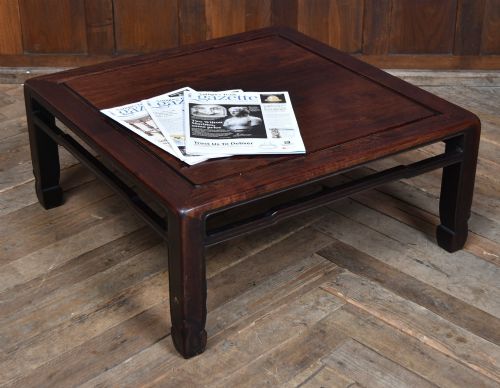
A square low coffee table grounds a room with proportions built for sitting close, spanning walnut, elm and rosewood across centuries of craftsmanship.
Square Low Coffee Table
A square low coffee table brings balanced proportions to a seating area, offering a generous surface while keeping sightlines open across the room. You will find these pieces spanning the eighteenth, nineteenth, and early twentieth centuries, reflecting diverse domestic traditions from British vernacular to continental European cabinet-making.
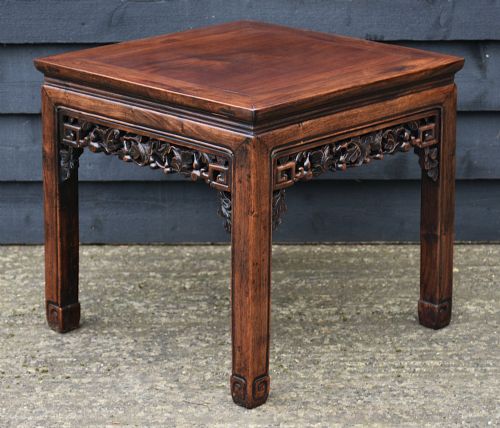
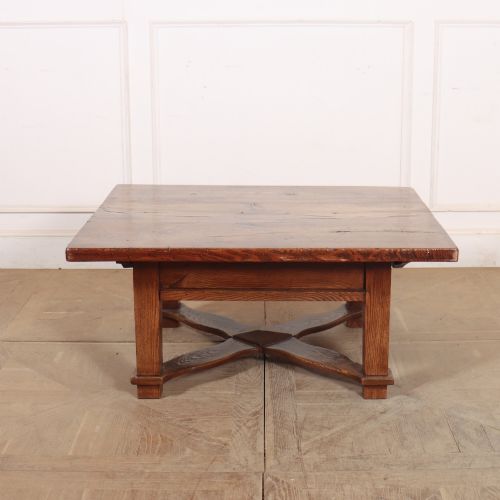
The selection ranges from rustic country pine and elm tables to sophisticated examples in walnut, mahogany, and rosewood. Many forms borrow traditional aesthetics, including Carolean, Queen Anne, Louis XV, and Chinese Qing styles, alongside utilitarian pieces such as campaign tables and repurposed carts.
Alongside dedicated coffee tables, the inventory includes side tables, occasional tables, and adapted footstools or ottomans featuring caned or leather-upholstered tops. These variations offer distinct heights and surfaces, adapting easily to modern living spaces while retaining their original period character.
Materials and Construction
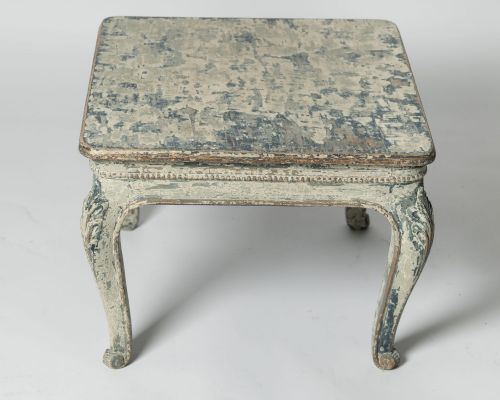
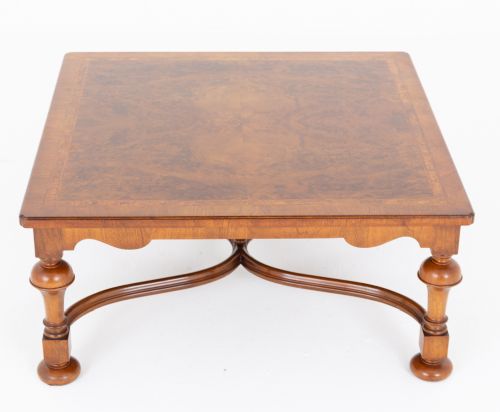
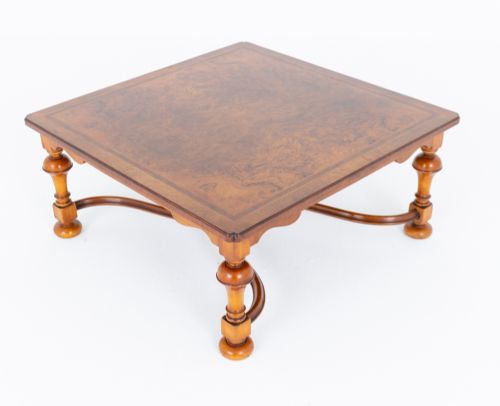
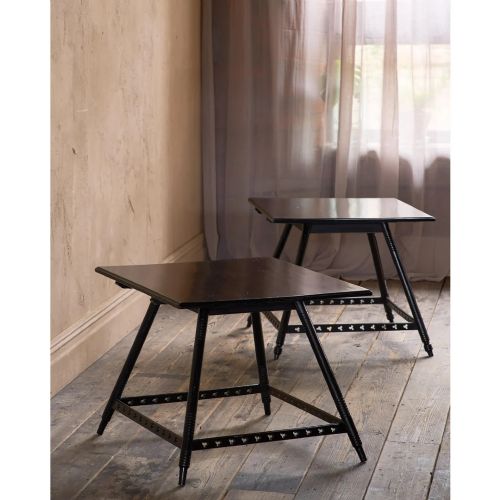
Cabinet-makers relied on sturdy hardwoods including walnut, mahogany, rosewood, and elm, often pairing solid timbers with decorative veneers and parquetry. Ebonised wood and painted finishes also appear, showing how makers altered the natural grain to suit prevailing interior fashions.
Construction techniques range from traditional joinery in eighteenth-century provincial pieces to the refined marquetry and pedestal designs of the Art Deco era. Details such as brass hardware on campaign pieces and caned or leather inserts demonstrate the functional adaptability of these low tables.
Listings feature pieces spanning from the eighteenth century through the Art Deco era, utilising walnut, mahogany, elm, and rosewood.
Assessing Quality
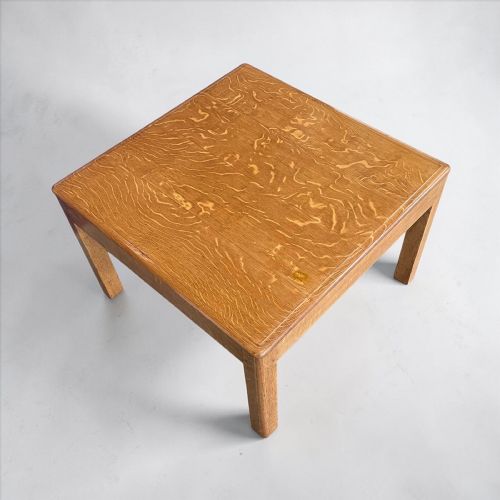
Quality rests in the integrity of the timber selection and the precision of the joinery, distinguishing sturdy vernacular work from refined cabinet-maker production. Finer examples show thoughtful alignment of grain patterns and deliberate choice of materials, whether dealing with native elm or imported rosewood.
Design cohesion also sets pieces apart, as seen in the balanced proportions of period revival styles and the crisp execution of marquetry or parquetry. The best pieces maintain structural stability without relying on heavy restoration, preserving their original surface patination.
Betty Joel·Gillows of Lancaster
The Square Low Coffee Table Glossary
- Parquetry
- Geometric wood mosaic work used for decorative surfaces on tables. It creates repeating patterns across the top using contrasting timber tones.
- Campaign table
- Portable furniture designed for travel, typically featuring recessed brass handles and folding or removable legs. These pieces prioritise robust construction and practicality.
- Ebonised wood
- Timber treated to imitate ebony through staining or painting. This finish gained popularity in the nineteenth century for a dramatic, dark appearance.
- Marquetry
- Decorative veneer work forming pictorial or ornamental designs using various woods. Craftsmen cut and fitted pieces together to ornament the table surface.
- Caned top
- Woven plant material forming a porous, resilient surface on seating or table frames. It provides a lightweight texture distinct from solid timber.
Square Low Coffee Table: Frequently Asked Questions
What is a square low coffee table used for?
These low surfaces provide a central platform for everyday items like books, drinks, and decorative objects within a seating arrangement. Their reduced height ensures they sit comfortably beneath eye level in a room.
Historically, many of these low formats evolved from side tables, stools, or regional furniture types repurposed for modern living. Their compact footprint makes them versatile for both spacious drawing rooms and tighter seating layouts.
How do I tell different periods apart?
Dating relies on observing construction methods, timber choices, and stylistic cues linked to specific eras. Eighteenth-century pieces often display heavier native timbers like elm and pine with straightforward joinery.
Nineteenth and early twentieth-century examples frequently incorporate exotic veneers, ebonised finishes, or specific revival motifs such as Carolean scrolls and Art Deco geometric lines. Comparing hardware and surface wear helps confirm the age.
Are these tables sturdy enough for daily use?
Period low tables are built from solid hardwoods or robust veneers designed to withstand regular domestic demands. Solid construction methods ensure they remain stable under normal weight.
Care should be taken with delicate surfaces like parquetry or caned tops, which benefit from coasters and gentle cleaning. Regular maintenance preserves the structural integrity of the joints.
How do I style a square table?
A square surface allows for balanced arrangements, such as placing a central focal point like a bowl or stack of books complemented by smaller items. Symmetrical placement suits formal periods, while casual arrangements work well on rustic country pieces.
Consider the surrounding seating height to ensure the table remains accessible and visually grounded. Mixing textures between the wood and tabletop accessories enhances the overall room design.