




Mahogany Footstool Table
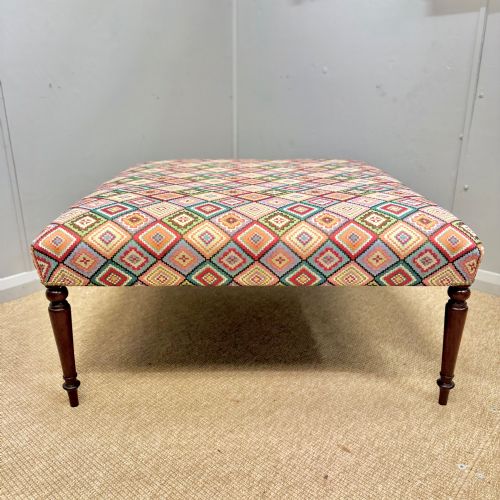
A mahogany footstool table provides a solid timber frame beneath period upholstery, serving as a versatile seat or low surface.
Mahogany Footstool Table
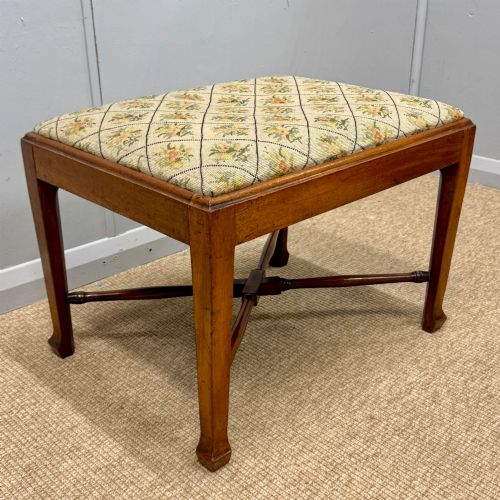
A mahogany footstool table brings together sturdy timber frames and upholstered or caned tops, appearing in forms such as dressing stools, piano benches, and large ottomans. These items serve multiple domestic uses, functioning as low tables, seats, or rests for the feet across various periods.
The pieces on this page span the nineteenth century into the early twentieth century, taking shape through revival styles like Chippendale, Queen Anne, and Georgian. Makers constructed these versatile furnishings to suit drawing rooms, bedrooms, and libraries.
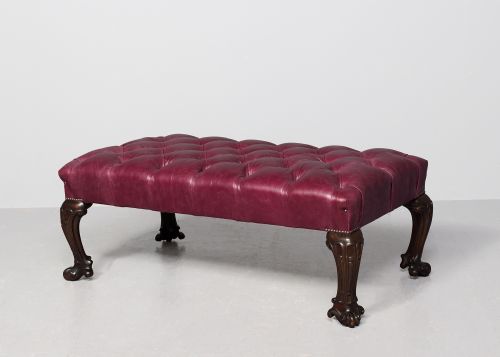
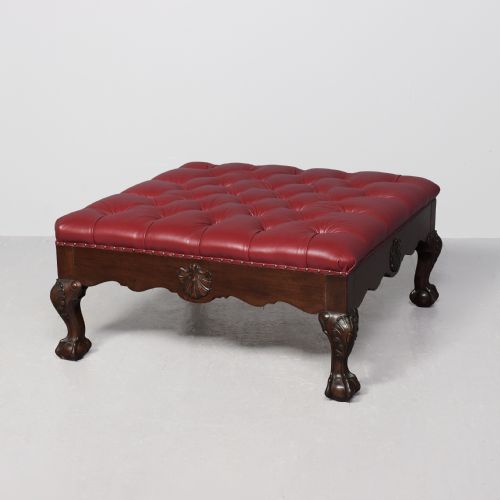
Victorian and Edwardian examples dominate the selection, often featuring buttoned leather, tapestry, or damask top surfaces. Buyers encounter both simple square forms and larger multi-purpose ottomans framed entirely in solid mahogany.
How they were made
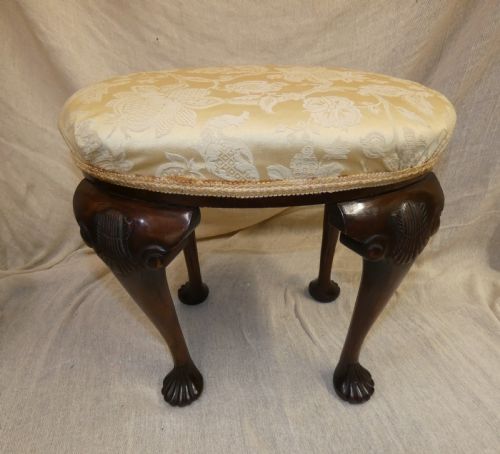
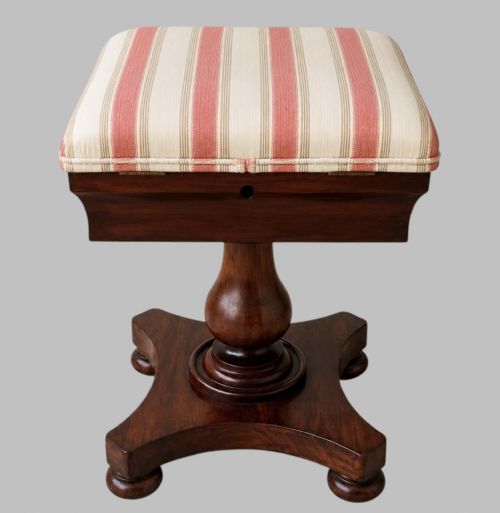
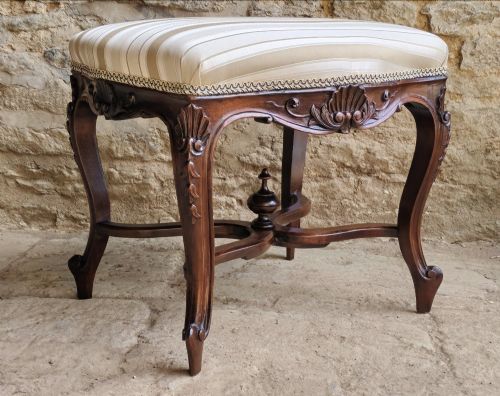
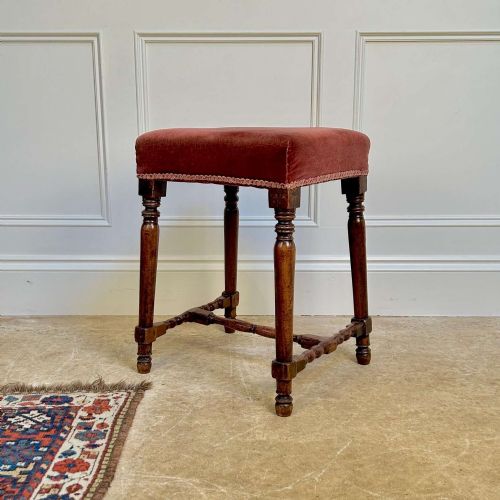
Craftsmen built the structural frames using solid mahogany, shaping cabriole legs, turned supports, and cross stretchers to distribute weight evenly. Woodworkers joined corners securely to withstand the daily strain placed upon low seating furniture.
Upholsters layered materials such as wool, fabric, red hide, and leather over internal stuffing, frequently securing the surface with deep buttoning or brass tacks. Some variants incorporated caned panels into the top frame instead of fabric.
Listings feature mahogany frames paired with materials such as brass, leather, wool, damask, and Liberty William Morris velvet.
What varies in quality
Quality rests in the precision of the timber carving and the integrity of the joinery within the mahogany frame. Finer items display crisp detailing along cabriole legs and stretchers rather than plain or hasty shaping.
The standard of the upholstery materials, from supple hide to tightly woven needlepoint or Liberty velvet, separates standard production from exceptional examples. Original brass castors and intact buttoning further elevate the standing of a piece.
The Mahogany Footstool Table Glossary
- Cabriole leg
- A furniture leg that curves outward at the knee and tapers inward to an ankle. This design echoes animal limbs and appears frequently on period seating.
- Cross stretcher
- An intersecting wooden brace placed between the legs of a stool to add stability. Craftsmen often carved these central junctions for decorative effect.
- Buttoned upholstery
- A method where deep tufts are pulled into the padding and secured with buttons, creating a cushioned geometric pattern. This finish is common on Victorian leather and fabric tops.
- Caned top
- A woven seat surface made from split rattan or cane strips. This technique provides a lightweight, resilient panel inside a wooden frame.
Mahogany Footstool Table: Frequently Asked Questions
How were mahogany footstool tables used?
These items served primarily as footrests, low seats, or improvised small tables in period interiors. Their sturdy mahogany frames allowed them to support regular use in living spaces and dressing rooms.
Larger versions functioned as ottomans or centre stools, accommodating multiple sitters or holding books and sewing boxes near armchairs.
How do I identify a Victorian stool?
Victorian examples often feature deep buttoned leather, turned wooden legs, or castors for mobility. The heavy solid mahogany construction reflects the manufacturing standards of the nineteenth century.
Stylistic revivals during this era borrowed heavily from Georgian and Rococo designs, leading to ornate frames paired with dark timber.
What is a Chippendale style stool?
A Chippendale style stool incorporates design elements from eighteenth-century cabinet maker Thomas Chippendale, such as carved cabriole legs and detailed woodwork. Makers revived these patterns during the nineteenth and early twentieth centuries.
These pieces usually combine dark mahogany frames with rich upholstery like burgundy hide or patterned damask.
Can these stools function as tables?
Many solid mahogany stools with flat or caned tops easily double as low display surfaces or tea tables. Adding a tray transforms the upholstered or wooden surface into a stable platform.
Their sturdy construction ensures they handle weight safely when utilised outside of seating duties.