



Woven Burgundy Bag
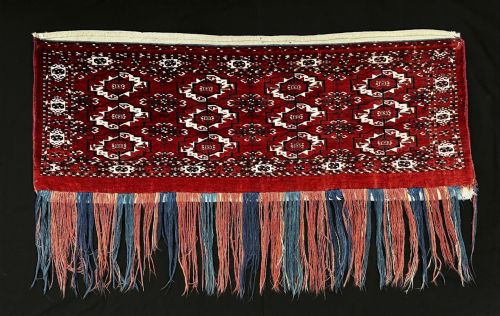
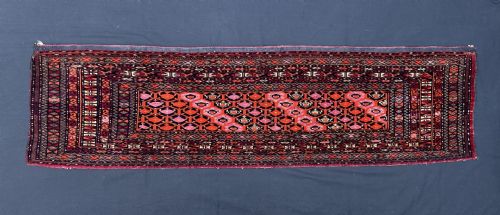
These woven burgundy bag examples are tribal textiles carrying deep red tones and rich Central Asian heritage.
Woven Burgundy Bag
A woven burgundy bag is a practical piece of Central Asian tribal art, specifically seen in forms like torbas, chuvals, jollars, and kaps originating from nomadic groups such as the Turkmen, Yomut, Tekke, Ersari, and Salor tribes. These bags served essential functions within nomadic camps as storage containers and household furnishings, woven with deep red and burgundy wool palettes.
The pieces present on this page date from the mid-nineteenth century through to the end of that century, encompassing decades between eighteen fifty and eighteen ninety. They arrive primarily as complete faces or full storage items featuring traditional tribal motifs and intricate structure.
Materials and Construction
These textiles are built from wool and hand-spun wool, utilising natural dyes to achieve their distinct burgundy and red colorways. The structural integrity relies on careful spinning and dyeing processes handed down through generations of tribal weavers.
The making involves dense weaving techniques, resulting in fine structures that sometimes incorporate plain weave backs or specific tribal designs like guls, curled leaves, and ikat patterns.
Woven Burgundy Bag Retail Price Guide 2026
Typical asking prices for woven burgundy bag among the pieces listed under this phrase on Sellingantiques today, from the lower quarter to the upper quarter. They describe what is for sale here now, not the wider market.
Camels once carried these bags across Central Asian steppes, making them hardy nomads before they became quiet wall art.
Assessing Quality and Execution
Quality rests upon the fineness of the weave and the clarity of the tribal patterns, such as the precision found in repeated guls and secondary motifs. Tighter knotting and finer wool preparation distinguish superior examples from standard ones.
The Woven Burgundy Bag Glossary
- Torba
- A small Turkmen bag used for storage inside a yurt. These pieces typically hung against the lattice walls.
- Chuval
- A large storage bag made by Turkmen tribes. They held household goods and bedding during nomadic migrations.
- Gul
- A medallion pattern used repeatedly in carpet and textile design. Each tribal group utilised distinct gul variations.
- Jollar
- A small bag placed on camel flanks during travel. They functioned as utilitarian containers for personal items.
- Natural Dyes
- Colourants derived from plants, insects, and minerals. These materials create the rich, organic hues seen in antique tribal pieces.
Woven Burgundy Bag: Frequently Asked Questions
What are these bags?
These items are antique Central Asian tribal bags and bag faces created by nomadic groups like the Turkmen, Yomut, and Tekke tribes.
They functioned primarily as utilitarian storage containers inside traditional dwellings before becoming collected textile art.
How were they used?
Nomadic families used these woven containers to store household goods, clothing, and bedding inside tents and during migrations.
Smaller versions hung from interior lattice walls, while larger pieces transported belongings across the steppes.
How do I live with them?
These textiles adapt well to modern interiors as wall hangings or decorative display items in low-traffic areas.
Keeping them away from direct sunlight protects the natural dyes and wool fibres from fading over time.
How are periods told?
Dating relies on wool quality, natural dye characteristics, structural wear, and specific tribal design attributions from the nineteenth century.
Early pieces often display finer hand-spun materials and specific regional motifs tied to distinct nomadic groups.