

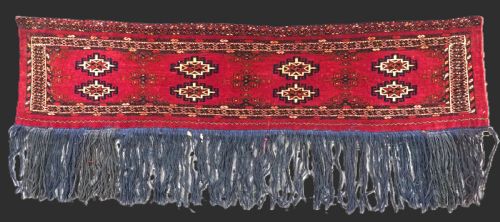


Saryk Tribal Weaving
Saryk tribal weaving brings heavy wool texture and distinct Central Asian motifs into a room, offering genuine historic character for collectors.
Saryk Tribal Weaving
When you search for saryk tribal weaving, you are looking at nineteenth-century Turkmen textile pieces produced across Central Asia, spanning domestic bags and hanging rugs. The most common forms on this page are torba faces and chuval faces created as dowry weaving or functional tent furnishings.
These pieces display traditional tribal artistry through structured geometric patterns and repeated medallions. Collectors value them for their authentic regional utility and rich wool construction dating back to the mid-nineteenth century and the eighteen-eighties.
How they were made
Traditional makers built saryk tribal weaving using wool foundations enhanced by natural dyes, cotton details, and occasional crimson silk highlights. Artisans employed careful knotting alongside flat-woven details and plain weave backs to ensure durability.
The material palette relies on natural dyestuffs to achieve deep red tones and contrasting white cotton elements. Fine weave construction characterises the smaller pieces and dowry items preserved from this period.
Saryk Tribal Weaving Retail Price Guide 2026
Typical asking prices for saryk tribal weaving among the pieces listed under this phrase on Sellingantiques today, from the lower quarter to the upper quarter. They describe what is for sale here now, not the wider market.
Nomadic weavers packed these small bags with dowry items, ensuring every camel-load across the steppe carried a riot of geometric wool.
What varies in quality
The fineness of the weave and the complexity of the design define the upper tier of these textiles. Pieces with denser knots and detailed Salor or Kedjebe gul patterns stand apart from simpler iterations.
The presence of supplementary materials, such as white cotton and crimson silk accents, alters the visual depth of a piece. Preservation of the original face structure and flat-woven elements also dictates the standing of each item.
The Saryk Tribal Weaving Glossary
- Torba
- A small hanging bag produced by Turkmen tribes for domestic storage inside a tent. These pieces frequently feature prominent gul designs and fine wool pile.
- Chuval
- A large storage bag face used in nomadic households, typically displaying multiple rows of major guls. They form a core category of Central Asian tribal weaving.
- Gul
- A repeated primary medallion motif used across Turkmen rugs and torbas. Specific variations like the Salor gul help identify regional design traditions.
- Kedjebe
- A lattice or tent-band design pattern often found on Saryk torba faces. It structures the field with geometric compartment shapes.
- Ensi
- A tribal door rug hung at the entrance of a yurt. These feature distinct cross-panel layouts distinct from floor carpets.
Saryk Tribal Weaving: Frequently Asked Questions
What is a Saryk torba?
A Saryk torba is a small, finely knotted storage bag face produced in Central Asia during the nineteenth century. These items served practical domestic functions within nomadic households.
They were typically hung inside tents to store personal items or household goods. Today, collectors prize them for their rich wool texture and traditional tribal patterns.
How do I identify a Chuval?
A chuval is a larger storage bag face compared to a torba, featuring multiple rows of primary medallions known as guls. They were designed for heavy domestic use.
These pieces often include contrasting white cotton and crimson silk details alongside natural dyes. Their expansive format displays the weaver's skill across a wider field.
What are natural dyes in these textiles?
Natural dyes are organic colourants extracted from plants and minerals used by nineteenth-century Turkmen weavers. They produce deep, enduring shades of red, brown, and dark tones.
Over decades, these traditional dyes age gracefully and develop a characteristic patina. They remain a primary indicator of authenticity in early tribal rugs.
How should I display a torba face?
Torba faces are well suited for wall mounting where their dense wool pile and geometric designs can be viewed safely. Proper mounting distributes the weight evenly across the textile.
Keep them away from direct sunlight to protect the natural dyes and cotton fibres. Gentle vacuuming with a screen helps maintain the wool without damaging the weave.