







Terracotta Wool Panel
These terracotta wool panel examples are woven tribal textiles and wall hangings that bring rich colour and traditional pattern into a room.
Terracotta Wool Panel
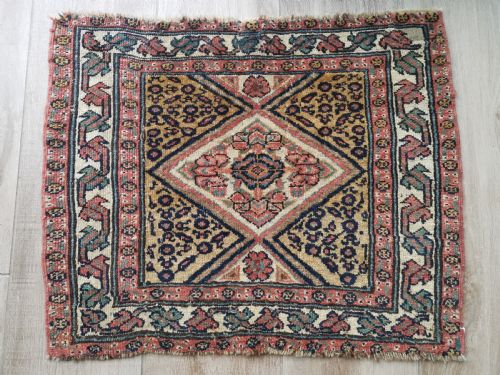
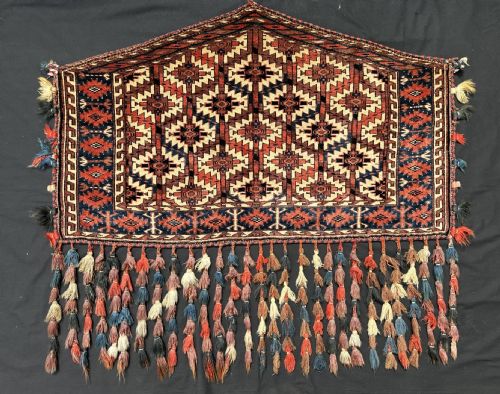
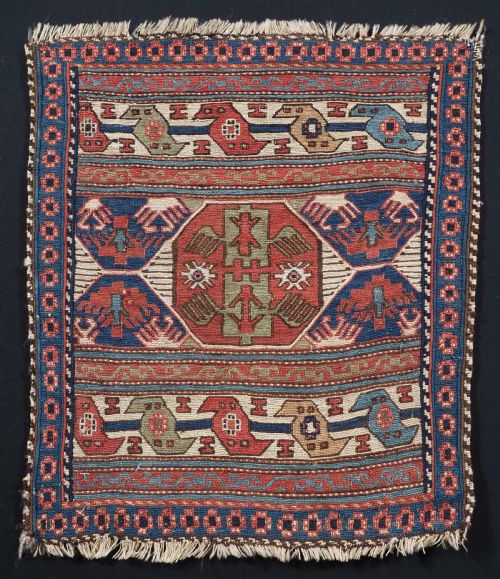
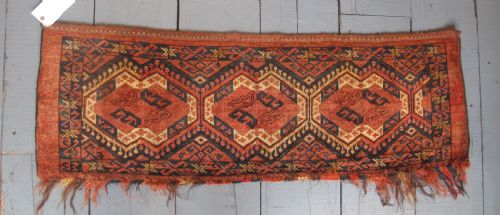
A terracotta wool panel comprises woven tribal textiles, flatweaves, and bag faces originating from Central Asian, Caucasian, and Persian weaving traditions. Buyers searching for a terracotta wool panel encounter nineteenth-century nomadic fragments, Yomut and Tekke Turkmen torba faces, and Shahsavan soumak panels.
The selection ranges from complete storage bags to individual kelim panels and rug fragments. Most pieces date from the mid-nineteenth century up to the early twentieth century, reflecting authentic tribal and regional methodologies.
The dominant terracotta palette draws the eye through earthy red and orange tones set against contrasting ground colours. These items function primarily as decorative wall hangings and textile art within contemporary interiors.
Materials and construction
Weavers utilised natural wool alongside cotton, employing hand-spun fibres that absorb dyes with subtle variation. Natural dyes provide the terracotta hues and secondary shades characteristic of these tribal textiles.
Construction techniques include flatweave, soumak wrapping, and piled knotting depending on the specific tribal origin. Many panels began as utilitarian storage items such as mafrash sides, chuvals, or asmalyks before being repurposed as decorative panels.
Terracotta Wool Panel Retail Price Guide 2026
Typical asking prices for terracotta wool panel among the pieces listed under this phrase on Sellingantiques today, from the lower quarter to the upper quarter. They describe what is for sale here now, not the wider market.
Nomadic weavers occasionally included deliberate minor irregularities in their repeating guls to ward off the evil eye.
Assessing quality
Quality rests upon the crispness of the tribal design, the complexity of motifs such as gul patterns or animal figures, and the saturation of the natural dyes. Superior examples display dense knotting or tight flatweave structures alongside harmonious colour balance.
Condition plays a central role, distinguishing intact bag faces and complete pairs from heavily worn or fragmented textile pieces. The integrity of the original selvedges and the survival of natural colour depth determine the standing of each textile.
The Terracotta Wool Panel Glossary
- Torba
- A small Turkmen storage bag, frequently collected for its finely patterned face. These pieces display traditional guls and characteristic banded designs.
- Soumak
- A flatweaving technique where supplementary weft threads wrap around the warp threads. This method creates a textured surface resembling embroidery on the front.
- Mafrash
- A rectangular storage chest panel woven by nomadic tribes. These panels often feature bold geometric motifs and are frequently found individually.
- Gul
- A repeating medallion or octagonal motif used in Turkmen and other Central Asian rugs. Each tribal group typically utilises distinct gul variations.
- Asmalyk
- A camel trapping produced by Yomut and other Turkmen tribes for wedding processions. They usually feature pentagonal or heptagonal formats.
Terracotta Wool Panel: Frequently Asked Questions
How were these panels used originally?
Nomadic communities utilised these woven pieces as functional storage bags, tent furnishings, and animal trappings during migration. They held bedding, clothing, and household goods within tribal dwellings.
Over time, many of these utilitarian objects lost their original function and entered the decorative market as wall panels and flatweaves.
How do I care for a textile panel?
Protect the wool panel from direct sunlight to prevent natural dye fading. Gentle vacuuming through a mesh screen helps remove dust without damaging the fibres.
Avoid hanging textiles in high-moisture environments such as kitchens or damp spaces. Professional textile conservation cleaning is recommended for deep cleaning.
How do I identify tribal origins?
Tribal attribution relies on specific design motifs, colour palettes, and structural weave characteristics. Turkmen pieces often feature distinct guls while Shahsavan items display intricate soumak work and bird motifs.
Regional dyeing traditions and wool preparation methods also offer clues to whether a piece originates from Persia, the Caucasus, or Central Asia.
Are these pieces complete or fragments?
The inventory includes both complete bag faces with original backs and individual fragments cut from larger storage containers or carpets. Some panels were constructed by joining multiple narrow flatweave strips together.
Each listing specifies whether the item is a full face, a pair, or a structural fragment.