


Wool Tekke Turkmen Bag
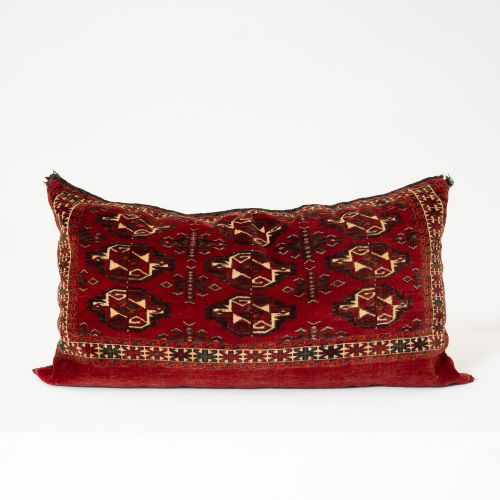
A wool tekke turkmen bag brings tactile Central Asian tribal heritage into a room through dense knotted wool and natural dyes.
Wool Tekke Turkmen Bag
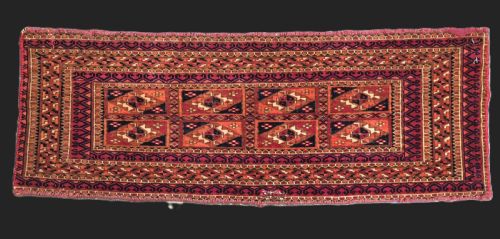
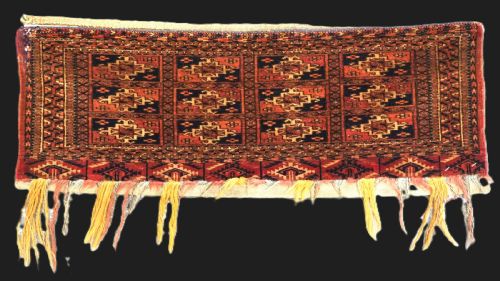
A wool tekke turkmen bag encompasses utilitarian tribal items such as chuvals, torbas, kap, and mafrash faces woven by nomadic weavers across Central Asia. These items served as storage sacks and household furnishings within the tribal tent, often created as dowry weaving.
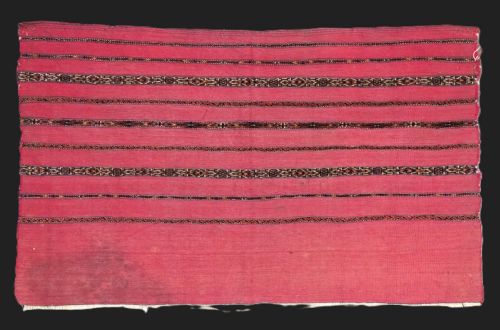
The selections available here range from complete examples retaining their plain weave backs to fragments and single cushion faces. Collectors encounter pieces originating from the eighteenth century through to the early twentieth century, spanning specific tribal designations including Kizil and Ak variants.
How they were made
Weavers utilised wool for the primary pile, often combining cotton and linen structural elements to achieve stability within the fabric. Natural dyes provided the characteristic deep palette seen across the tribal formats.
The construction relied on meticulous knotting to produce very fine weaves, frequently incorporating specific design motifs such as primary guls, curled leaf patterns, and tree designs.
Some survival bags still bear their original hanging loops, ready to be mounted just as they were inside nineteenth-century tents.
What varies in quality
Quality rests upon the density of the weave and the precision of the drawing within the main motifs. Pieces demonstrating exceptionally fine knotting and scarce design layouts stand apart from standard production.
The retention of original components, such as plain weave backs and hanging loops, influences the integrity of the piece. Colour saturation and the clarity of natural dye application further distinguish superior examples.
The Wool Tekke Turkmen Bag Glossary
- Chuval
- A large storage bag used by nomadic tribes for bedding and household goods. These pieces typically display multiple guls arranged in rows.
- Torba
- A smaller storage bag utilised within the tent, often hung against the wall. They share the intricate knotted pile technique of larger chuvals.
- Gul
- The primary medallion motif repeated across Turkmen weaving. Variations include Salor guls and aina guls.
- Mafrash
- A rectangular storage container or face utilised for bedding and possessions. They frequently display panel or banded designs.
- Kizil
- A red-ground variety of Turkmen weaving. These examples are distinguished by their deep madder coloration.
Wool Tekke Turkmen Bag: Frequently Asked Questions
What is a chuval used for?
A chuval functioned as a large storage sack inside the nomadic tent. Weavers designed them to hold bedding, clothing, and domestic possessions.
Over time, many of these storage sacks were separated into individual faces or preserved with their original plain weave backs intact.
How do I identify a torba?
A torba is traditionally smaller than a chuval and served as a smaller storage bag or hanging pouch within the dwelling. They often feature distinct primary guls and formal borders.
Collectors frequently encounter them in complete form with backs or as individual decorative textile faces.
What are guls on these bags?
Guls are the repeating primary medallion motifs that form the central design vocabulary of Turkmen tribal weaving. Different tribes and sub-groups utilised distinct gul shapes, such as Salor or aina forms.
The drawing and arrangement of these guls help identify the origin and period of the textile.
How should I care for a textile?
Living with these antique textiles involves protecting them from direct sunlight and excessive moisture to preserve the natural dyes and wool pile. Gentle vacuuming through a mesh screen helps remove dust without disturbing the structure.
Displaying them away from high-traffic floor areas ensures the fragile cotton and wool foundations remain secure.