
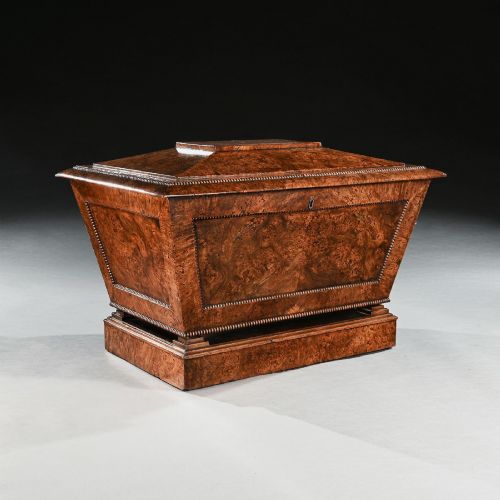

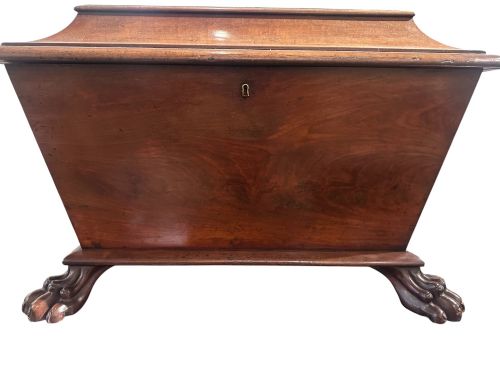
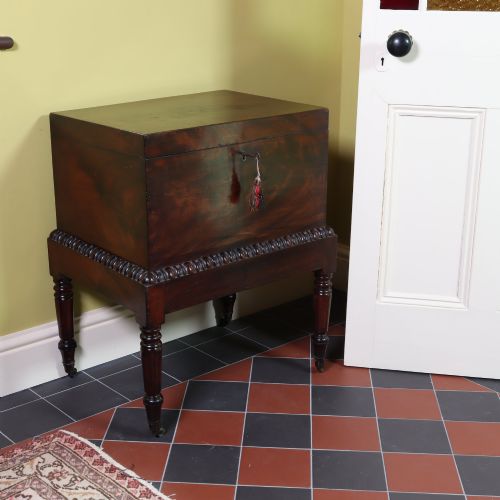


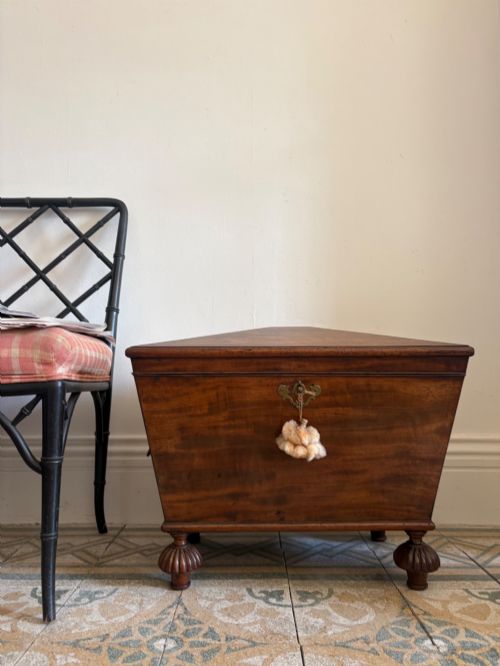

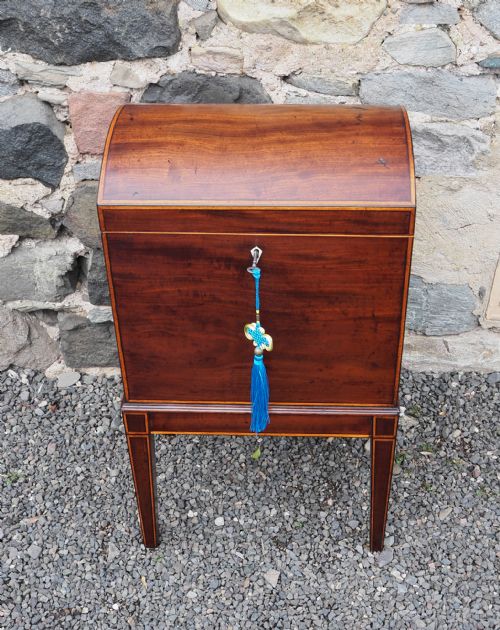
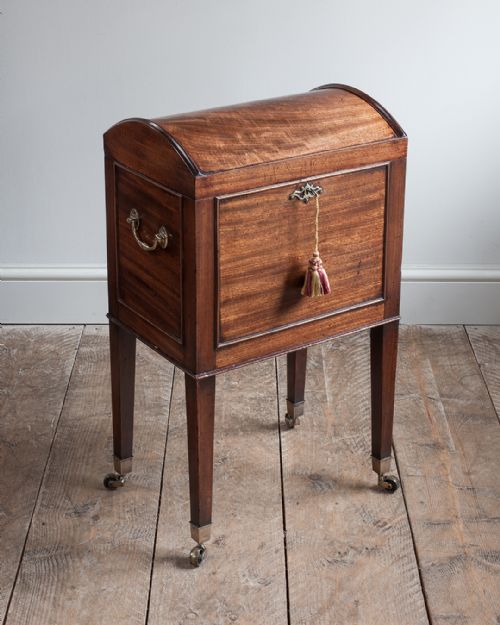


Wooden Wine Sarcophagus
A wooden wine sarcophagus is a stately receptacle for bottles, bringing classical architecture into the dining room.
Wooden Wine Sarcophagus
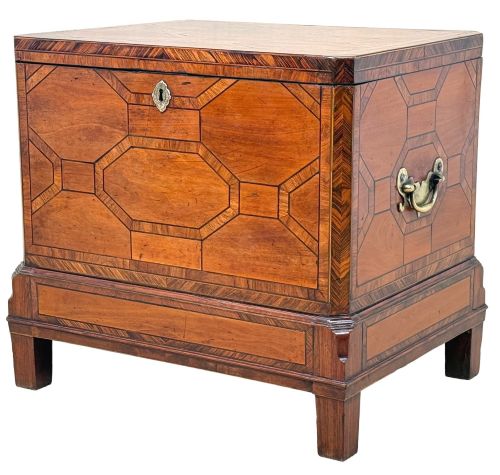
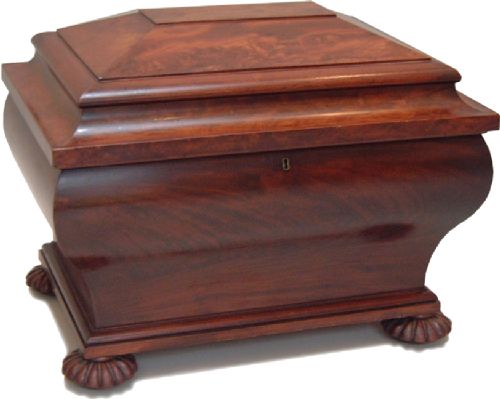
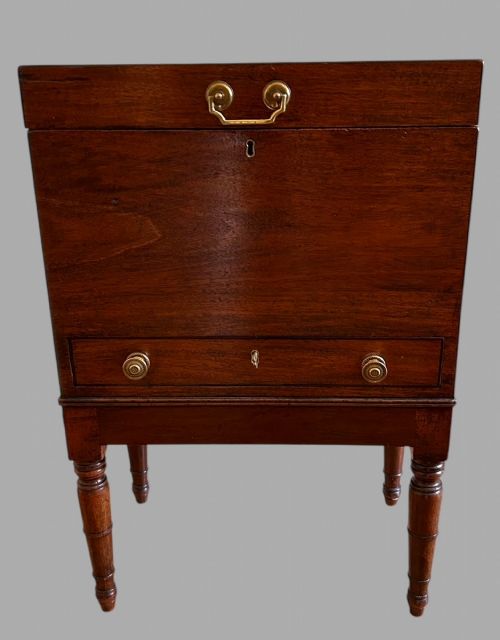
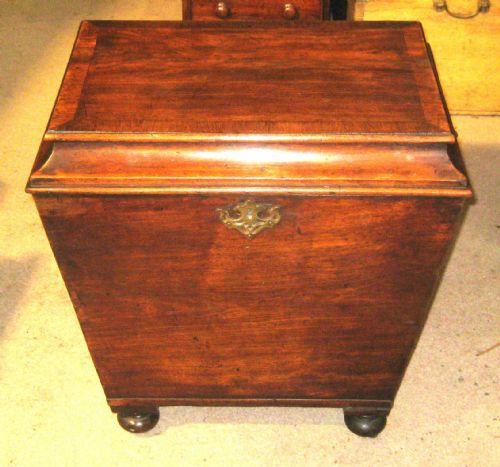
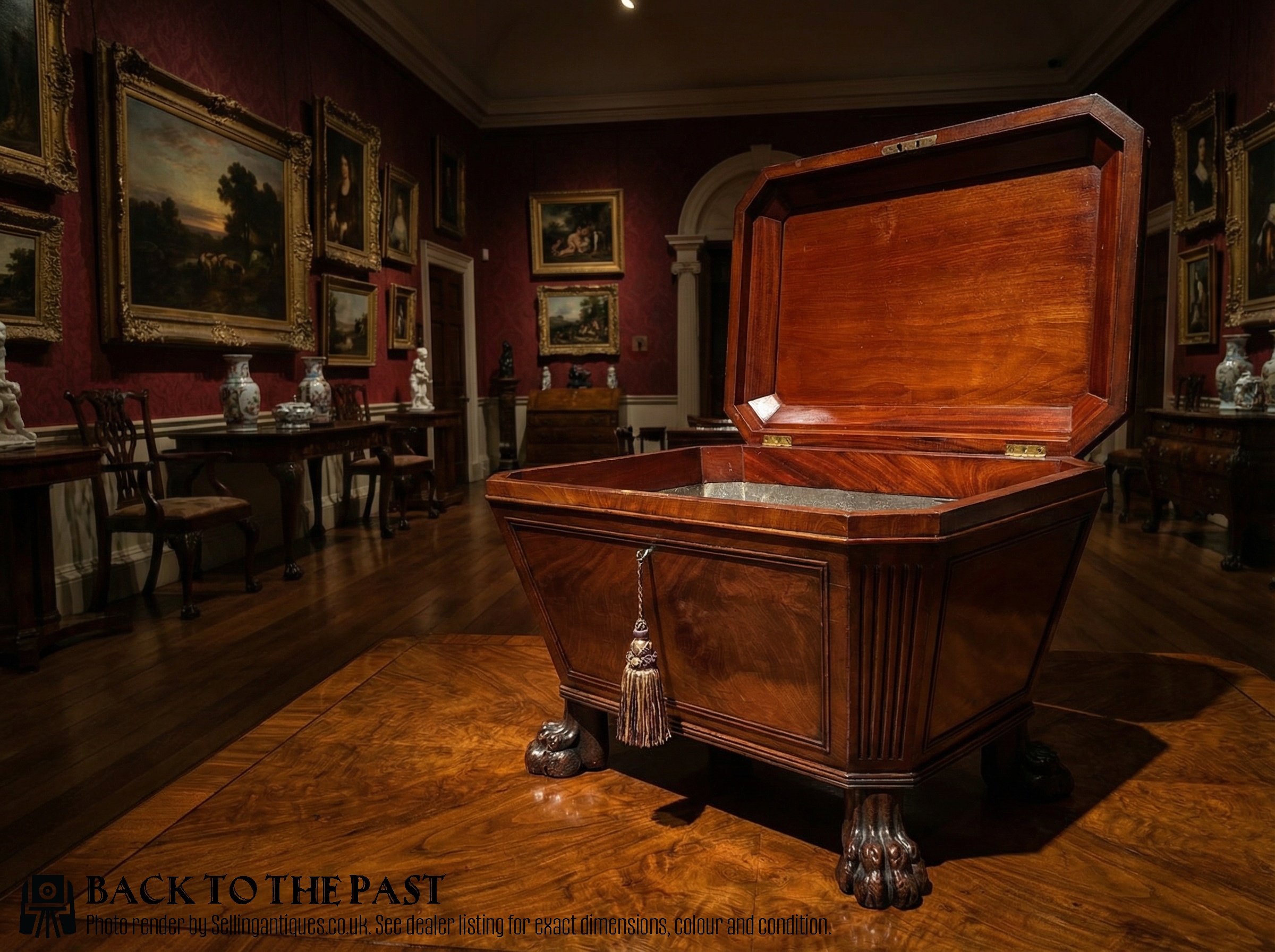
When you search for a wooden wine sarcophagus, you encounter classical vessels designed to chill and store wine during elite dining customs. These objects date primarily from the Georgian, Regency, and Victorian eras, taking their name from ancient stone coffins due to their distinct gabled or pedestal forms. Mahogany dominates the selection, frequently paired with secondary timbers like pollard oak.
You will most commonly meet Regency and Georgian examples on this page, often featuring sarcophagus outlines resting on paw feet or plinths. Makers shaped these pieces to sit beneath sideboards or beside dining tables, ready to hold bottles in internal lead-lined compartments. The typology encompasses cellarettes and wine coolers sharing this heavy architectural silhouette.
Quality variations
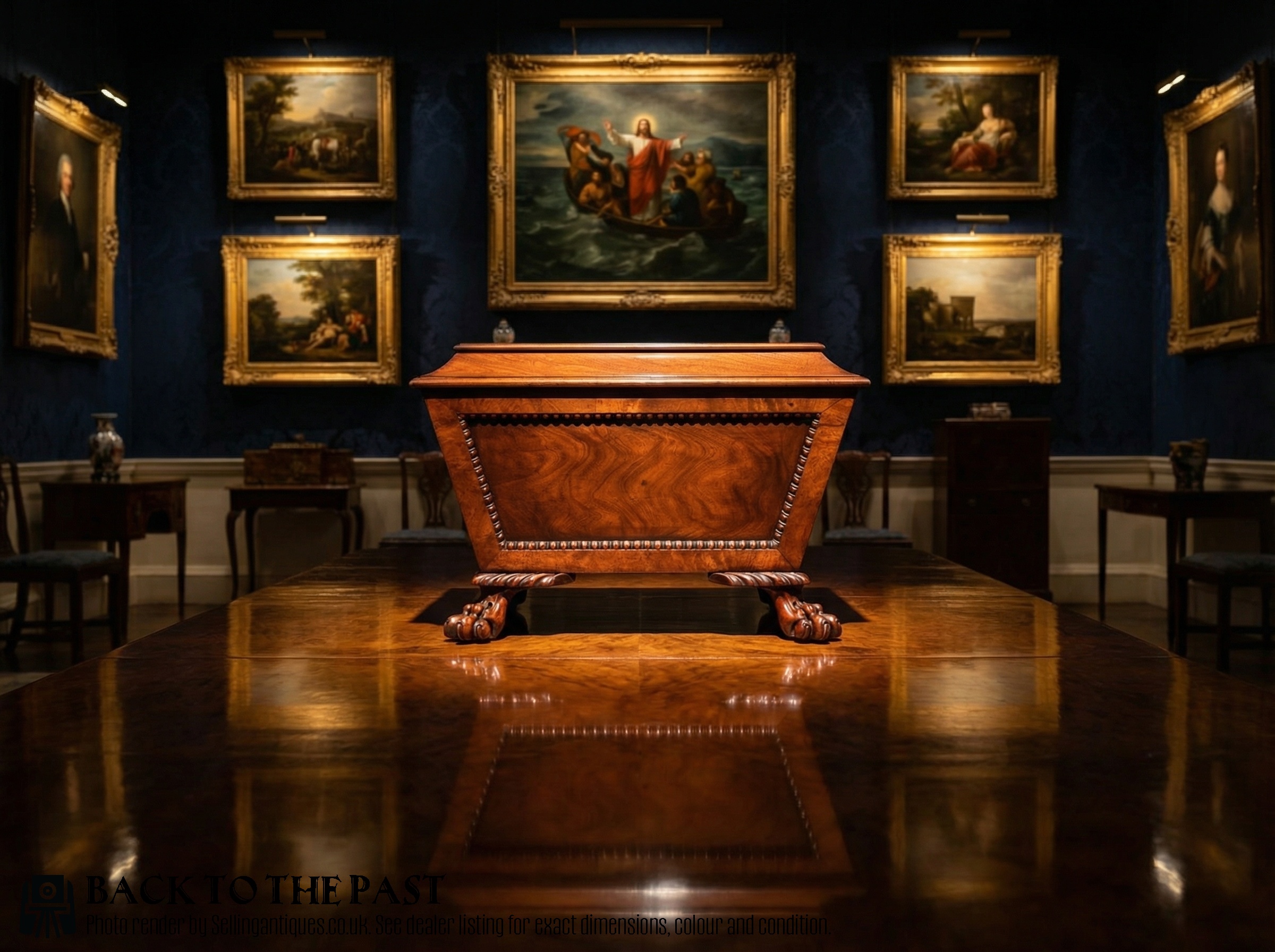
The sophistication of the timber figure and the crispness of any carving set apart the finest examples. Flame mahogany and figured pollard oak demand superior skill from the cabinetmaker in matching grains across curved surfaces.
Original hardware, including lead liners, brass carrying handles, and working locks with keys, elevates an item's integrity. Secondary woods and the precision of internal bottle dividers further indicate the workshop's original standing.
Wooden Wine Sarcophagus Retail Price Guide 2026
Typical asking prices for wooden wine sarcophagus among the pieces listed under this phrase on Sellingantiques today, from the lower quarter to the upper quarter. They describe what is for sale here now, not the wider market.
Listings feature mahogany, pollard oak, and satinwood across Georgian, Regency, and Victorian periods.
Thomas Hope·Charles Heathcote Tatham·Freemans of Norwich·T. Feetham·Gillows of Lancaster and London·Maples & Co
The Wooden Wine Sarcophagus Glossary
- Cellarette
- A lockable container used for storing wine bottles near the dining table. They frequently double as wine coolers.
- Sarcophagus
- A monumental vessel shape inspired by classical antiquity, featuring a sloping lid and a tapered body.
- Ormolu
- Gilded bronze mounts applied to furniture for decorative contrast. This technique was favoured during the Regency and French-influenced periods.
- Pollard oak
- Timber taken from pollarded trees, noted for its turbulent, dense grain patterns. Cabinetmakers utilised it for high-status Regency furniture.
- Lead liner
- A protective internal metal trough designed to hold ice for chilling bottles. Its survival indicates original domestic use.
Wooden Wine Sarcophagus: Frequently Asked Questions
What is a wooden wine sarcophagus used for?
These pieces served as portable cellars during formal dinners, keeping wine cool in ice within lead-lined interiors. Guests accessed bottles stored securely beneath heavy lockable lids.
Today, they function as sculptural side tables or storage chests in living spaces, holding blankets or periodicals instead of vintage claret.
How do I date a wooden wine sarcophagus?
Dating relies on stylistic clues, timber choice, and construction methods. Georgian models often show cleaner rectilinear lines, whereas Regency versions embrace bold classical sarcophagus curves and bronze mounts.
Victorian and later revival pieces frequently repeat these motifs with heavier proportions or machine-cut veneers. Examining secondary woods inside the carcass clarifies the period.
Where were these placed in a historic dining room?
They usually stood directly beneath the dining sideboard or tucked into a designated corner of the room. Servants drew bottles from them throughout the course of a long meal.
Because they were freestanding, their finished backs and side handles allowed easy movement by footmen.
Are lead liners original?
Many surviving examples retain their original fitted lead linings, which were soldered into the timber interior to hold melting ice. The presence of this lining confirms the vessel's primary function as a cooler.
Some interiors were later altered or stripped of their metal liners to serve as dry storage boxes.