



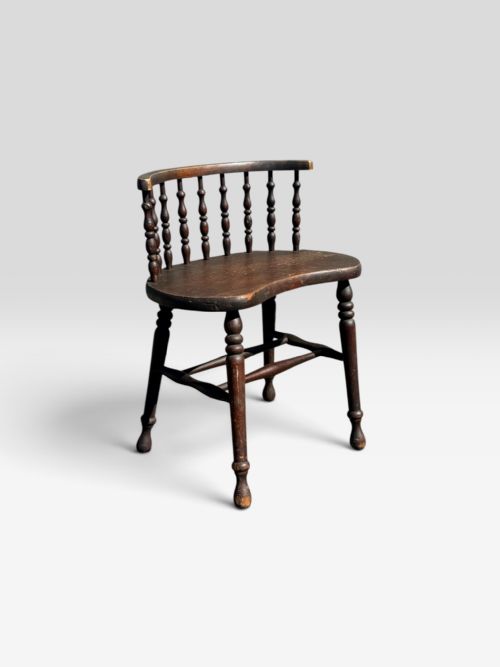
Wooden Windsor Desk Chair
A wooden windsor desk chair combines country comfort with sturdy seating, offering solid timbers and traditional joinery that suit daily writing tasks.
Wooden Windsor Desk Chair
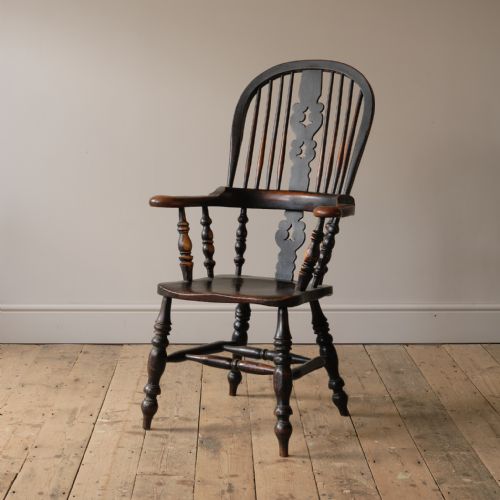
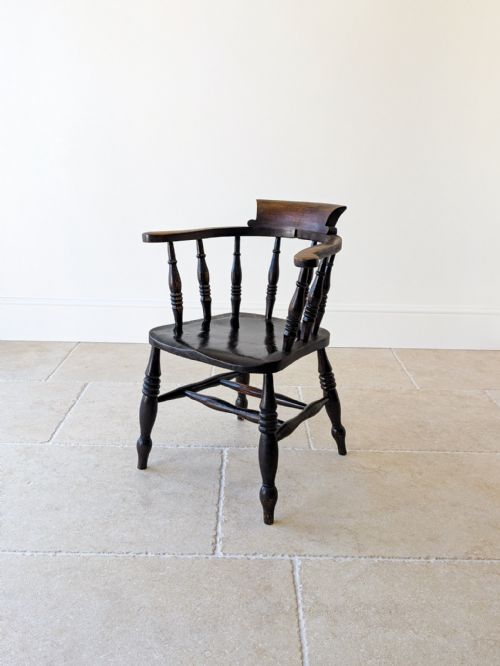
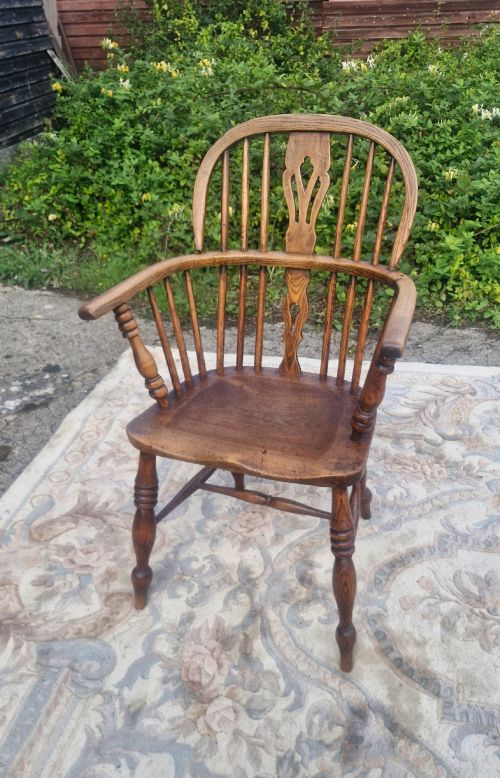
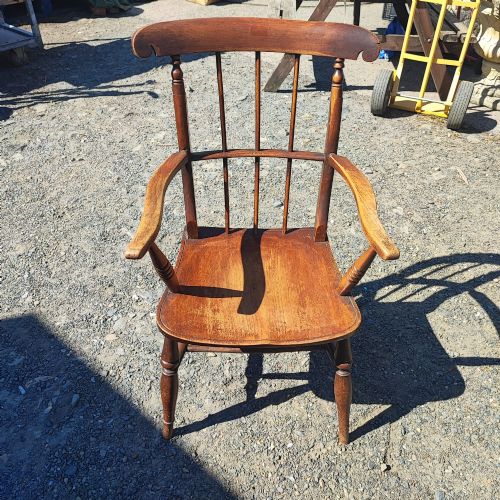
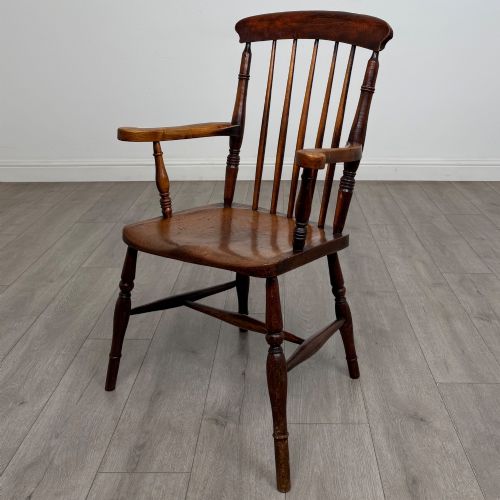
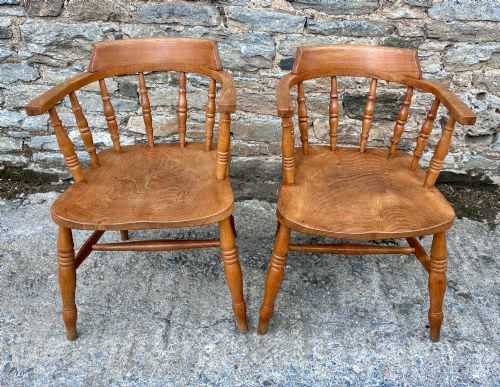
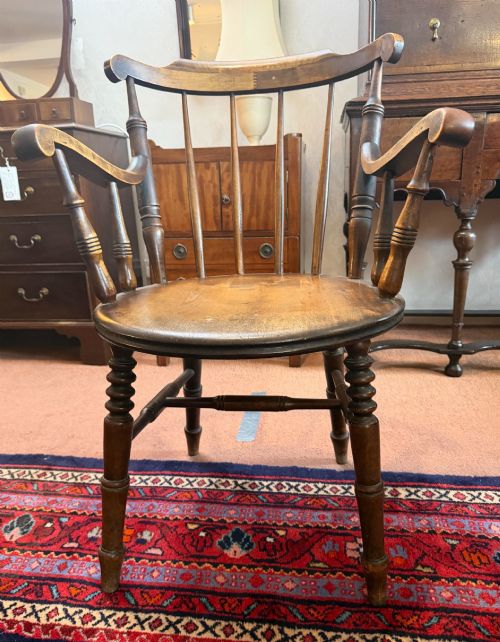
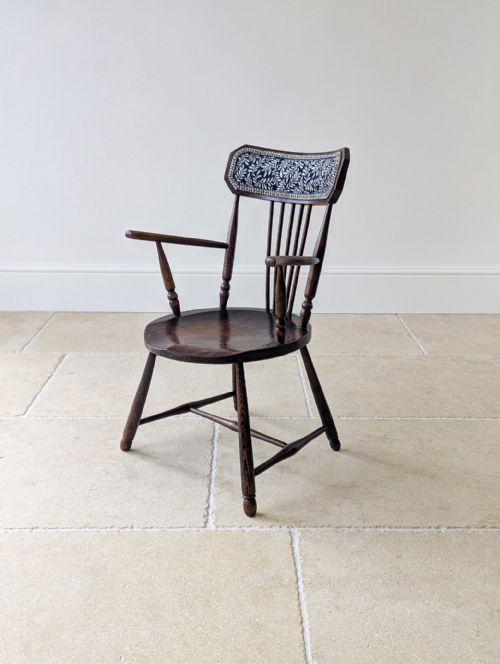
A wooden windsor desk chair brings together centuries of vernacular seating tradition, built specifically for practical workspaces and studies. When searching for a wooden windsor desk chair, you encounter forms that evolved from kitchen and farmhouse seating into functional writing chairs. The selection spans low backs, smokers' bows, and captain's chairs designed for long hours at a table.
The pieces appearing here date predominantly from the nineteenth and eighteenth centuries, with Victorian and Edwardian examples also represented. You find regional variations including Scottish models and West Country forms, showing distinct local turning and bending traditions. Armchairs and carvers dominate the offerings, providing supportive curves for regular use.
Materials and construction methods
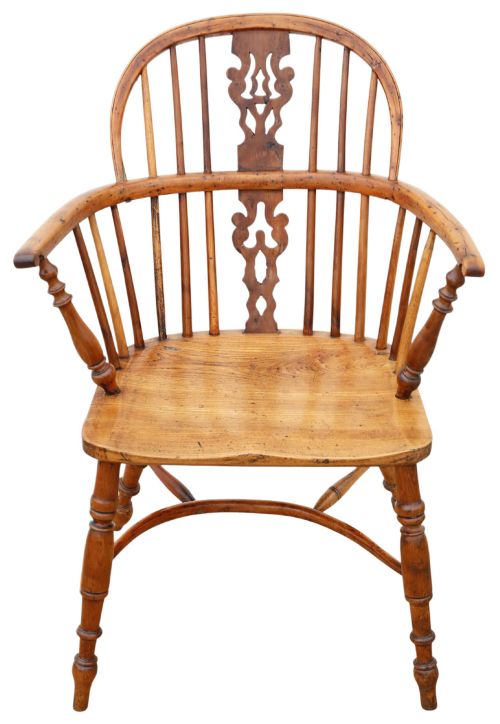
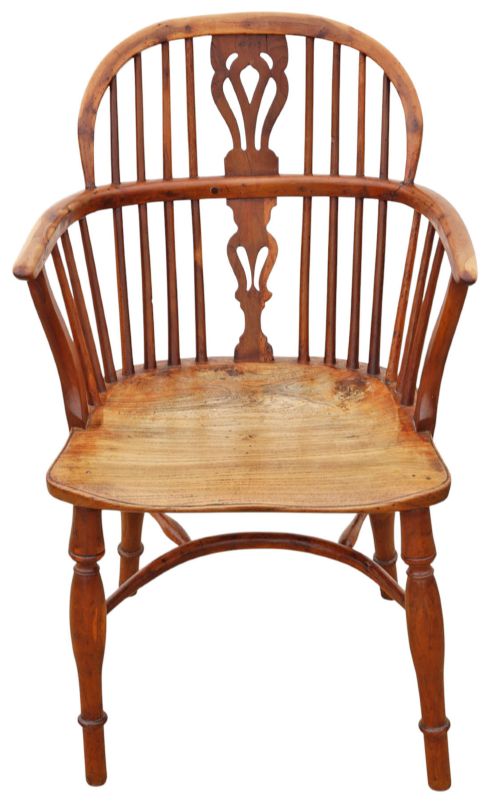
Construction relies on a traditional mix of timbers selected for their specific mechanical properties. Elm commonly forms the thick saddle seat because its interlocking grain resists splitting under pressure, while ash, beech, and oak provide strength for legs, spindles, and bows. Yew appears in higher quality examples, prized for its rich figure and warmth.
Makers shaped these chairs using a combination of steam bending for the back hoops and arm rails, and lathe turning for the spindles and undercarriages. The components join through wedged tenons and mortises, locking the uprights directly into the solid wooden seat slab without metal fasteners.
Makers occasionally stamped their work directly into the thick elm seats, leaving permanent signatures for future deskside sitters.
Distinctions in quality and execution
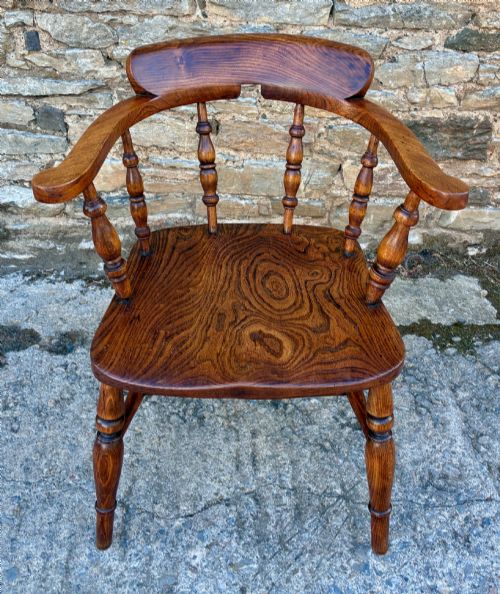
Quality separates through the selection and matching of timbers, particularly in the contrast between the seat wood and the turned members. Superior examples utilise figured yew or carefully chosen elm with deep, natural figuring across the seat. Lesser pieces rely on plain beech or mixed timbers with heavier painted finishes applied later.
The refinement of the turning on the legs and spindles dictates the visual success of the piece. Better chairs display crisply profiled baluster turnings and well-carved arm terminals, whereas utilitarian versions feature simple, straight spindles and thicker, heavier proportions.
J Spencer·Gabbitass Worksop
The Wooden Windsor Desk Chair Glossary
- Smoker's bow
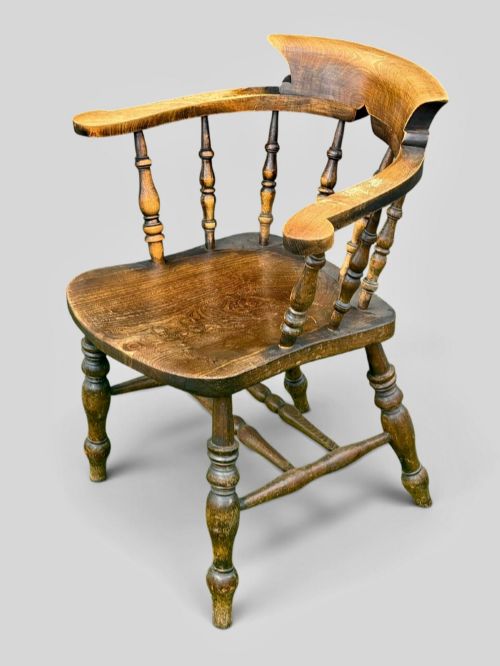
- A low-backed Windsor chair with a continuous bentwood rail forming the arms and back, commonly used in domestic and commercial settings during the nineteenth century. These chairs offer a compact footprint and supportive elbow rests.
- Comb back
- A Windsor chair style where the vertical spindles extend upward to support a horizontal top rail resembling the teeth of a comb. This form dates back to the eighteenth century and provides additional upper back support.
- Captain's chair
- A sturdy low-back armchair designed for office or domestic use, featuring a rounded top rail supported by numerous short spindles. They provide stable seating for writing desks and captain's tables.
- Saddle seat
- A thick wooden seat base sculpted with hollows and dips to mimic the contours of a saddle for sitting comfort. Elm was the preferred timber for this purpose due to its splinter-resistant grain.
- Spindle
- A slender turned wooden rod used vertically to fill the space between the seat and the arm rail or back bow. Spindles distribute weight and provide rigid structural support.
Wooden Windsor Desk Chair: Frequently Asked Questions
What makes a windsor chair suitable for a desk?
A wooden windsor desk chair provides a supportive curved back and sturdy armrests that accommodate seated work at tables and writing surfaces. The solid saddle seat offers durability for daily use.
Traditional proportions place the seat at a height that fits standard writing desks while allowing the sitter to move freely.
How do I identify an eighteenth-century model?
Eighteenth-century examples often feature comb-back configurations and vernacular regional characteristics. The turning details on the legs and the wear patterns on the elm seat indicate earlier production dates.
Construction methods on these pieces rely entirely on traditional wedged joints without modern adhesives or fixings.
Which woods were used to build these chairs?
Makers combined multiple timber species within a single chair to utilise the strengths of each wood. Elm provided a tough, non-splitting seat slab.
Ash, beech, and oak supplied rigid strength for the turned legs and spindles, while yew was selected for its decorative grain in finer models.
Are smokers' bows the same as captain's chairs?
Smokers' bows and captain's chairs share a similar low-backed profile with a continuous curved arm rail. Both forms emerged during the nineteenth century for use in domestic and office settings.
Regional terminology often defines whether a dealer lists a particular low-backed model under one name or the other.