

Oak Captains Armchair
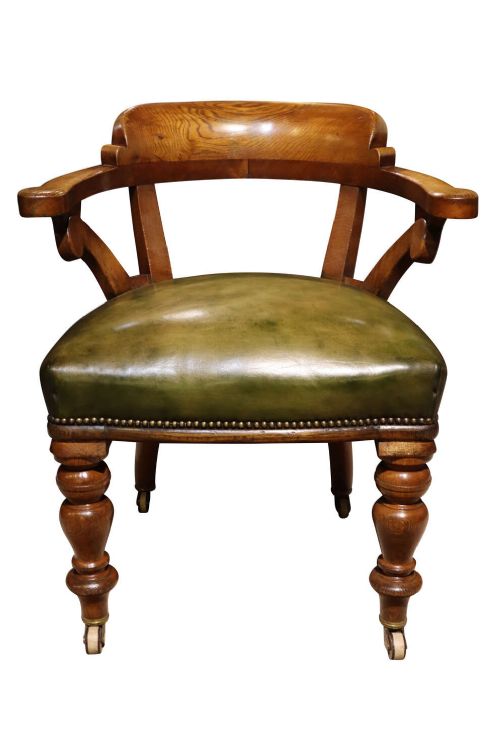
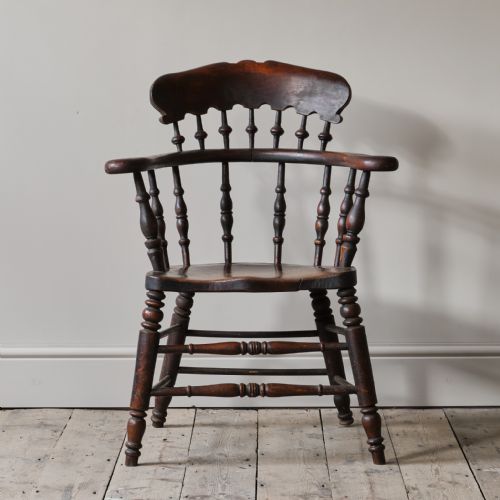
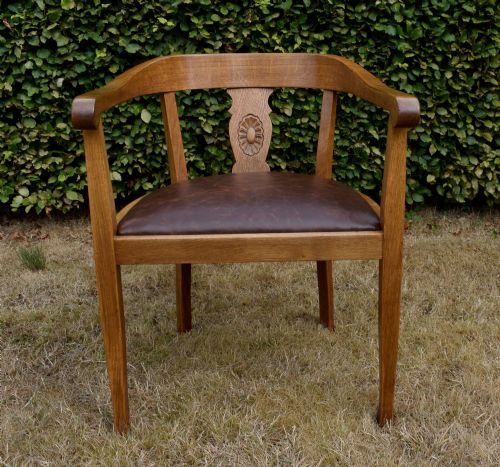
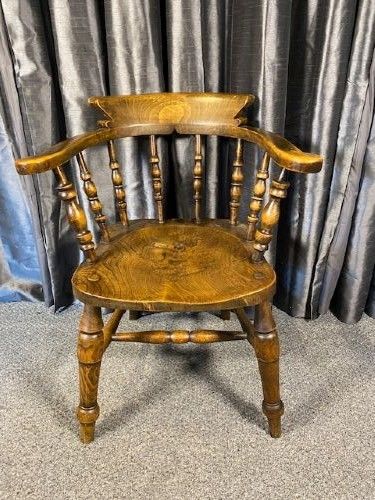
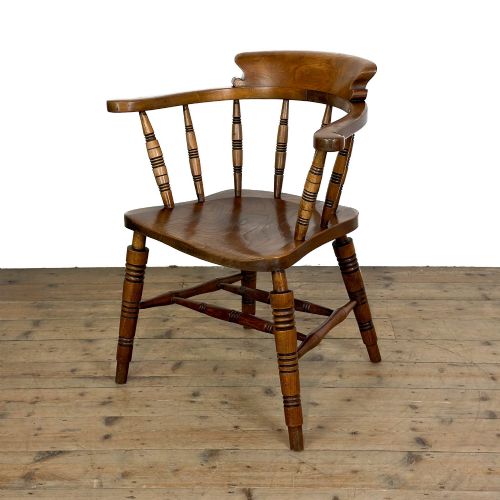
An oak captains armchair delivers sturdy comfort and traditional office utility, making it a dependable seat for a desk or study.
Materials and Construction
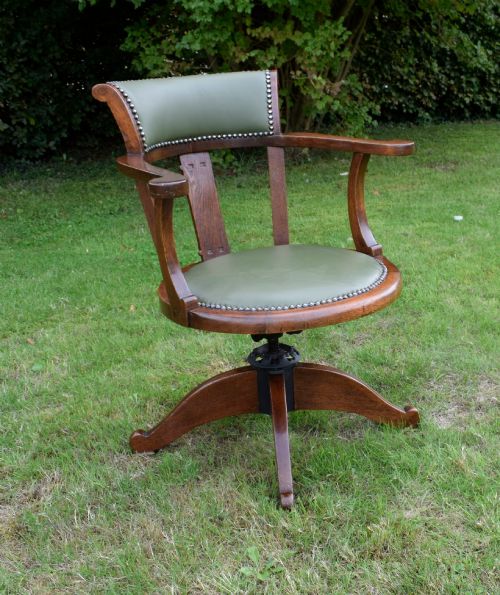
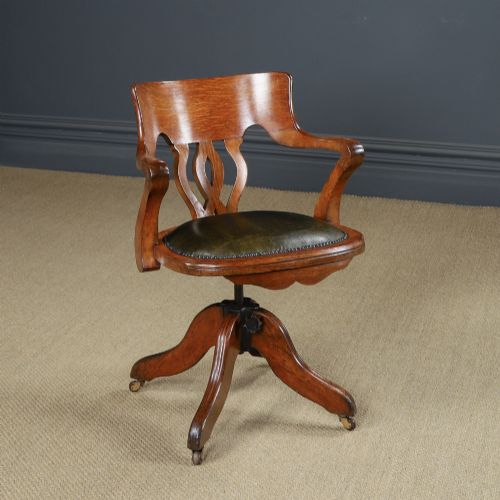
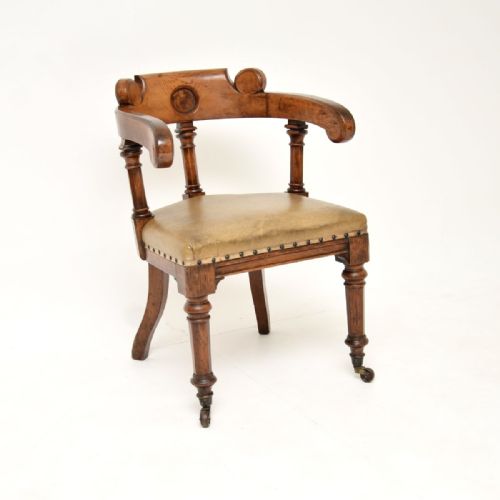
Makers built these frames predominantly in solid oak, supplemented by secondary timbers such as elm, beech, ash, and iron for internal swivel mechanisms. Leather upholstery appeared frequently on library and office variants, secured with brass tacks or studs.
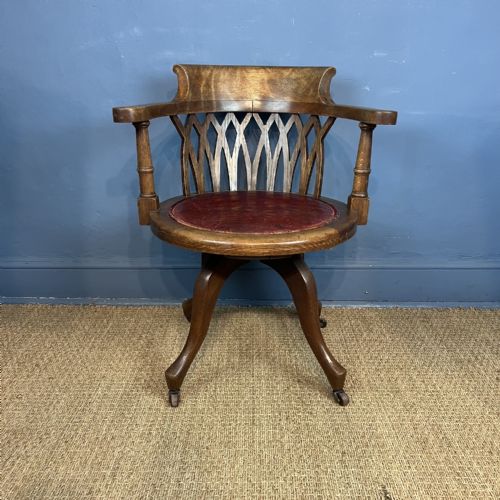
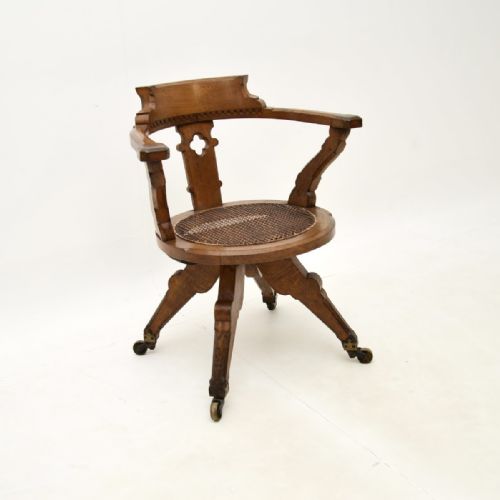
Joinery combined traditional turning and steam-bending for the curved back rails with metal swivel and tilt hardware on later office models. Carved details, Gothic revival motifs, and inset leather pads distinguished the more ambitious workshop productions from utilitarian seating.
Assessing Quality
The standard of a piece rests upon the weight of the timber and the integrity of the rotating or tilting mechanism. Superior examples utilise dense golden or dark oak with substantial turned spindles and clean joinery that withstands daily use.
Refined pieces display deeper carving, high-grade supple leather upholstery, and sophisticated revolving hardware rather than simple wooden pivots. The harmony between the turned arm supports and the proportion of the round or saddle seat dictates the overall balance of the design.
Listings span the Victorian and Edwardian eras, featuring oak combined with leather, brass, elm, and cast iron.
S&H Jewell·P & O
The Oak Captains Armchair Glossary
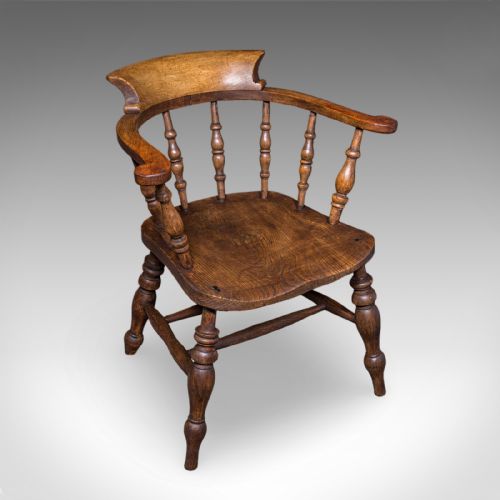
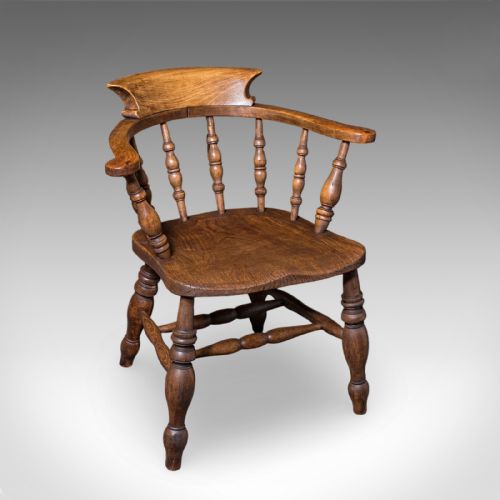
- Smoker's bow
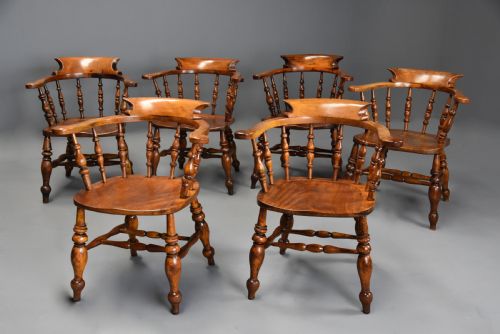
- A low-backed Windsor-style armchair with a continuous curved rail forming the arms and back. This form appears frequently in nineteenth-century country and office settings.
- Revolving mechanism
- The iron and brass hardware beneath the seat that allows the chair to turn and tilt. Early twentieth-century examples often incorporate complex spring systems.
- Gothic Revival
- A nineteenth-century stylistic movement marked by pointed arches, heavy moulding, and architectural carving. Chairs in this style display distinct ecclesiastical influences.
- Bergere
- A type of upholstered armchair featuring enclosed cane or wicker work on the back and sides. Some twentieth-century variants combine this technique with a swivel base.
Oak Captains Armchair: Frequently Asked Questions
What defines an oak captains armchair?
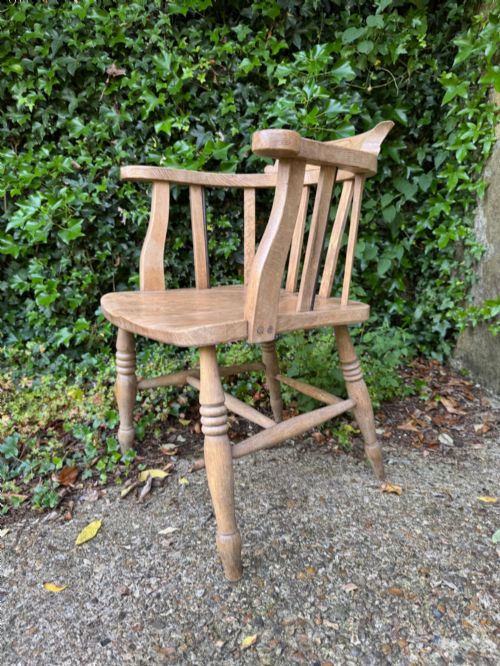
These pieces combine a low, curved wooden back rail with a solid timber or leather-upholstered seat. They derive their traditional form from nineteenth-century office and shipboard seating.
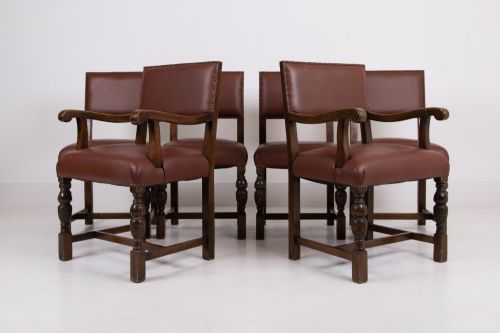
Most variants feature either a stationary four-leg base or a revolving metal mechanism designed for desk work.
How do I date an oak captains armchair?
Dating relies on identifying construction methods, hardware, and stylistic details recorded across Victorian and Edwardian periods. Mid-nineteenth-century pieces often show simpler country joinery.
Later Edwardian versions introduce complex iron swivel and tilt mechanisms alongside machine-turned spindles.
Were these chairs used at sea?
Certain specialised models originated as ship's furniture, utilised in officers' quarters and vessel saloons. These variants often featured heavy wooden frames and weighted bases to maintain stability.
Land-based versions quickly adopted similar low profiles for domestic libraries and commercial offices.
How should I care for the leather upholstery?
Original leather benefits from periodic conditioning to maintain flexibility and preserve its natural grain. Avoid placing the timber and hide near direct heat sources.
Gentle dusting of the carved oak frame helps protect the surface patina over time.