
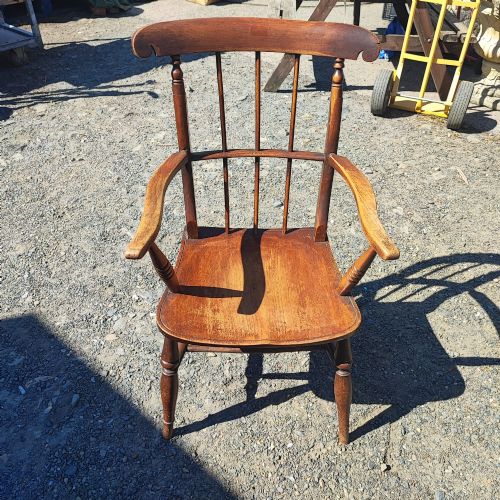
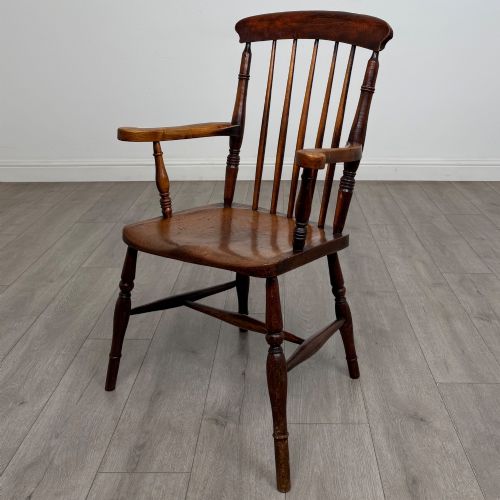

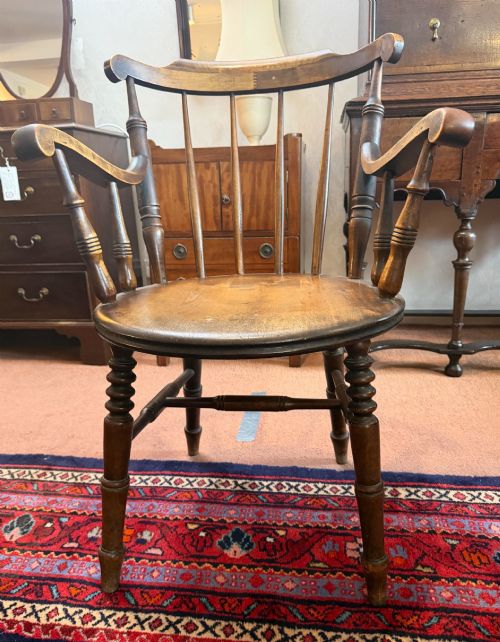
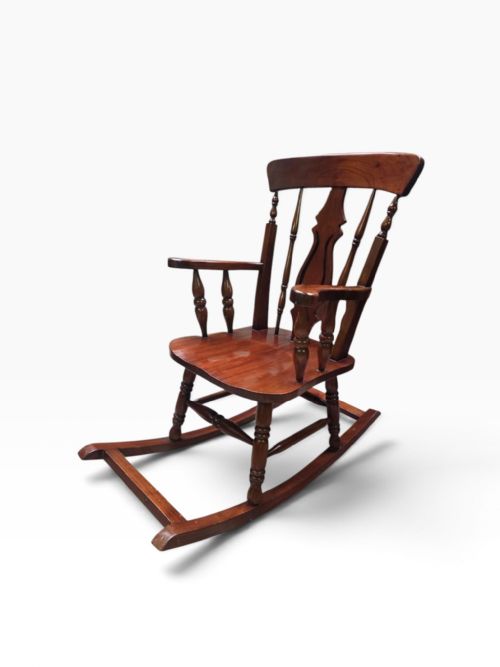
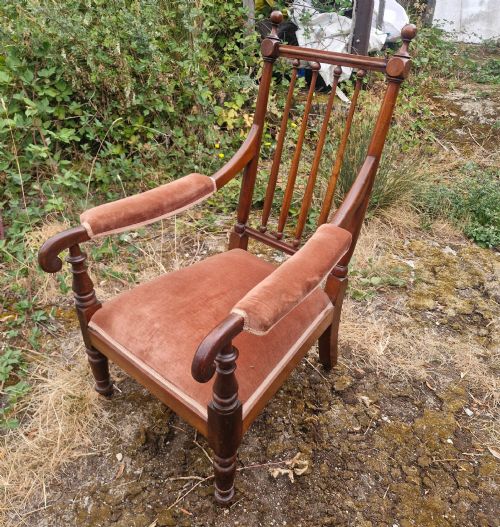
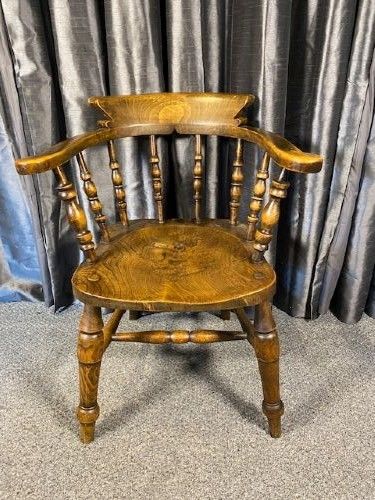
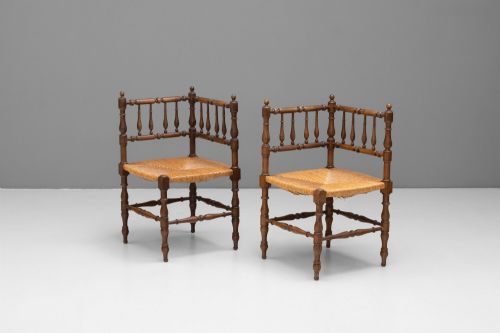
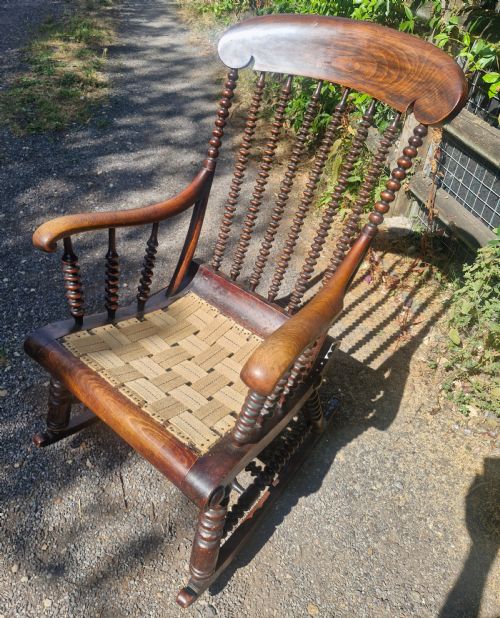
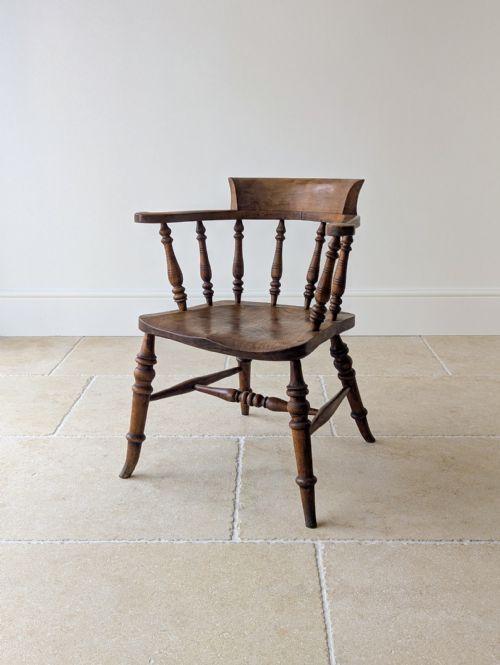
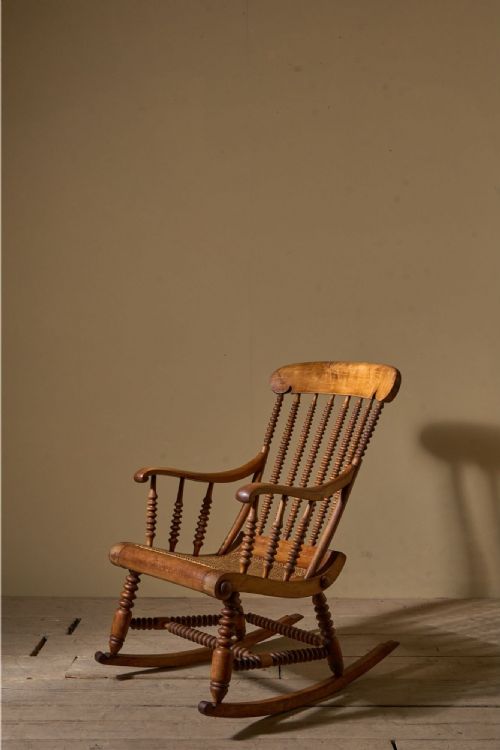
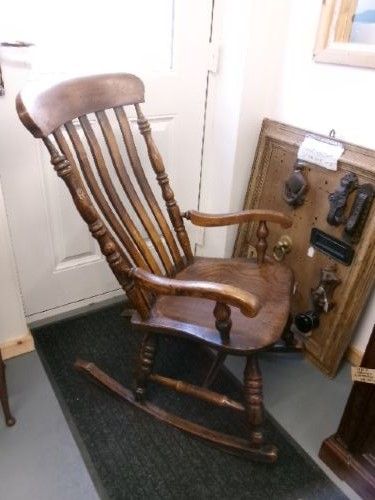
Turned Spindle Back Armchair
A turned spindle back armchair brings robust vernacular craft and honest structural joinery directly into a living space.
Turned Spindle Back Armchair
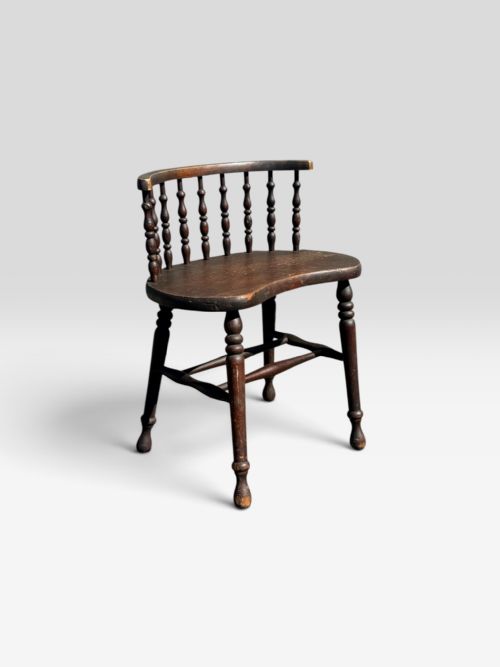
A turned spindle back armchair relies on shaped wooden uprights and sturdy rails to form a supportive framework for daily seating. These pieces span country workshops and urban revival studios, crossing Georgian, Regency, Victorian and Edwardian decades with enduring utility.
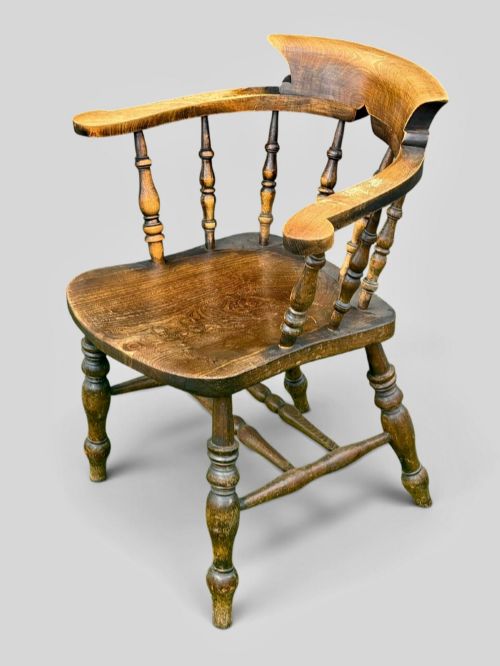
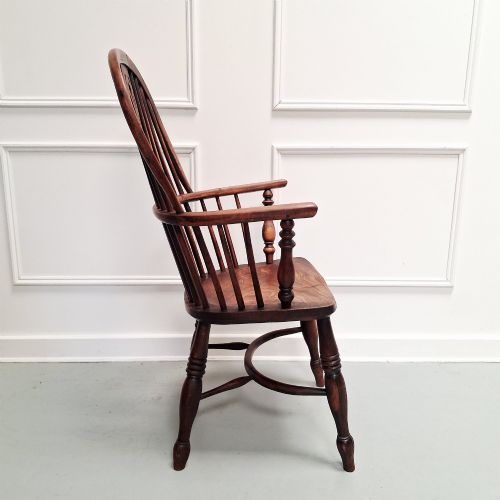
Most examples found here emerge from regional British traditions, blending vernacular forms like the smokers bow, captain chair, and Windsor armchair. Woods such as elm, ash, beech, and oak predominate, frequently paired with rush seats or solid timber saddles.
How they were made
Joiners shaped these armchairs using traditional lathe turning for the spindles and legs, alongside steam-bending for the curved back rails. Woods were selected for specific structural roles, pairing flexible ash with durable elm seats and sturdy beech framing.
Many specimens show exposed pegged joints and wedged tenons that lock the components tightly together without relying on metal fixings. Surfaces often display original finishes, ranging from clear wax polish and dark stain to early black ebonising and historic paint.
Listings feature woods like elm, ash, beech, oak, and mahogany across Victorian, Regency, and Edwardian periods.
What varies in quality
The distinction between ordinary and exceptional work lies in the crispness of the lathe turning and the harmony of timber selection. Master makers balanced visual lightness with structural strength, ensuring that slender spindles carried load without appearing clumsy.
Preservation of original surface patination and uncompromised joinery elevate individual examples significantly. Pieces retaining early rush seats, maker stamps, or undisturbed historic finishes represent the upper tier of surviving stock.
Morris & Co·Philip Webb·J Spencer·E W Godwin
The Turned Spindle Back Armchair Glossary
- Spindle
- A slender, lathe-turned wooden rod used to form the uprights of a chair back. These components provide rigid back support while maintaining an open, airy silhouette.
- Smokers Bow
- A low-backed Windsor derivative featuring a continuous curved armrail supported by turned spindles. This vernacular form originated in country pubs and farmhouses for comfortable fireside sitting.
- Windsor
- A chair construction method where legs and back spindles are wedged directly into a solid sculpted wooden seat rather than a traditional frame. This technique yields exceptional physical stability.
- Rush Seat
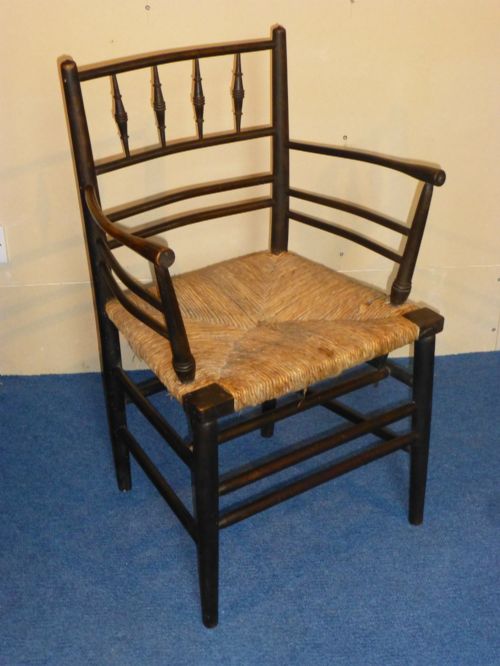
- A woven seating surface made from twisted marsh grasses tied over a wooden frame. This traditional method offers a resilient, textured platform for everyday use.
Turned Spindle Back Armchair: Frequently Asked Questions
How do I care for a rush seat?
Keep rush seats dry and away from direct heat sources to prevent the natural fibres from becoming brittle and snapping.
Apply a light application of beeswax to the wooden frame occasionally, avoiding contact with the woven seating material.
Were these chairs used at desks?
Shorter spindle back armchairs and captain chairs frequently served as desk or library seating in nineteenth-century homes.
Their curved arm rails and sturdy proportions allowed for extended sitting while accommodating traditional writing spaces.
How do I distinguish regional styles?
Regional differences appear in the turning profiles of the legs and the specific combination of native timbers utilised.
Lancashire and Cheshire workshops often favoured distinct spindle arrangements compared to West Country or Thames Valley makers.
Can these chairs handle daily use?
Solid hardwood construction and pegged joinery make these armchairs remarkably durable for regular seating.
Checking that the wedged joints remain firm ensures the frame safely supports everyday weight over time.