
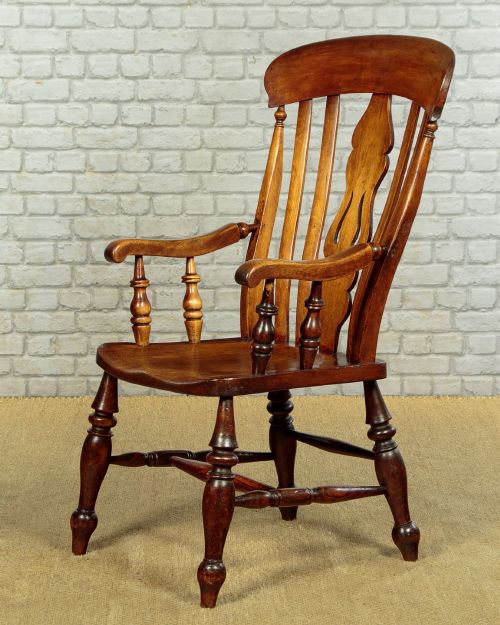
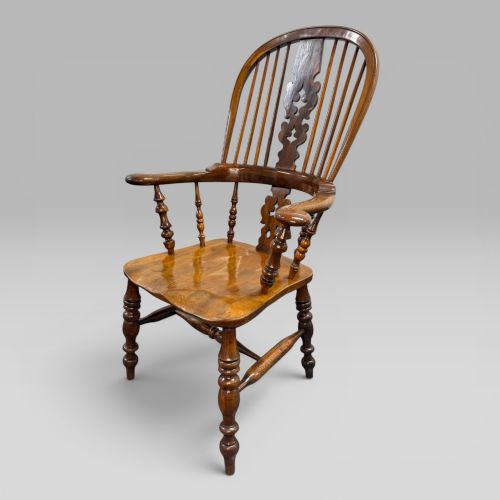
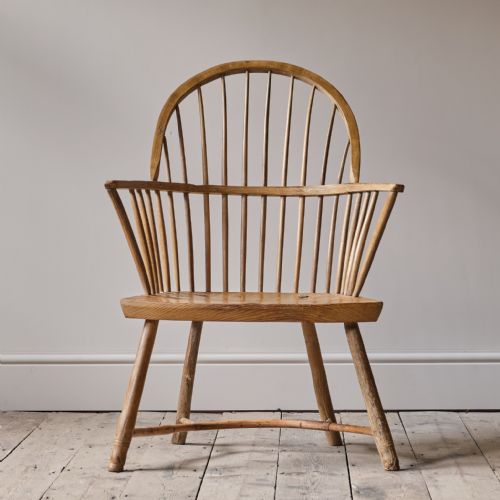
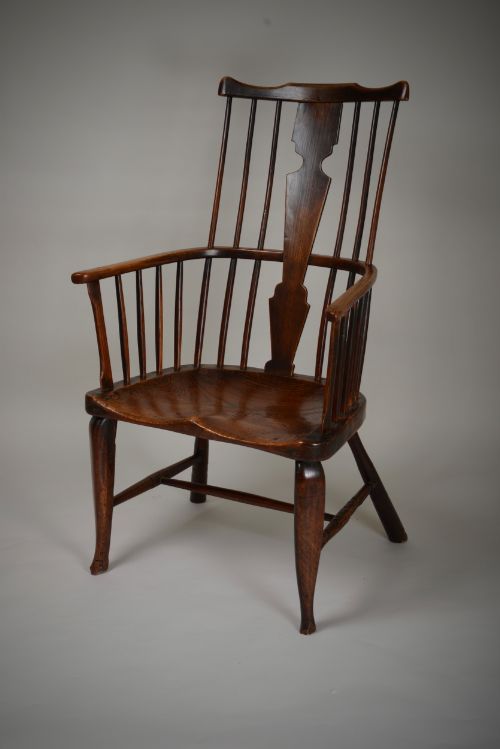
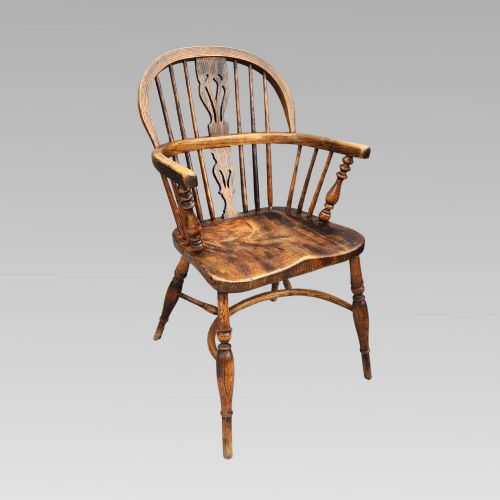
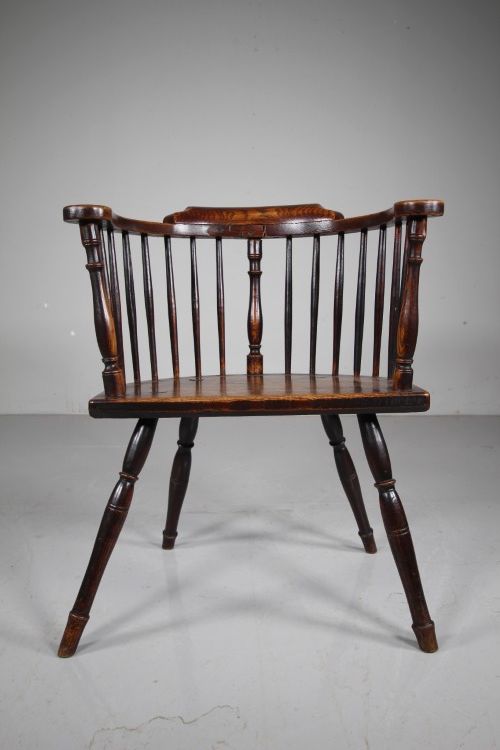
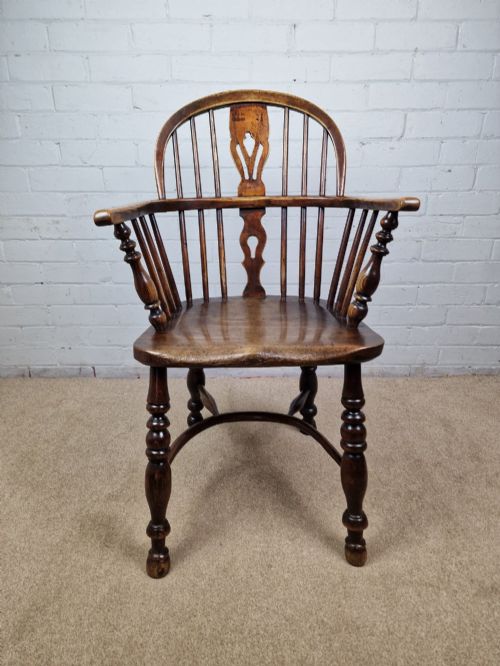

Rustic Elm Desk Chair
A rustic elm desk chair brings tangible domestic history to a workspace, combining sturdy vernacular seating with deep timber character.
Rustic Elm Desk Chair
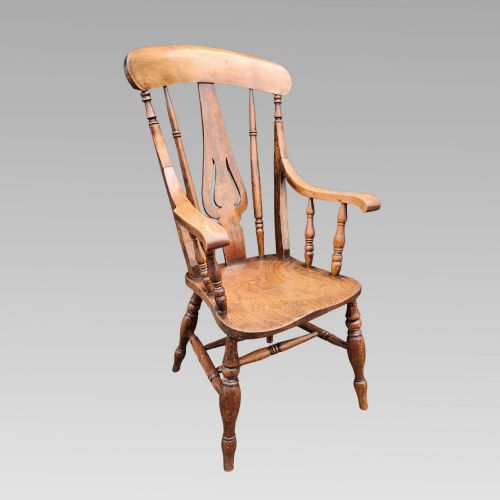
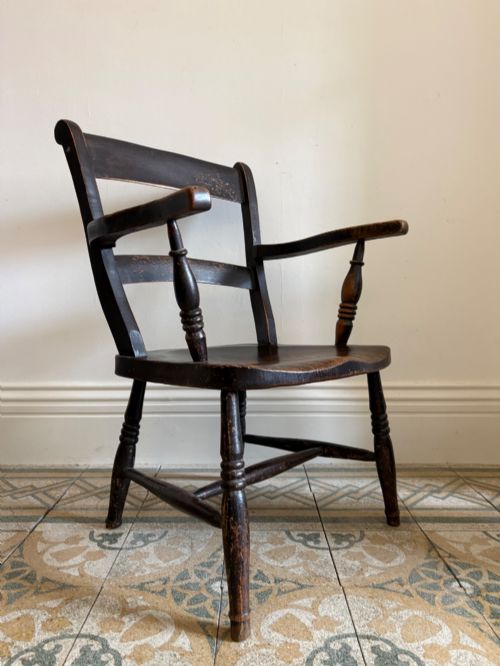
A rustic elm desk chair encompasses heavy country armchairs, carver chairs, and Windsor chairs built primarily for utilitarian service in farmhouses, kitchens, and studies. These forms date principally from the eighteenth and nineteenth centuries, spanning Georgian, Regency, and Victorian periods.
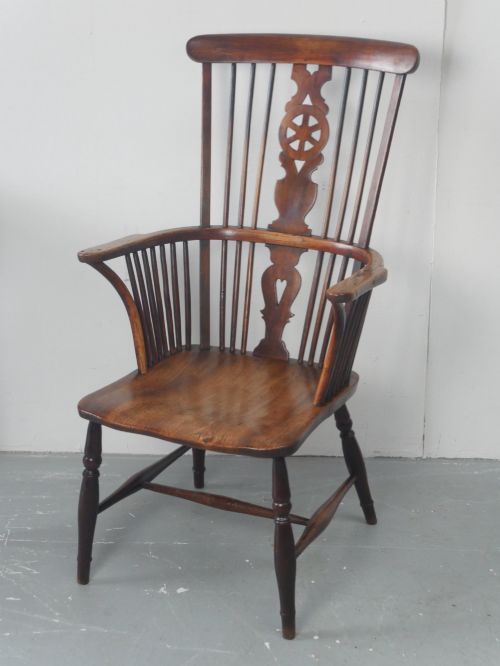
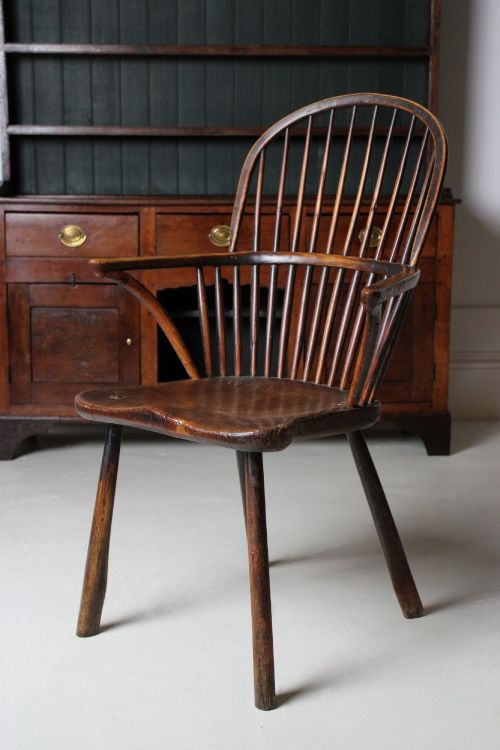
The version most commonly encountered on this page is the Windsor chair, featuring a solid shaped elm seat combined with ash, beech, or yew for spindles and framing. These pieces originate from regional English workshops, including the Thames Valley, Nottinghamshire, and the West Country.
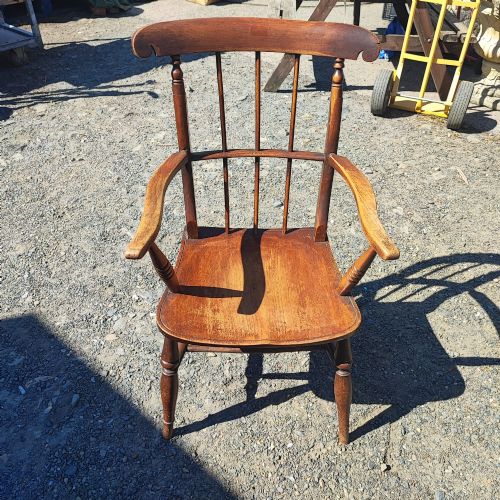
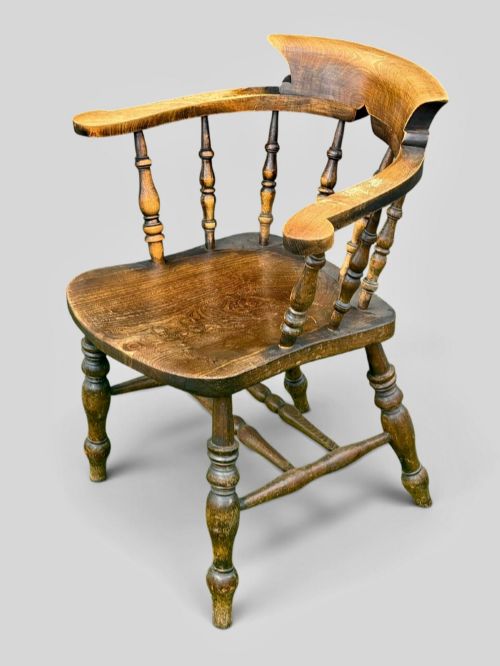
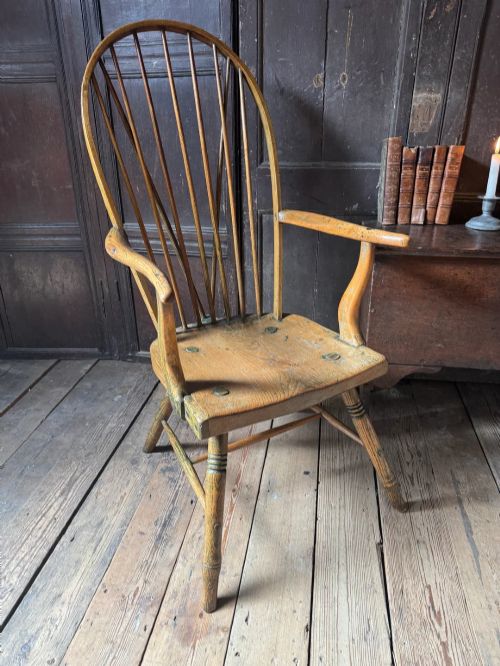
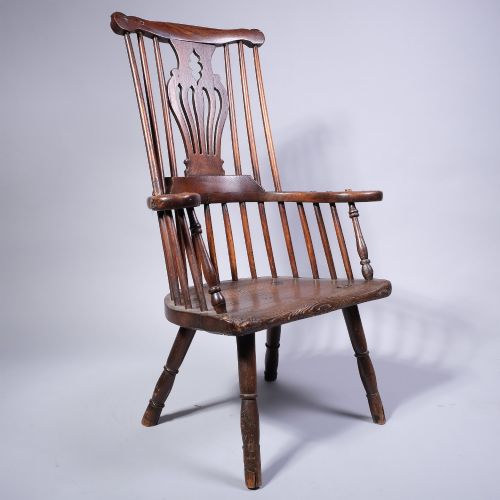
Makers constructed these sturdy armchairs with distinct regional variations in the backrest, such as high hoop-backs, comb-backs, wheel-backs, and smokers bows. Buyers look to these chairs for daily seating that offers both functional workspace ergonomics and strong antique character.
How they were made
Craftsmen built these chairs around a thick, solid elm seat, which served as the central anchor for all other components. Elm timber provided exceptional resistance to splitting when turned and bored, making it the ideal material for sculpted saddle seats.
Makers utilised contrasting timbers for the framework, turning ash, beech, and occasionally yew into slender spindles, legs, and bow supports. Steam-bending allowed woodworkers to shape flexible ash and yew into continuous high hoops and broad arms.
Joinery relied on traditional wedged tenon joints, where legs and spindles passed directly through holes in the elm seat and were locked securely in place. This construction method delivered immense structural rigidity without requiring complex metal fixings.
Several chairs include subtle tool marks left by country carpenters who test-fitted green wood joints by eye.
What varies in quality
The sophistication of the timber selection dictates much of the distinction between everyday utility examples and finer regional pieces. Yew wood framing and striking grain patterns in the elm seat elevate certain chairs above standard beech-framed variants.
The grace of the turning work on the spindles and legs reveals the skill of the original rural maker. Crisp, well-defined turnings and balanced proportions distinguish superior regional carvers from simpler provincial workshop output.
The depth and comfort of the saddle-molded seat also mark the difference between standard production and careful craftsmanship. A deeply carved, ergonomic elm seat indicates a chair designed for sustained daily use.
The Rustic Elm Desk Chair Glossary
- Windsor chair
- A chair built with a solid wooden seat into which the legs and back spindles are directly inserted. This construction method creates a sturdy, unified frame.
- Comb back
- A Windsor chair design where the vertical spindles extend up to a horizontal top rail that resembles the teeth of a comb. This style frequently dates to the eighteenth century.
- Smokers bow
- A low-backed Windsor armchair with a continuous curved armrail, commonly found in nineteenth-century settings. These chairs provide compact, sturdy seating.
- Vernacular
- Objects made by regional artisans following local traditions rather than strict academic pattern books. These pieces reflect practical utility and local material availability.
- Carver chair
- An armchair, often designed for the head of a dining table or desk use. They share stylistic traits with smaller side chairs of the same period.
Rustic Elm Desk Chair: Frequently Asked Questions
What is a rustic elm desk chair?
A rustic elm desk chair is a traditional wooden armchair featuring a solid elm seat and vernacular framing, built for functional workspace or domestic use.
These pieces typically date from the Georgian and Victorian periods, reflecting regional English woodworking traditions from areas like the Thames Valley.
How were these chairs used historically?
These armchairs served multiple domestic and working roles, functioning as writing seats, fireside chairs, and farmhouse carvers. Their sturdy construction accommodated long hours of daily tasks.
The solid timber seats and supportive high backs provided practical comfort in kitchens, studies, and country houses.
How do I date a rustic elm chair?
Dating relies on observing structural forms, such as high hoop-backs, wheel-backs, or comb-backs, alongside the type of secondary woods utilised. Eighteenth-century examples often feature different spindle arrangements compared to later Victorian iterations.
Tool marks, timber shrinkage, and regional design traits also help narrow the period of origin.
How do I live with a rustic elm desk chair?
Living with these chairs involves placing them in a study or workspace where their solid timber construction can endure daily use. They pair well with both antique and modern desks.
Routine maintenance requires simply keeping the wood clean and away from extreme temperature shifts to protect the historical elm and ash.