
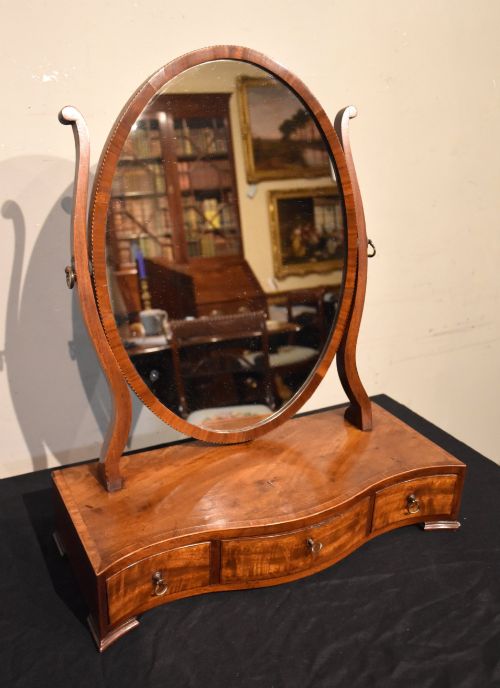


Wooden Vanity Mirror Drawers
These wooden vanity mirror drawers are functional dressing glass pieces that sit upon tables to hold small valuables.
Wooden Vanity Mirror Drawers
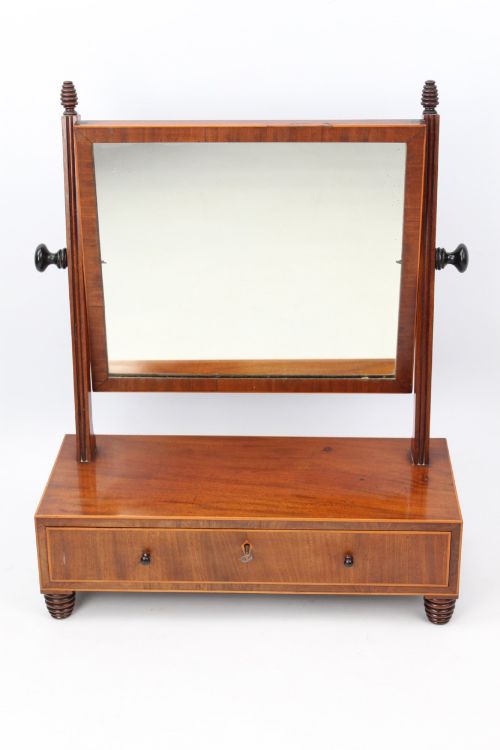
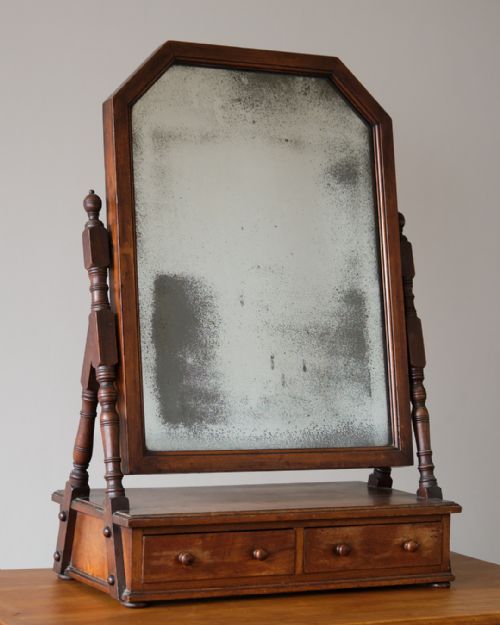
Wooden vanity mirror drawers, frequently termed toilet mirrors or dressing table mirrors, combine a pivoting swing glass with a small chest base. These objects served for grooming and personal administration in bedrooms before full-length floor mirrors became common in domestic interiors.
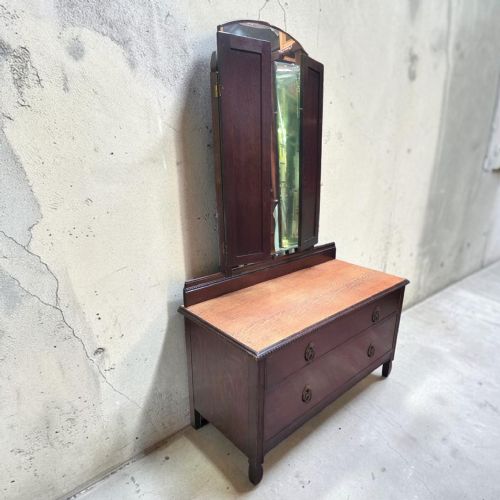
The pieces appearing on this page span several centuries, with particular strength in Georgian, Regency and Victorian eras. You will encounter compact tabletop forms alongside larger dressing chests fitted with drawers beneath the frame.
Timbers vary across these examples, with mahogany and walnut predominating, often supplemented by fruitwood marquetry or satinwood highlights. The base typically incorporates one, two, or three small drawers designed for trinkets and cosmetics.
How they were made
Cabinetmakers constructed the frames and drawer boxes primarily using solid hardwoods such as mahogany, walnut, and oak, frequently applying finely figured veneers to the principal surfaces. Secondary timbers like pine appear on internal drawer linings and back panels.
The mirror plates are held within adjustable swing frames supported by upright arms, allowing the user to tilt the glass to various angles. Drawer construction relies on traditional joinery, while decorative touches include bone escutcheons, brass finials, and intricate marquetry inlay.
Listings feature pieces spanning the eighteenth to the early twentieth century, utilising mahogany, walnut, oak, and fruitwood marquetry.
What varies in quality
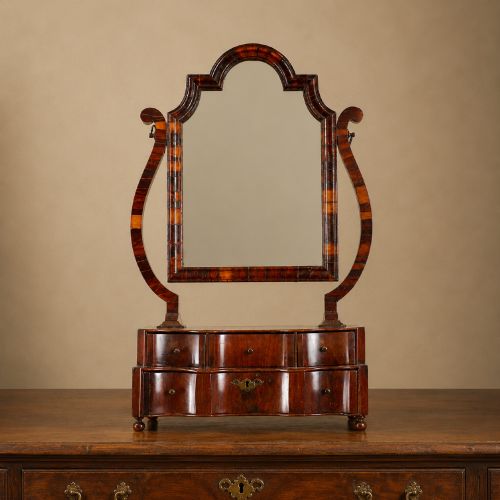
The degree of sophistication in the cabinet work distinguishes examples, particularly in the shaping of the drawer fronts and the precision of serpentine outlines. Simpler rectangular boxes contrast with sophisticated pieces featuring stepped interiors, ogee brackets, or elaborate crossbanding.
The choice of timber grain and the complexity of decorative techniques, such as Dutch floral marquetry or contrasting ebony stringing, elevate certain pieces. Original brass hardware, well-figured walnut or mahogany veneers, and retained mirror glass contribute further to the distinction between standard and superior pieces.
Heal & Sons
The Wooden Vanity Mirror Drawers Glossary
- Toilet mirror
- A tabletop dressing mirror featuring a small base fitted with one or more drawers. These pieces stood upon chests of drawers or dressing tables in eighteenth and nineteenth-century chambers.
- Serpentine front
- A furniture front curved with a convex centre flanked by concave wings. This graceful contour appears frequently on finer Georgian dressing mirror bases.
- Marquetry
- Decorative veneer work formed by fitting together small pieces of various coloured woods to create pictorial or geometric patterns. Dutch examples often display floral marquetry across the entire frame and drawer fronts.
- Swing mirror
- A glass plate suspended on pivots between two upright posts so that the angle of reflection can be adjusted. The frame tilts forward and backward within its supporting arms.
- Escutcheon
- A small protective plate surrounding the keyhole of a drawer or cabinet door. These are often rendered in brass or bone on period pieces.
Wooden Vanity Mirror Drawers: Frequently Asked Questions
Where were wooden vanity mirror drawers placed?
These pieces sat upon dressing tables, sideboards, or chests of drawers in bedchambers. Their elevated position allowed individuals to groom themselves while standing or sitting.
Because they were portable rather than fixed fixtures, they could be moved around the room to follow the available natural light from windows.
How do I distinguish Georgian from Victorian examples?
Georgian pieces often display simpler proportions with mahogany or walnut solids, bracket feet, and restrained stringing. The carving is typically crisp and architectural.
Victorian iterations frequently utilise heavier mahogany timbers, more elaborate scrolling supports, and sometimes incorporate larger banks of drawers beneath the mirror frame.
Are the mirror plates original?
Mirror glass frequently underwent replacement over the centuries due to foxing, breakage, or silver degradation. Older plates often exhibit slight distortion or minor blemishes in the reflection.
Many surviving pieces retain their historic glass, though buyers should expect to encounter Georgian and Victorian frames fitted with later replacement mirrors.