
Dark Mahogany Toilet Mirror
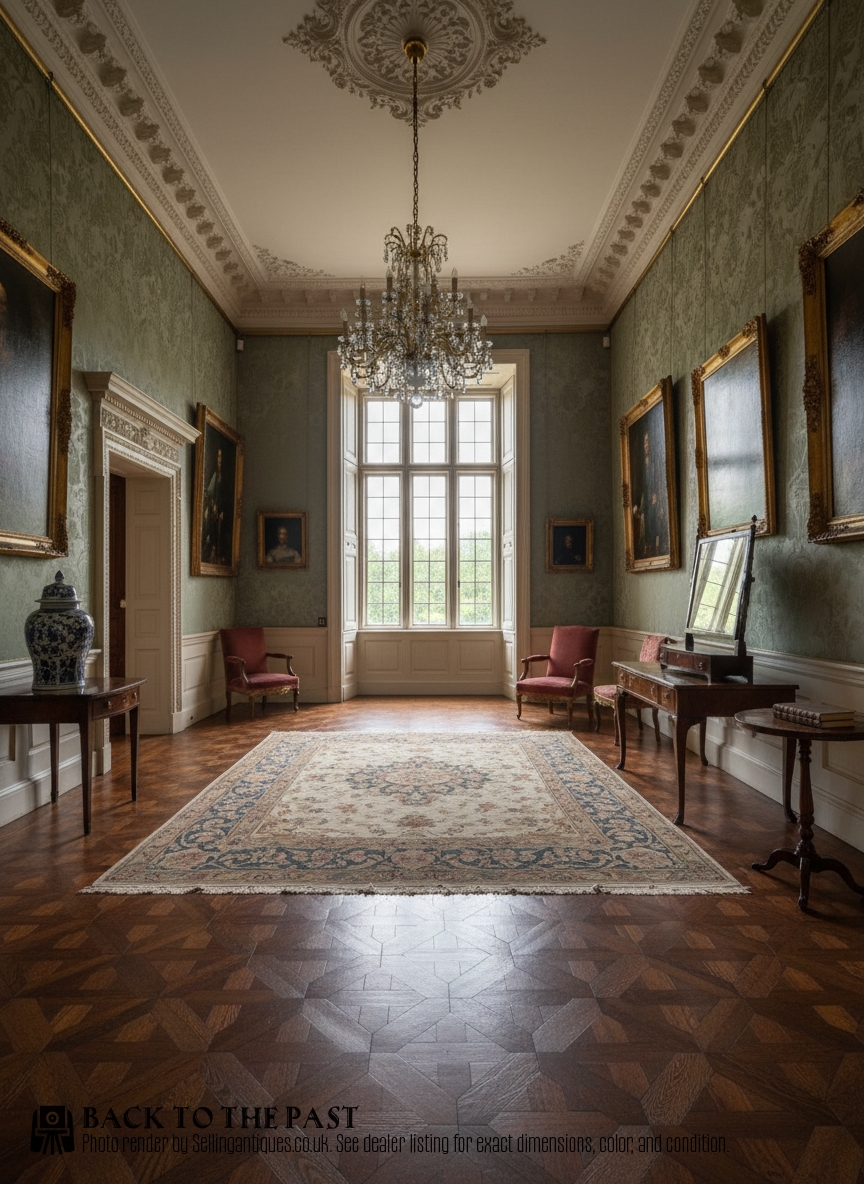
A dark mahogany toilet mirror brings depth and proportion to a dressing surface, offering a pivoting glass framed in rich timber.
Dark Mahogany Toilet Mirror
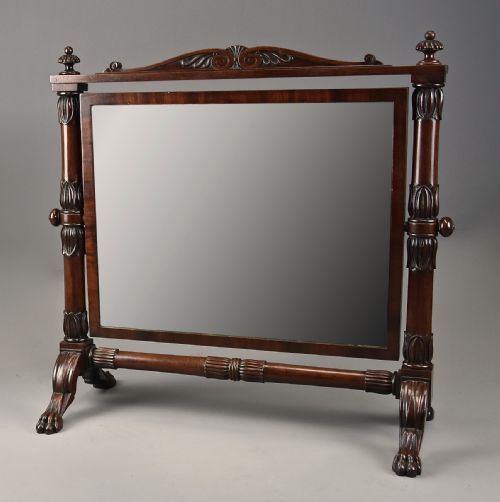
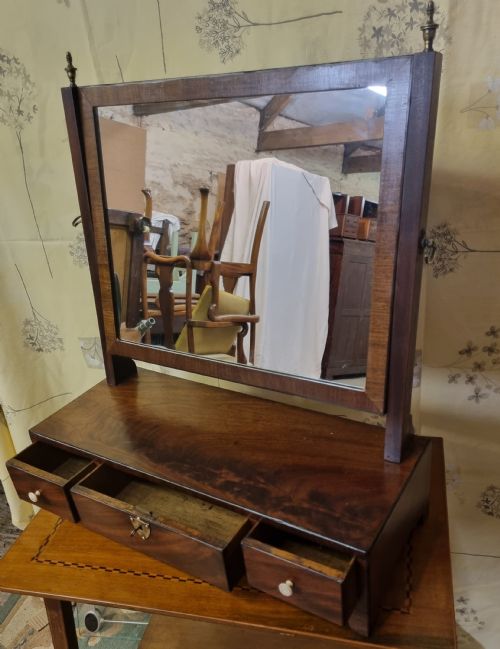
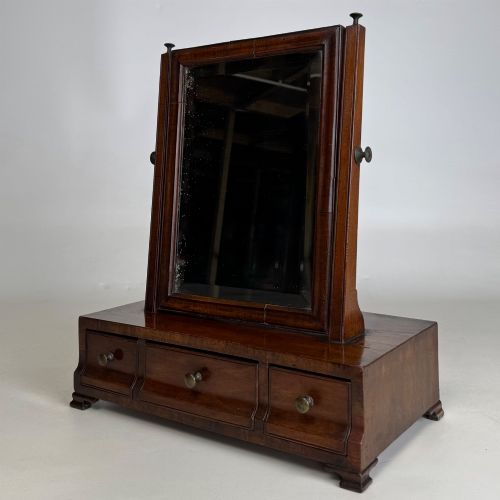
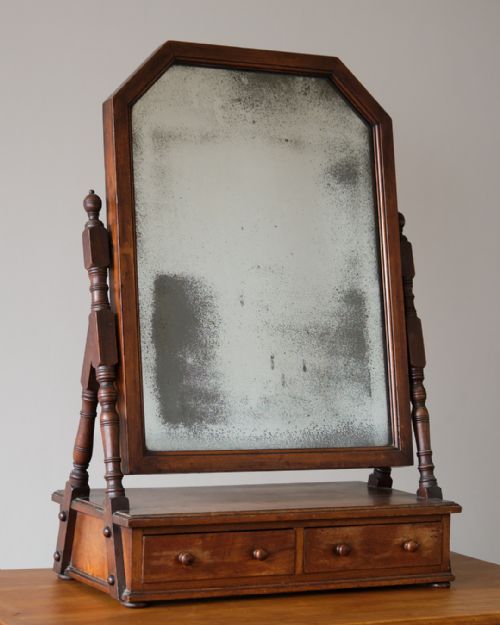
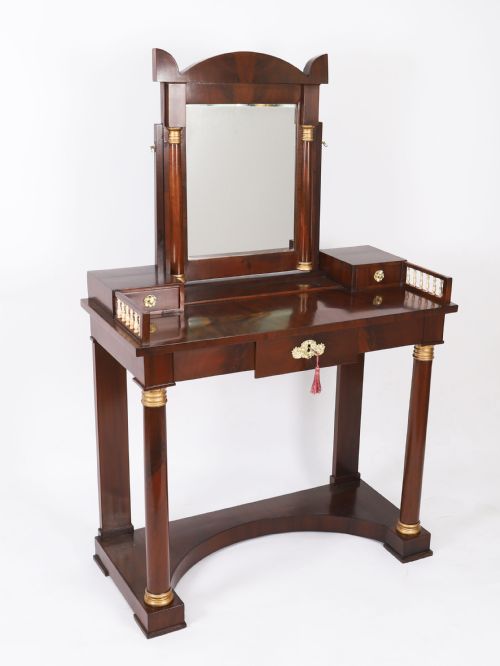
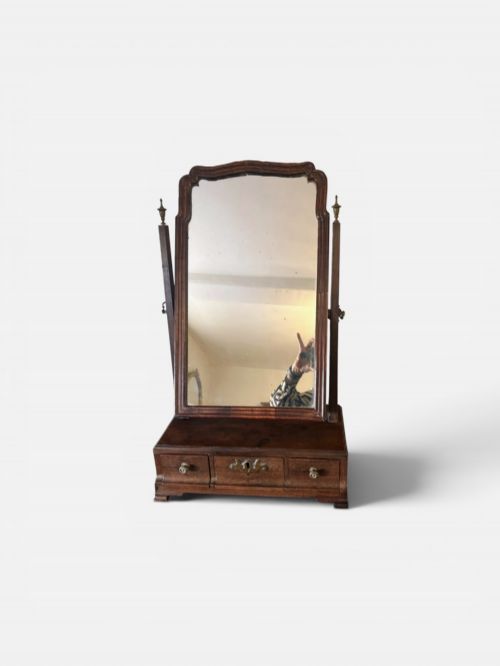
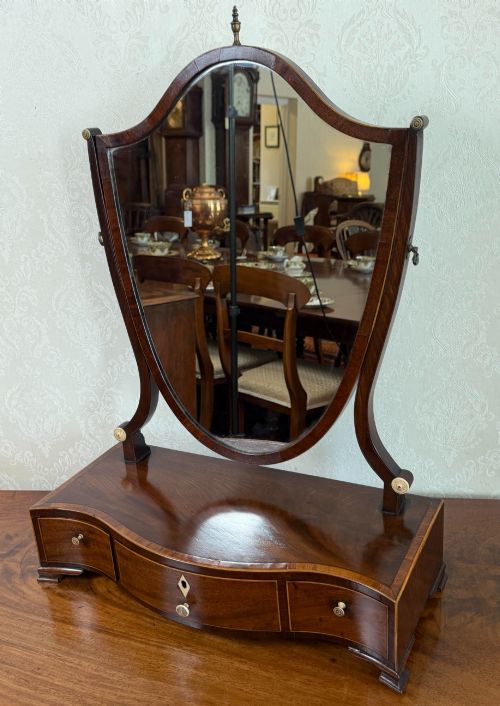
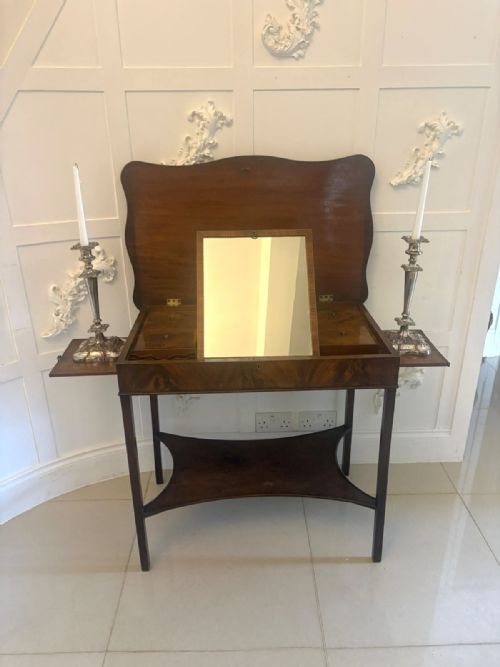
A dark mahogany toilet mirror sits on chests, tables or dedicated stands, designed for close grooming and personal reflection. These pieces range from compact box mirrors with small drawers to larger swing and cheval formats.
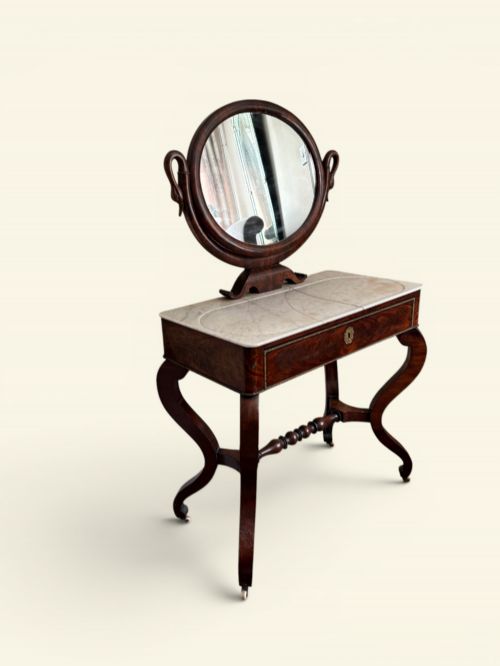
The selections here span the Georgian, Regency and Victorian periods, with George II, George III and 19th-century examples appearing frequently. Most take the form of table mirrors or dressing mirrors featuring rectangular or oval glass frames.
Makers such as Heal & Sons and P & MA Nicholson emerge in specific pieces, alongside regional variations including Scottish and Viennese pieces. The prevailing material is dark mahogany, often paired with glass, brass and boxwood.
Materials and Construction
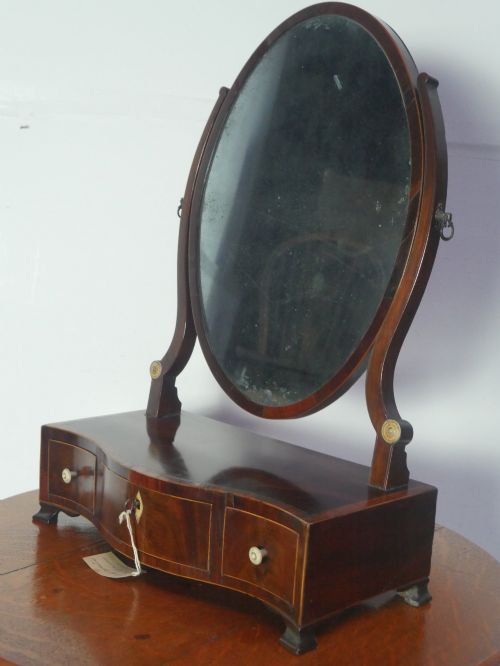
Makers built these mirrors primarily from solid or veneered mahogany, frequently selecting flame mahogany for figured grain patterns on box fronts and frame surrounds. Secondary timbers often included boxwood for stringing and bone for escutcheons or drawer pulls.
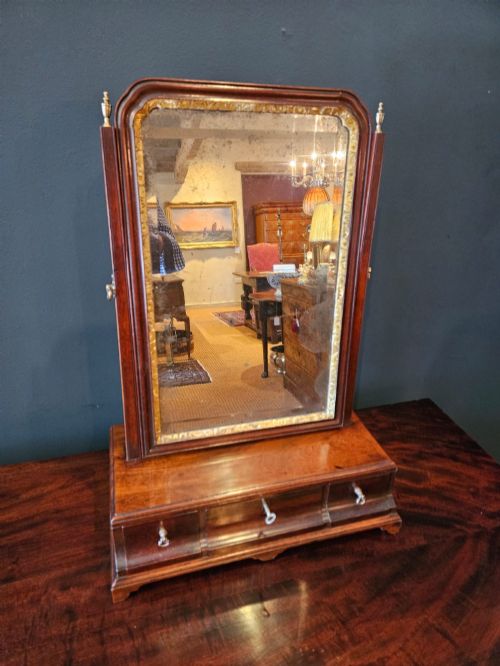
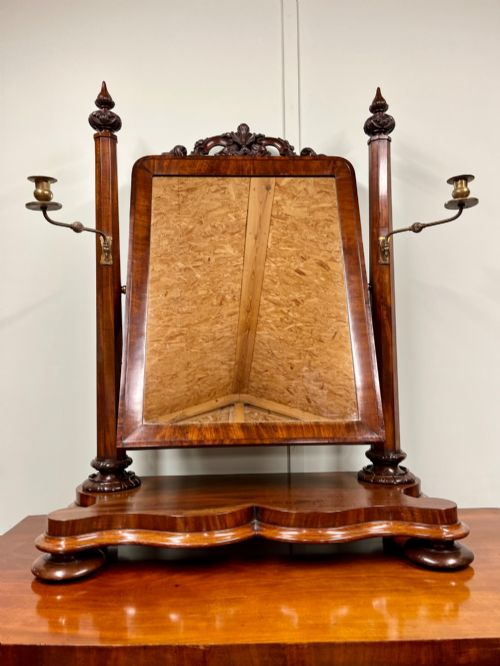
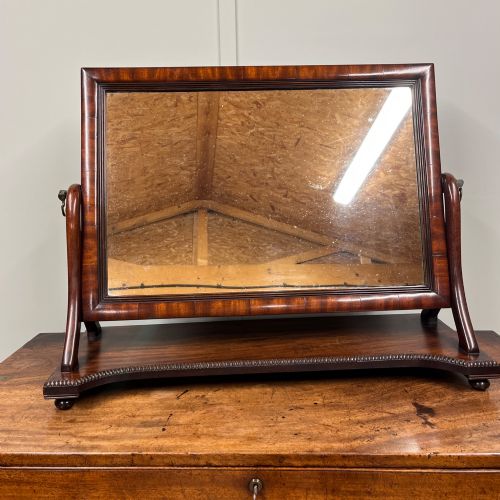
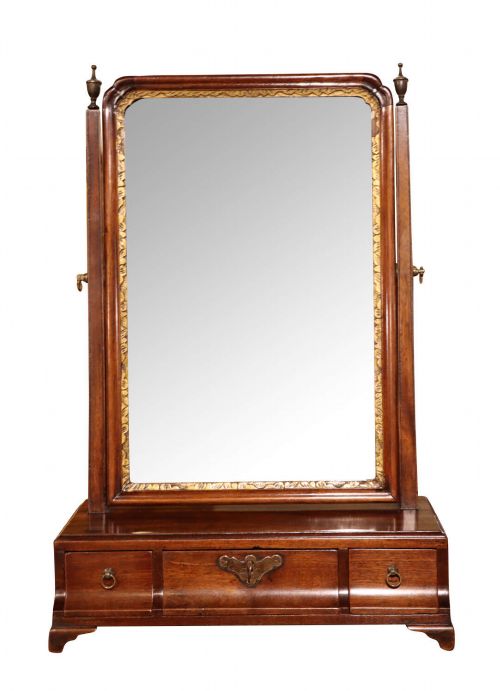
The glass sits within pivoting frames supported by upright arms, allowing the user to adjust the angle of reflection. Brass fittings, including candle sconces, hinges and adjustment screws, provide functional articulation and structural support.
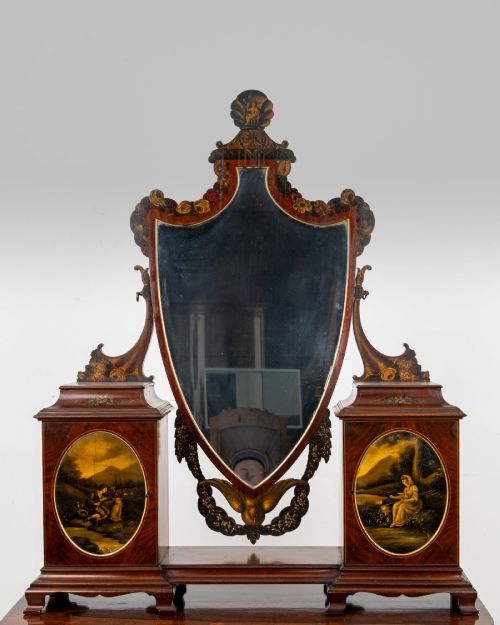
Advanced examples incorporate detailed craftsmanship such as Dutch marquetry inlay, parcel-gilt highlights, or fitted drawer compartments for jewellery and toilet articles.
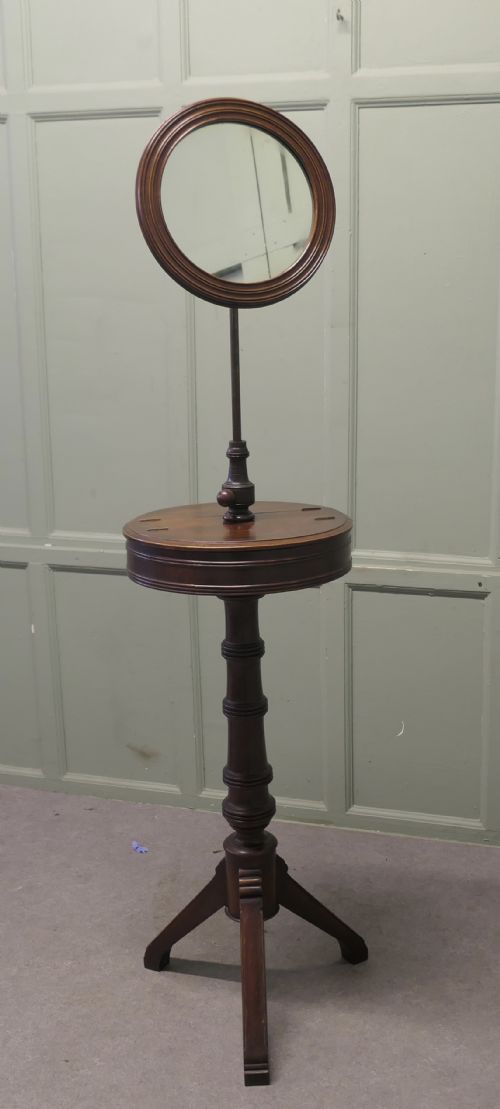
Gentlemen shared in the vanity, requiring specialised shaving mirrors with telescopic stands and built-in candle holders for early starts.
Factors That Distinguish Quality
The refinement of the timber selection dictates much of the visual weight, with heavily figured flame mahogany and precise cross-banding marking out superior cabinet work. Plain, utilitarian boards indicate more standard workshop production.
The integration of the drawer base and the finesse of the joinery around the mirror frame reveal the maker's hand. Finely turned support pillars, crisp mouldings and original brass hardware elevate the piece above plain, later adaptations.
Proportion and balance define the better examples, where the scale of the mirror glass relates harmoniously to the base drawers or stand without appearing top-heavy.
Heal & Sons·P & MA Nicholson
The Dark Mahogany Toilet Mirror Glossary
- Toilet mirror
- A small mirror designed to stand on a dressing table or chest of drawers for personal grooming. These units often include a small box base with one or more drawers.
- Cheval glass
- A full-length dressing mirror suspended on a vertical frame that allows it to swing freely. They appear in table-top and larger standing formats.
- Swing mirror
- A mirror plate hung on pivots between two upright posts, permitting the glass to tilt. This mechanism is central to most period dressing mirrors.
- Parcel-gilt
- Partially gilded woodwork where gold leaf highlights specific carved details or mouldings against the dark mahogany ground. It adds contrast to Georgian pieces.
- Boxwood stringing
- Thin inlaid lines of light boxwood contrasting sharply against the dark mahogany surface. This technique outlines drawer fronts and borders.
Dark Mahogany Toilet Mirror: Frequently Asked Questions
Where should I place a toilet mirror?
These mirrors suit dressing tables, low chests of drawers or sideboards where they provide a functional focal point. Ensure the surface supports the footprint of the base securely.
They also sit comfortably on writing desks or vanity tables, adding height and reflective light to darker corners of a room.
How do I adjust the swing mirror?
Most mirrors use brass screw caps or threaded pivot pins set into the upright support arms. Tightening or loosening these fittings controls the tension on the frame.
Support the glass with one hand while adjusting the hardware to prevent sudden movement and protect the antique timber joints.
What is the difference between George II and Regency mirrors?
George II mirrors often display heavy mahogany frames, parcel-gilt accents and architectural pediments reflecting earlier 18th-century tastes. Their drawer boxes tend to have stepped or shaped profiles.
Regency mirrors favour bolder, cleaner proportions with brass mounts, reeded uprights and sweeping bow-fronted box bases that reflect neoclassical influences.
How do I clean the mahogany frame?
Dust the timber gently with a soft, dry cloth to remove surface particles. Avoid modern silicone polishes that build up a greasy film over the antique finish.
Microfibre cloths and traditional beeswax formulated for antiques help maintain the natural lustre of the dark mahogany grain without harming the polish.