

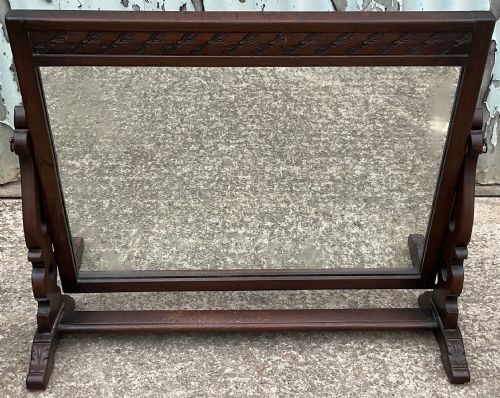
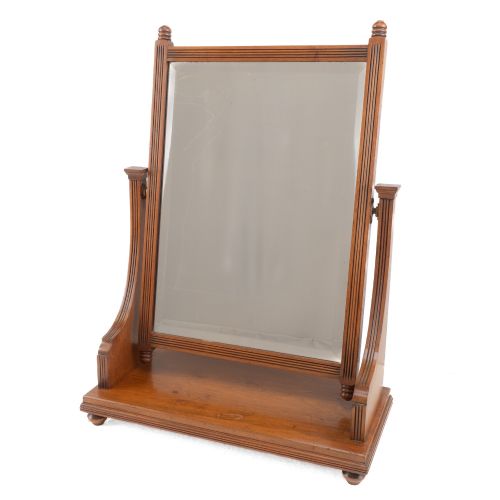

Wooden Swing Mirror
When you select a wooden swing mirror, you acquire a pivoting glass mounted on a supportive frame that brings traditional function and timber warmth to a dressing space.
Wooden Swing Mirror
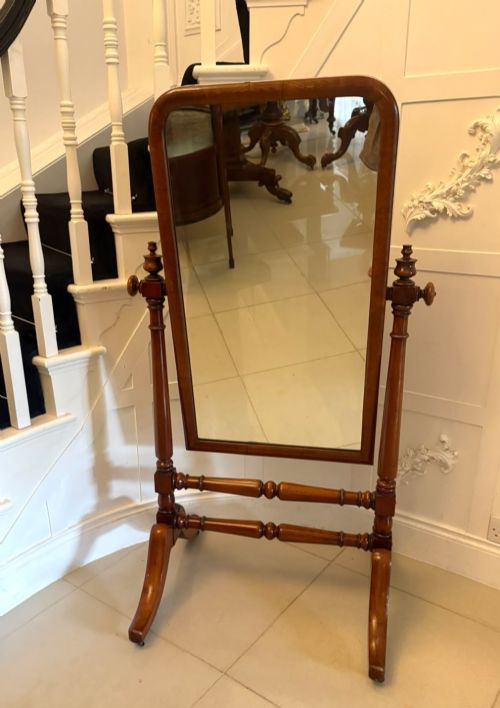
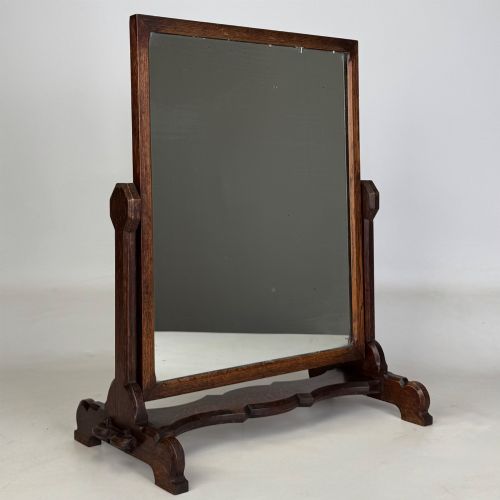
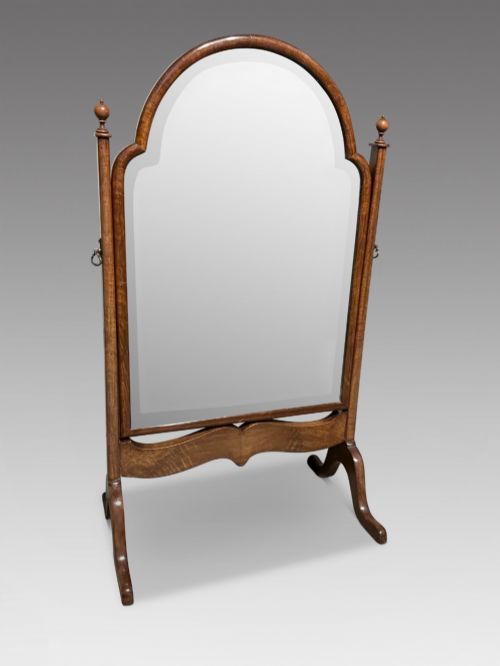
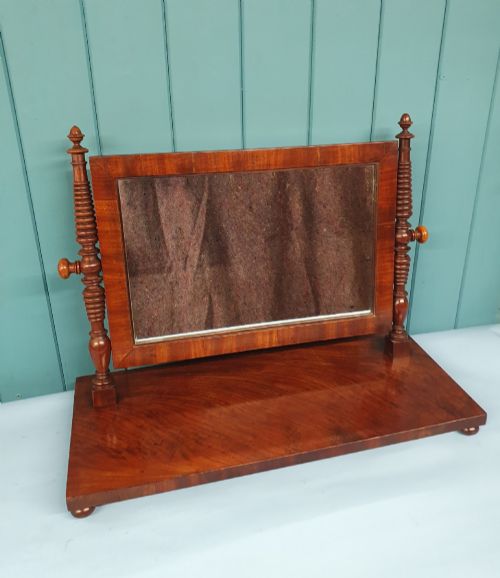
A wooden swing mirror is a pivoting glass designed to sit upon a table or stand independently on the floor as a cheval version. These pieces appear across Georgian, Victorian and Regency periods, utilising timber frames that pivot between upright supports.
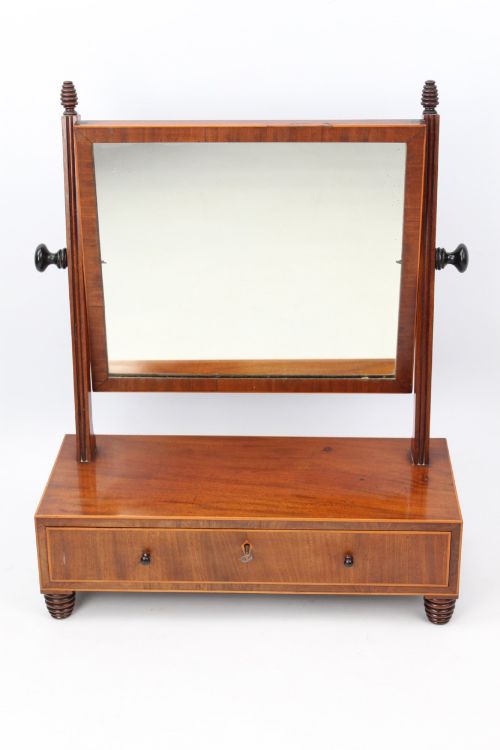
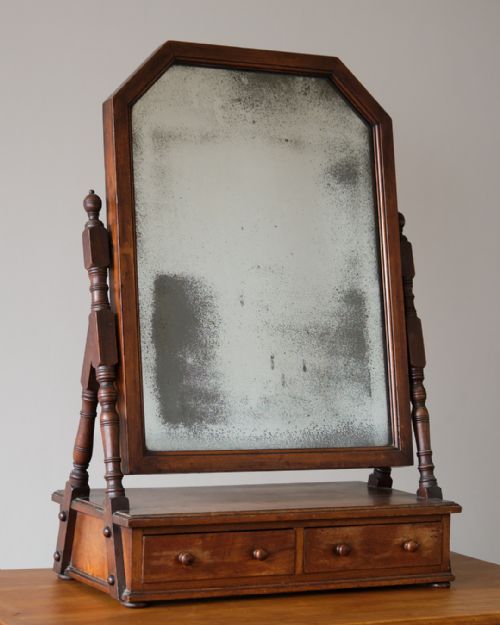
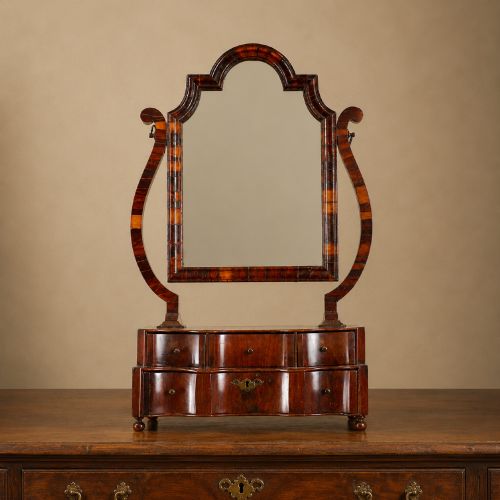
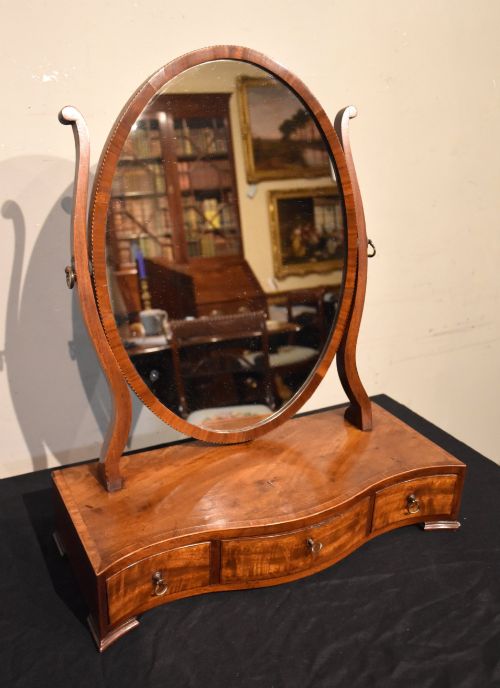
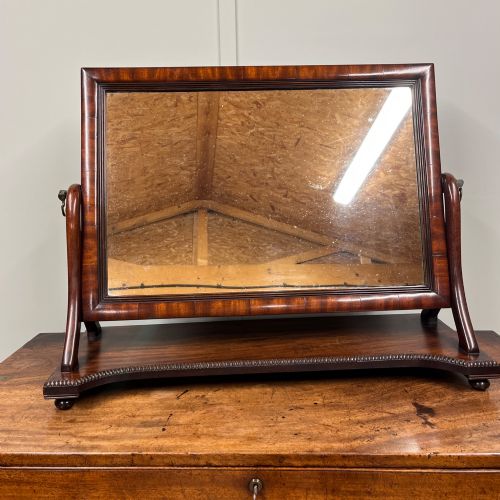
The version most commonly met on this page is the tabletop toilet or dressing table mirror, typically constructed in mahogany or walnut. These smaller items often feature small drawers incorporated into the base plinth for storage of small personal items.
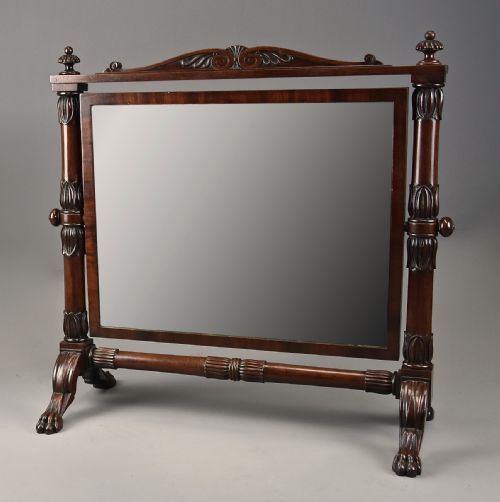
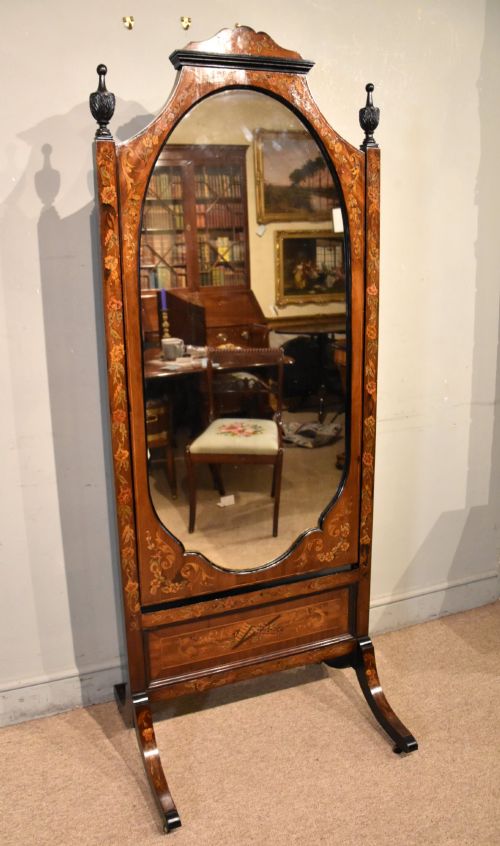
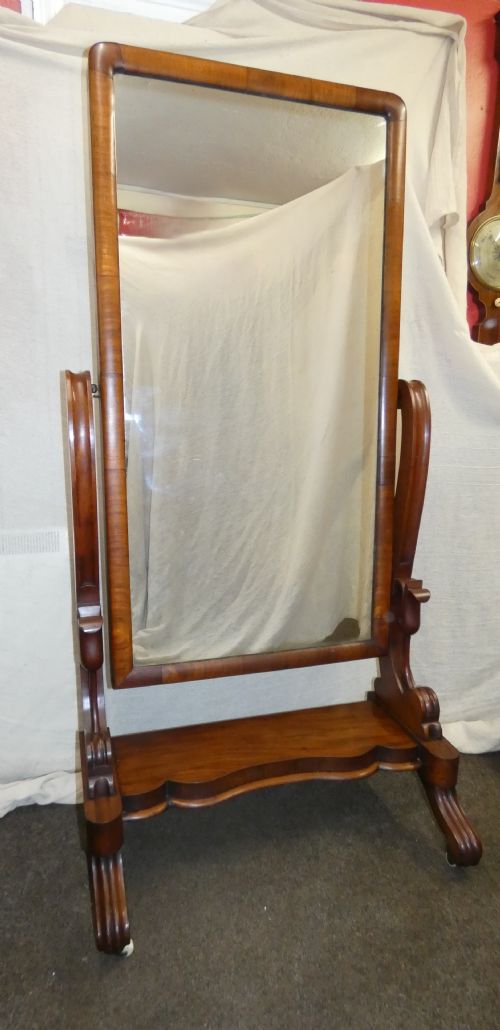
Larger freestanding cheval mirrors also appear in the listings, offering a full-length pivoting glass plate supported by substantial upright pillars and feet. Both table and floor versions rely on brass pivot screws or side arms to hold the glass angle in place.
Materials and Construction
Cabinetmakers constructed these frames using dense hardwoods like mahogany, walnut, oak and satinwood, often selecting figured veneers for visual depth on the principal surfaces. Secondary woods such as pine or oak frequently form the interior linings of the small base drawers.
The glass plates were historically silvered and held within rebated wooden frames, secured by thin wooden slips at the back. Brass hardware, including swing pins, arm plates and small drawer knobs, provides the functional joints and decorative accents.
Several mirrors include tiny hidden drawers within their box bases, once used to keep secret love letters or visiting cards safe.
Evaluating Quality
Quality reveals itself in the crispness of the timber carving, the choice of highly figured veneers, and the harmonious proportions between the mirror plate and its supporting frame. Superior examples demonstrate refined joinery in the drawer construction, such as fine hand-cut dovetails.
The integrity of the original mirror glass and the correct matching of brass pivot hardware also distinguish finer items. Pieces that retain their original timber surfaces without excessive refinishing carry greater authenticity.
Heal & Sons
The Wooden Swing Mirror Glossary
- Cheval mirror
- A large freestanding dressing mirror supported on a frame with four legs that allows the glass to swing fully through an arc. These tall pieces typically stand directly on the floor.
- Toilet mirror
- A smaller dressing glass designed to sit upon a chest of drawers, dressing table or low cabinet. They frequently incorporate a set of small storage drawers in the base.
- Serpentine
- A curved shape featuring a convex centre flanked by concave curves, often seen on the lower box bases of Georgian examples. This undulating profile requires skilled woodworking.
- Marquetry
- The art of applying pieces of veneer to a structure to form decorative patterns or pictures. Dutch examples frequently employ floral marquetry in contrasting woods across the frame and base.
Wooden Swing Mirror: Frequently Asked Questions
How do I date a wooden swing mirror?
Dating relies on observing the timber species, construction methods of the base drawers, and the style of the support horns. Earlier 18th-century pieces often display walnut or early mahogany with hand-cut dovetails and distinct moulding profiles.
Later Victorian and Edwardian examples introduce machine-sawn elements, different veneer thicknesses, and heavier carved details. Comparing the hardware fixings and the bevel of the glass plate also helps narrow down the period of manufacture.
Are the mirror plates usually original?
Many older frames retain their original silvered glass, which often exhibits minor foxing or light oxidation. This natural ageing adds character and confirms the age of the piece.
Some mirrors have received replacement glass plates over the centuries for clearer reflection. Examining the backboards and retaining slips helps determine whether the glass dates to the same period as the frame.
How do I maintain the swing mechanism?
The pivoting action depends on brass screws or threaded bolts fitted into the upright supports and the sides of the mirror frame. Tightening or loosening these fittings adjusts the tension so the glass stays at the desired angle.
Avoid over-tightening the hardware, as this can stress the timber frame or damage the threaded inserts in the wood. Periodic gentle cleaning of the brass components keeps the mechanism functioning smoothly.