
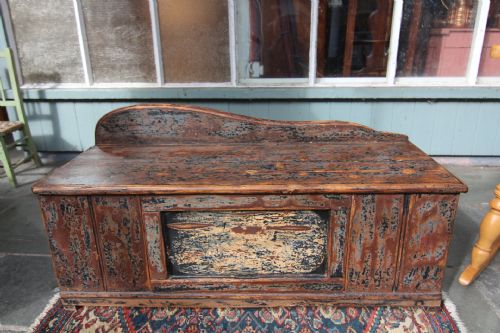
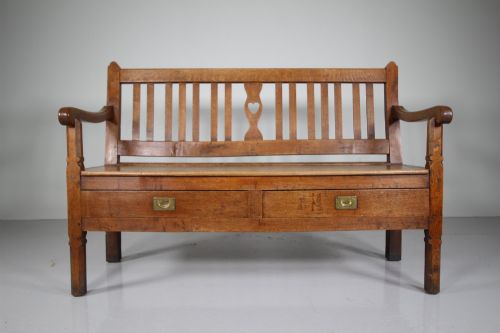
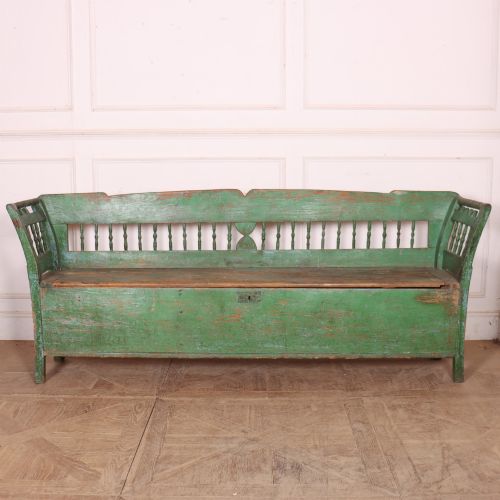
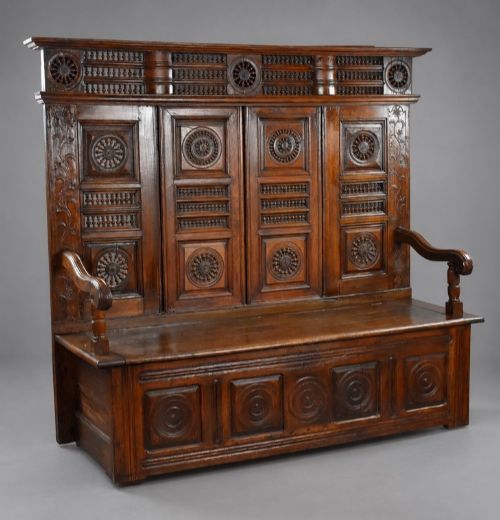
Wooden Storage Settle
These heavy timber benches with integrated lift-lid storage offer a practical seat and a concealed compartment, forming the backbone of traditional hallways.
Wooden Storage Settle
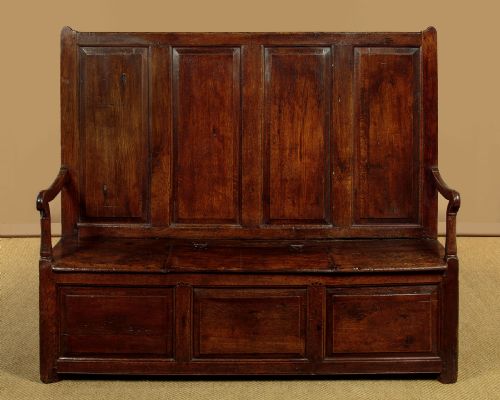
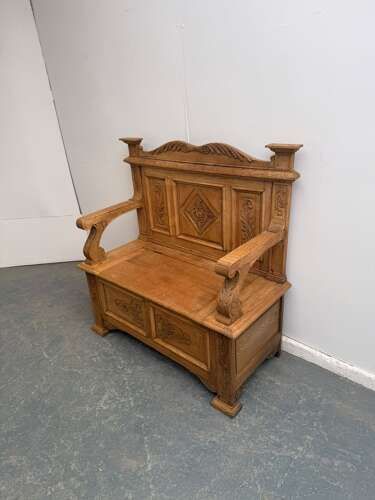
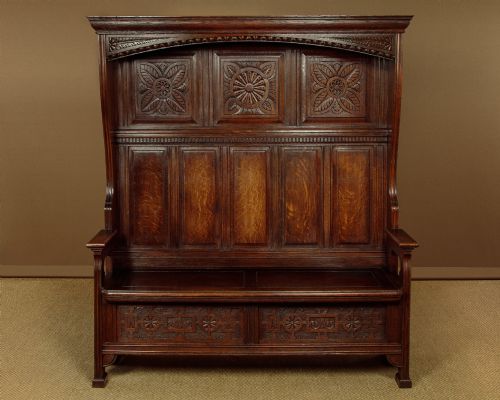
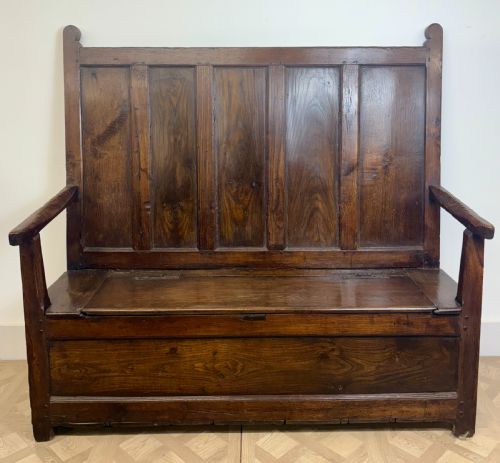
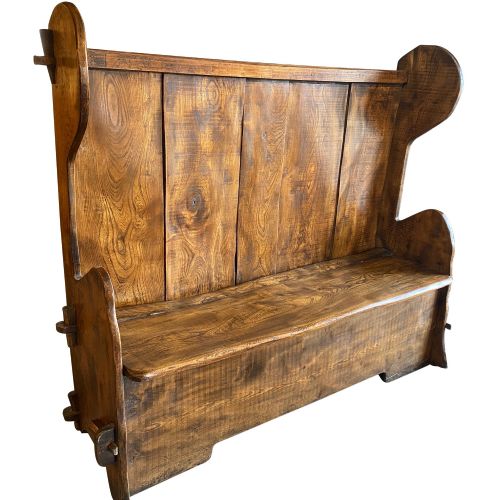
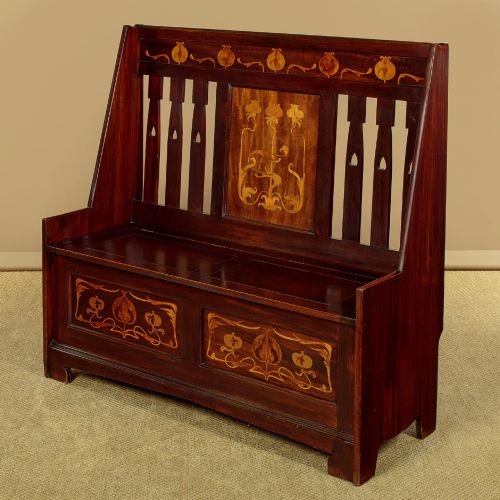
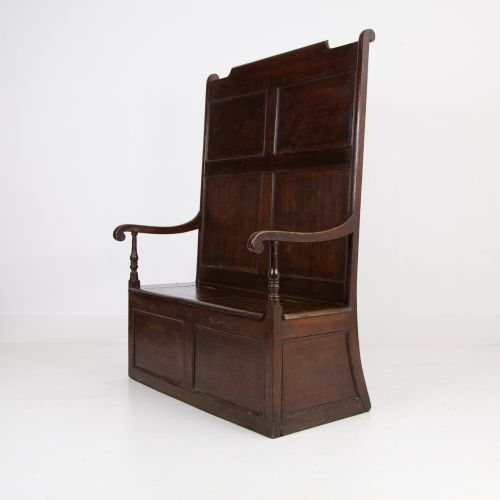
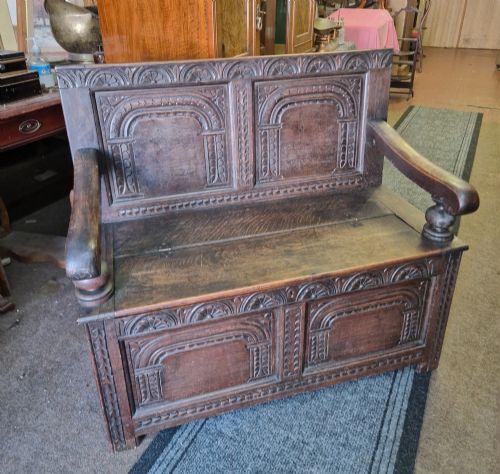
A wooden storage settle combines a high-backed bench with a concealed compartment beneath the seat, designed to keep draughts at bay in domestic hallways and living rooms. These pieces originate across the centuries, spanning seventeenth-century country workshops to early twentieth-century interpretations, with solid timber construction defining their enduring utility.
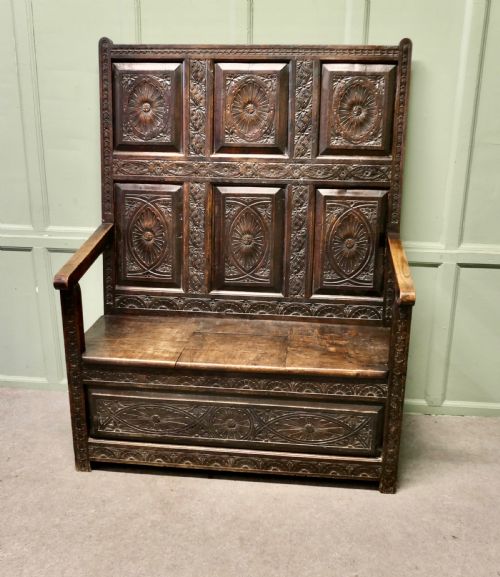
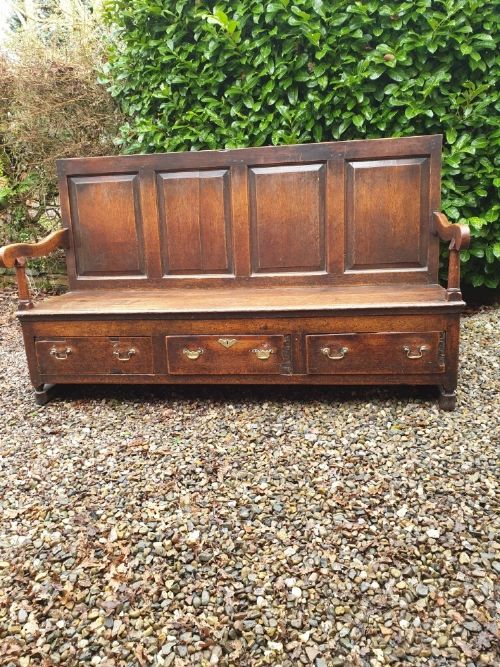
Buyers meet examples fashioned from native hardwoods such as oak and ash, alongside painted pine variants originating from continental farmhouses. The form ranges from austere vernacular panels to heavily carved revival styles, reflecting the domestic habits of different European regions.
What varies in quality
The integrity of the timber joints and the retention of original structural members dictate the standard of a piece, separating untouched examples from heavily altered ones. Grain selection and the depth of hand-carved panels demonstrate the skill invested by the original maker.
Surface patination plays a primary role, where untouched wax accumulation or early layers of paint indicate decades of natural ageing. The balance of proportions between the high back and the storage box shows whether a piece originated from a skilled regional workshop or a basic vernacular setting.
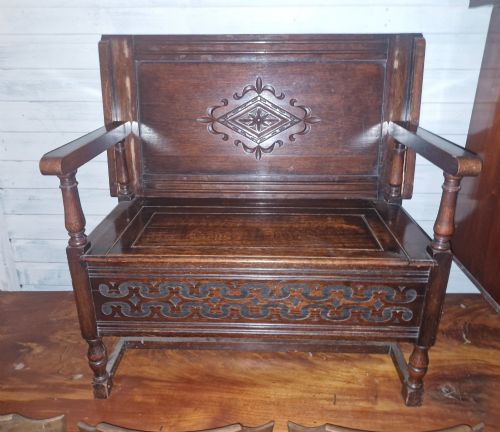
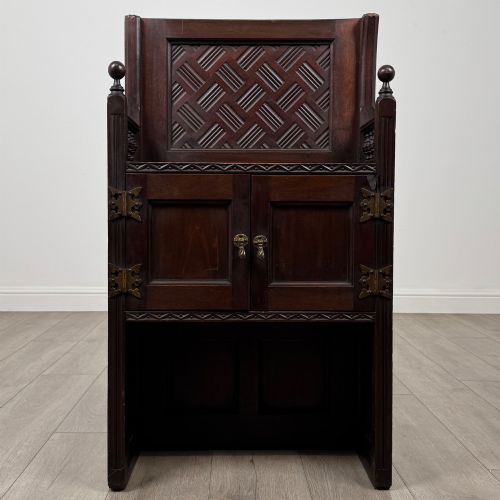
Some nineteenth-century hall seats feature fold-over tops designed specifically for temporary sorting of heavy woollen coats and tweed garments.
James Shoolbred & Co·Shapland & Petter·Liberty
The Wooden Storage Settle Glossary
- Box settle
- A high-backed wooden bench featuring a hinged seat lid that opens to reveal an enclosed storage compartment beneath. This form served to keep rooms free from clutter and stored heavy blankets or garments.
- Cassapanca
- An Italian wooden bench featuring a chest base and backrest, combining seating and storage in domestic interiors. These examples often incorporate carved walnut and regional continental styling.
- Vernacular
- Objects built by local craftsmen using regional materials to satisfy domestic needs rather than following strict academic design rules. These pieces display practical construction methods tied to specific geographic areas.
- Panelling
- Wooden boards joined within a framed structure to cover walls or furniture surfaces, allowing timber to expand and contract without splitting. Carved decoration frequently adorns these sections on formal pieces.
- Patina
- The surface sheen and colour developed by timber and paint over decades of handling, exposure to light and polishing. This quality distinguishes aged surfaces from modern chemical treatments.
Wooden Storage Settle: Frequently Asked Questions
What rooms suit a wooden storage settle best?
These benches fit naturally into entrance halls and boot rooms, where the integrated compartment holds footwear, scarves and everyday items.
Their high backs also provide a practical windbreak in open plan living spaces or dining areas, offering partitioned seating while maintaining hidden storage.
How do I care for waxed oak surfaces?
Apply a natural beeswax paste sparingly with a soft cloth and buff gently along the grain to maintain the protective finish without building up residue.
Keep these timbers away from direct heat sources and rapid temperature changes to prevent the wood from drying out and splitting over time.
How do I tell an 18th-century settle from a revival piece?
Early pieces show hand-cut peg joints, irregular board widths and natural wear patterns formed by centuries of use in country homes.
Revival furniture from later periods often displays machine-sawn timber edges, standardised hardware fittings and decorative carving applied to mimic earlier styles.
Did settles always have storage compartments?
Traditional country variants incorporated enclosed box bases beneath the seat to shield occupants from floor draughts while holding household textiles.
Open-frame versions without storage also exist, though box variants provided essential utility in smaller dwellings lacking designated closets.