
Wooden Spindle Back Chairs
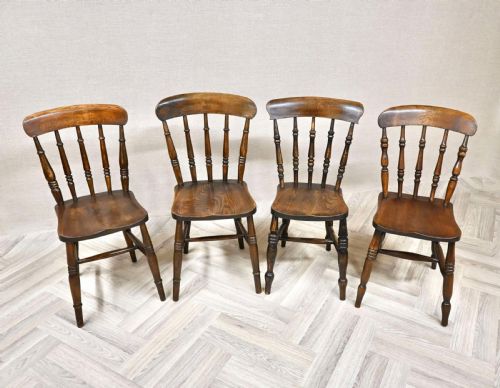
Wooden spindle back chairs bring honest vernacular character into a room, offering sturdy construction and timber patination developed across generations of daily use.
Wooden Spindle Back Chairs
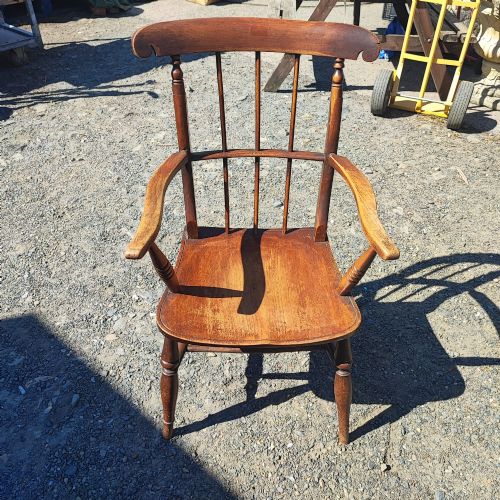
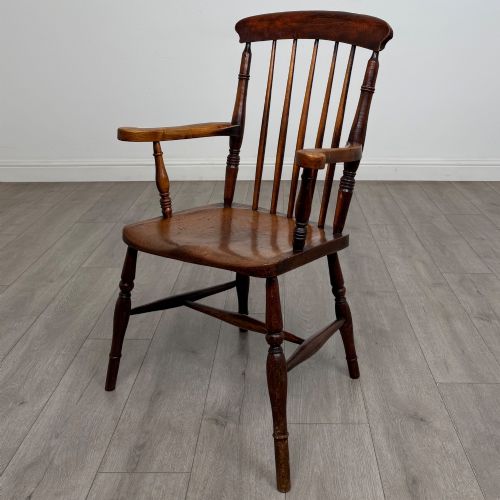
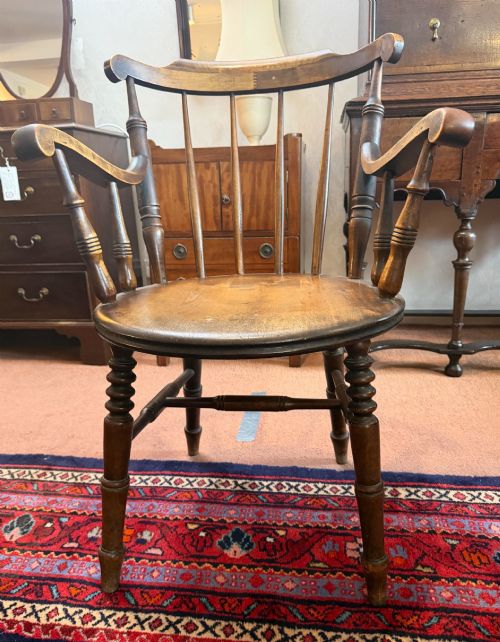
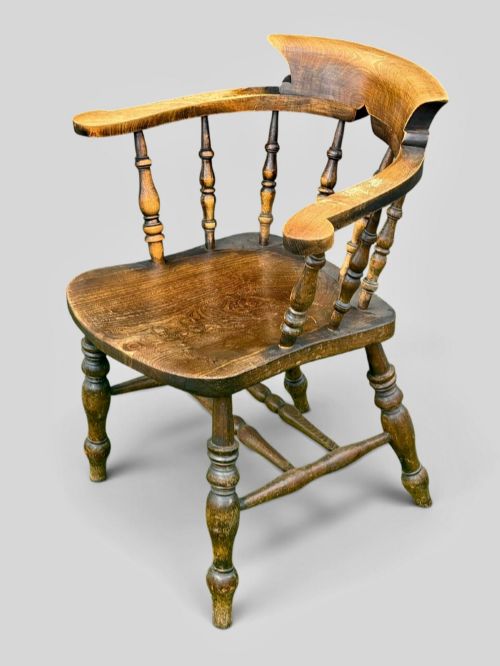
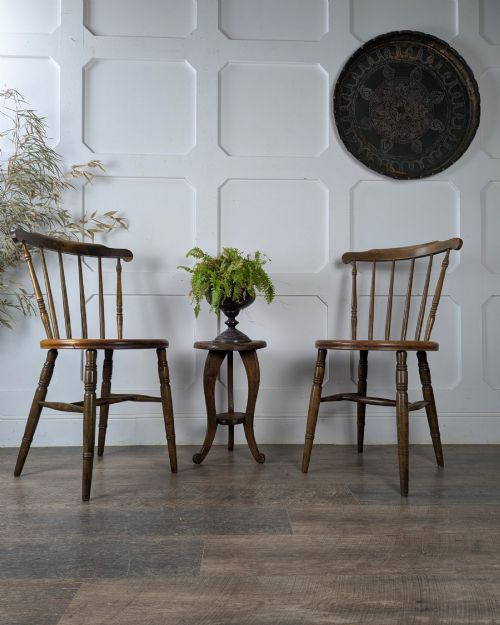
When you search for wooden spindle back chairs, you encounter a diverse array of vernacular seating spanning the eighteenth, nineteenth, and early twentieth centuries. These encompass kitchen dining chairs, office desks, smoking captains, and substantial country armchairs rooted in English, Scottish, and regional traditions.
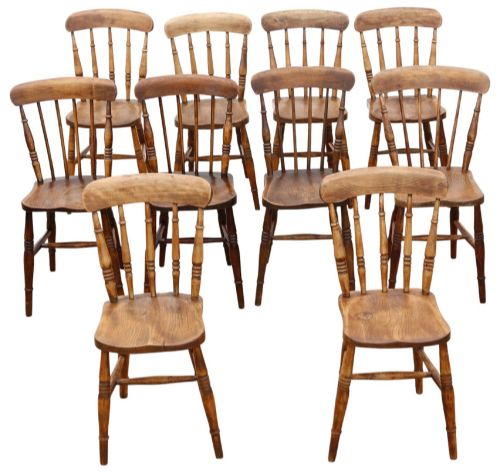
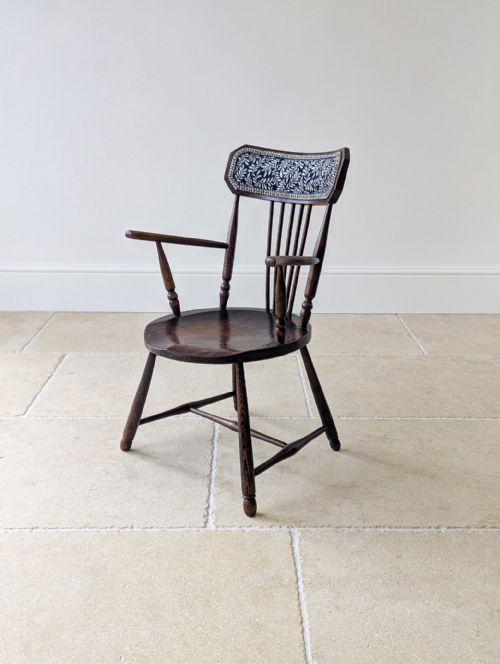
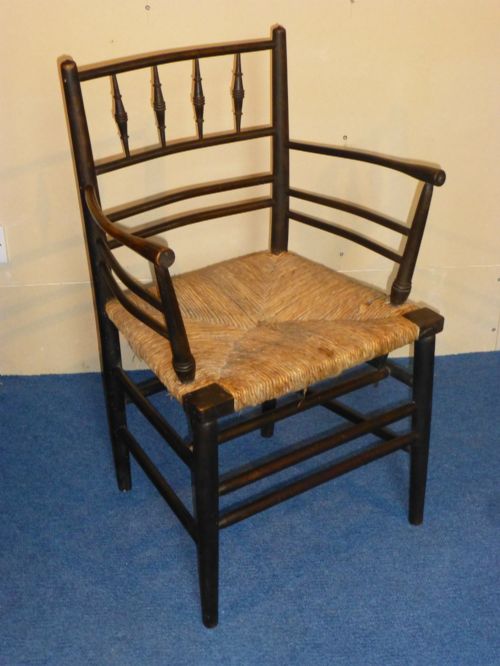
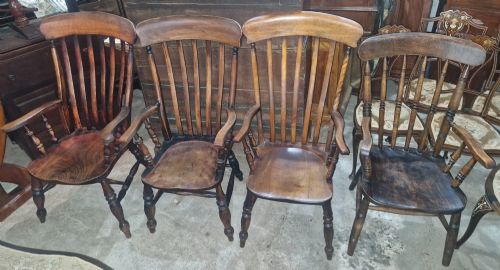
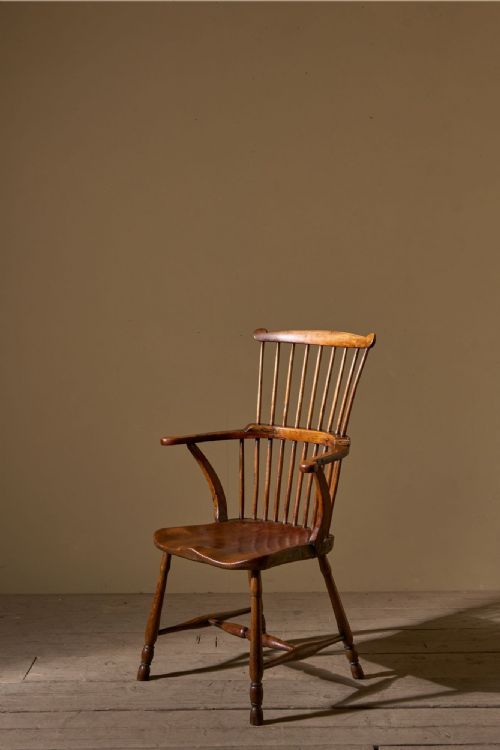
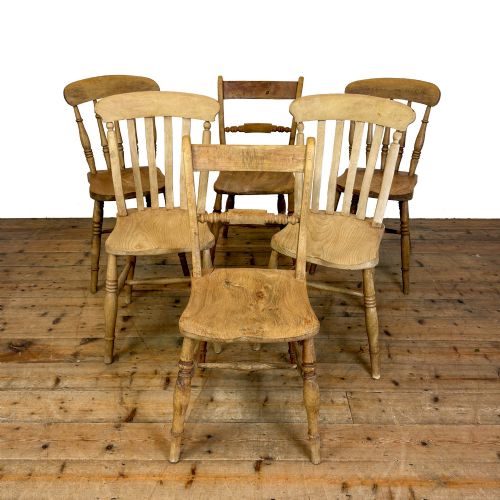
You meet nineteenth-century Victorian elm and beech kitchen examples most frequently on this page, often appearing in harlequin sets or individual farmhouse forms. Alongside these sit earlier Georgian comb-back designs and later Arts and Crafts interpretations.
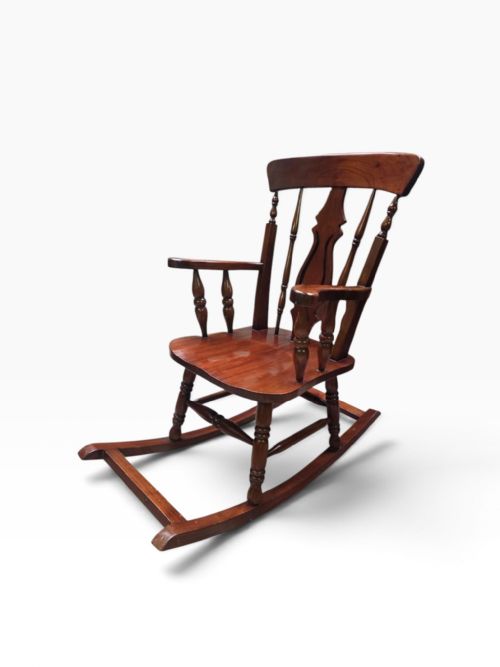
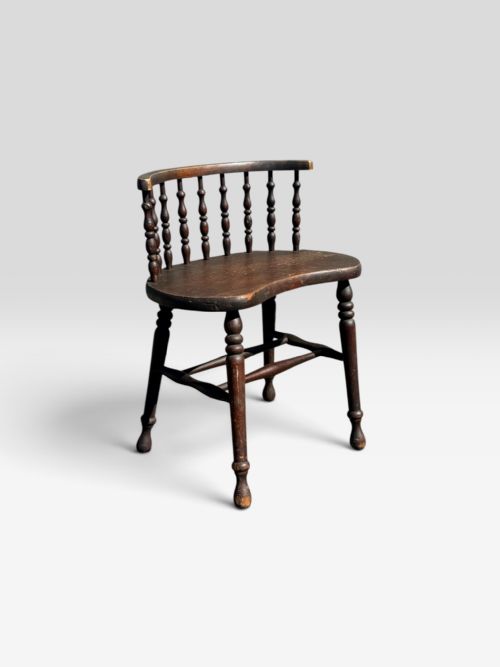
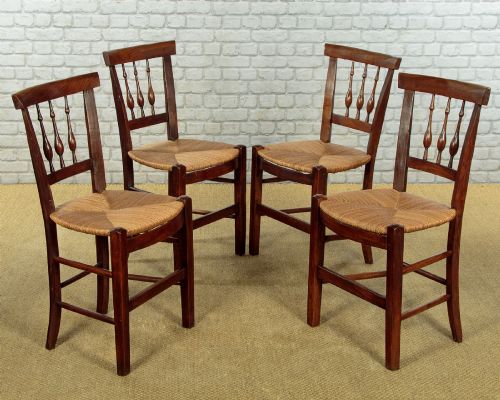
The category extends beyond standard dining seats to embrace rocking chairs, corner chairs, and low benches fitted with rush or timber seats. Each iteration relies on turned spindles to form an open, supportive backrest.
Materials and construction methods
Cabinetmakers and country joiners combined contrasting native timbers to maximise strength in structural elements and visual warmth in seats. Elm frequently provides the thick, saddled seat boards, while ash, beech, and oak form the slender turned spindles, legs, and steam-bent bow backrests.
Traditional construction depends on wedged tenon joints and through-pegged stretchers that allow the timber to move naturally over decades. Turning lathes shaped the upright posts and spindles, whilst drawknives and scutches hollowed solid wooden seats for comfort.
Listings span multiple regional styles, incorporating English Country, Victorian, Arts and Crafts, and Georgian vernacular traditions.
Distinctions in quality and execution
Quality rests in the harmony of the timber selection and the retention of crisp turning on the spindles and arm supports. Superior examples display thoughtful grain matching between the elm seat and the supporting ash or yew framework.
Proportion and structural integrity define the upper tier of these pieces, where bow arms sweep cleanly and stretchers remain tight without excessive replacement parts. Finer chairs show deliberate refinement in the saddle shaping of the seat and the taper of the vertical members.
Morris & Co·J Spencer·Codina·Philip Webb
The Wooden Spindle Back Chairs Glossary
- Windsor chair
- A chair built with a thick wooden saddle seat into which the back and legs are separately dowelled. This method provides robust structural stability without requiring a heavy internal frame.
- Comb-back
- A regional Windsor variant where the vertical spindles extend upward to pierce a top rail that resembles the teeth of a comb. This form frequently dates to the eighteenth century.
- Harlequin set
- A collection of dining chairs assembled to match in style, material, or period rather than originating as a single workshop commission. These groups share common visual characteristics like elm seats and turned spindle backs.
- Stretcher
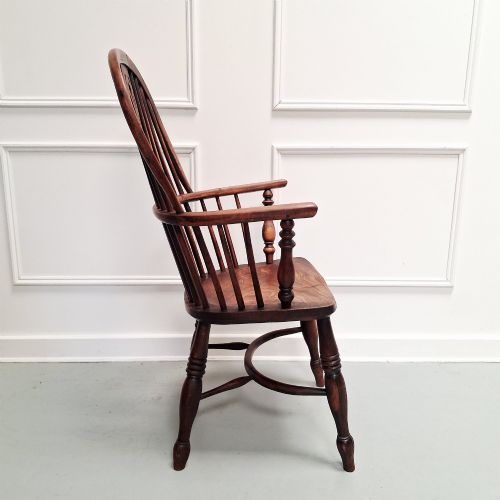
- A horizontal timber connecting the legs of a chair to reinforce the underframe. Crinoline stretchers curve outward in a hoop shape beneath the seat.
- Vernacular
- Objects made by regional craftspeople using local traditions and available materials rather than following high-style metropolitan fashion. These pieces prioritize utility and local resourcefulness.
Wooden Spindle Back Chairs: Frequently Asked Questions
How do I date a wooden spindle back chair?
Dating relies on observing tool marks, timber combinations, and structural wear patterns across the frame. Eighteenth-century examples often feature comb-backs and heavier ash construction, while Victorian pieces frequently pair elm seats with beech turnings.
Examine the construction of the seat underside and leg joints. Hand-augered holes and accumulated patination help distinguish older vernacular pieces from later revival work.
Are these chairs comfortable for daily dining?
Most wooden spindle back chairs provide firm support through ergonomically saddled solid timber seats. Their open spindle arrangements allow freedom of movement during long meals.
Adding loose squab cushions can soften the seat without altering the historical appearance of the chair. The natural give in steam-bent wooden bows offers a comfortable lean.
What is a harlequin set?
A harlequin set is a curated group of chairs that share similar materials, periods, or vernacular styles without having been made together originally. Collectors assembled these groups to furnish large tables while maintaining visual harmony.
Such sets typically feature matching woods like elm and beech, united by common design traits such as stick backs or turned legs. They offer a flexible approach to seating an antique dining table.
How do I care for antique timber seats?
Maintain antique wooden spindle back chairs by keeping them away from direct heat sources and sudden humidity changes. Feeding the dry timber occasionally with a quality wax preserves the natural lustre of the grain.
Avoid harsh chemical cleaners that strip the historic patination accumulated over centuries. Regular dusting with a soft cloth prevents grime buildup in the turned spindle joints.