
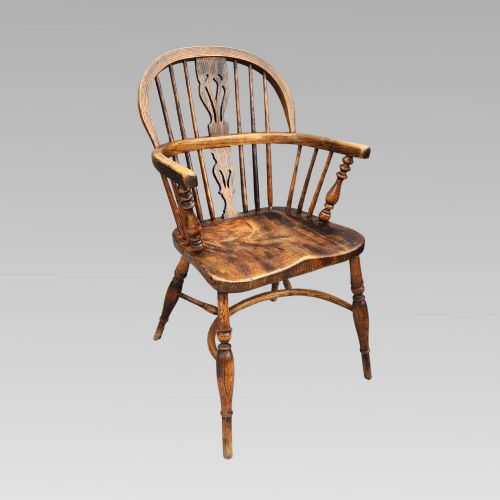


Edwardian Spindle Back Chairs
Edwardian spindle back chairs bring functional domestic seating into domestic rooms with slender turned uprights and sturdy timber frames.
Edwardian Spindle Back Chairs
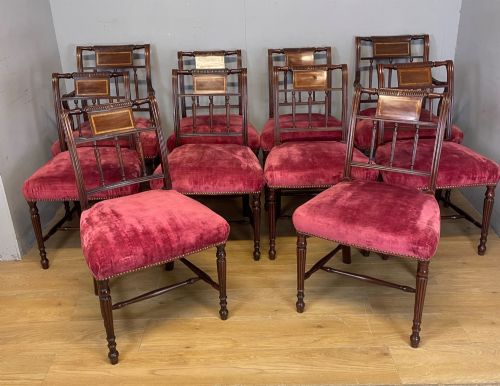
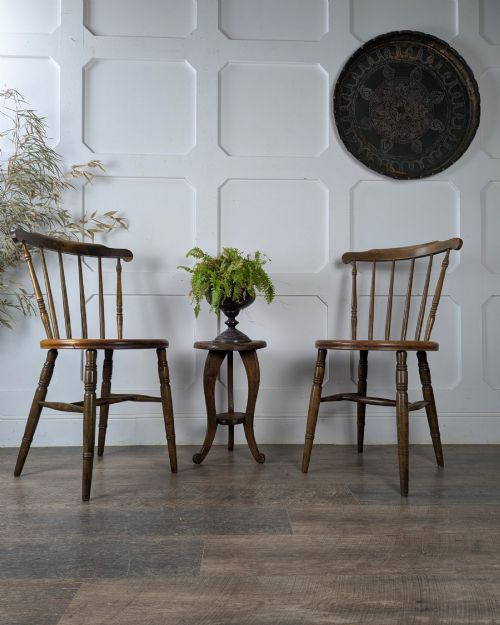
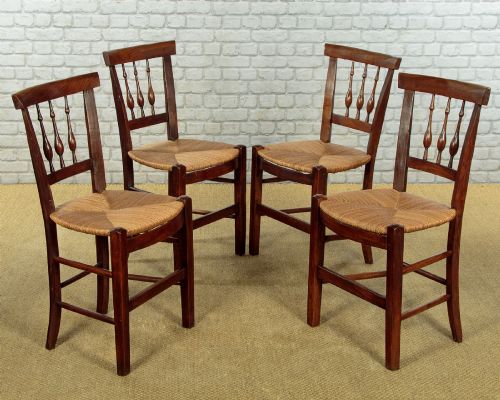
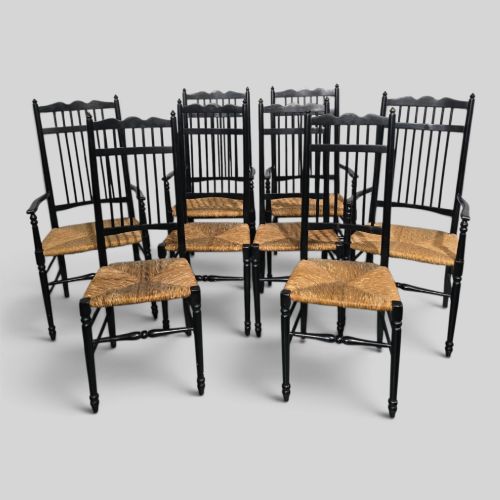
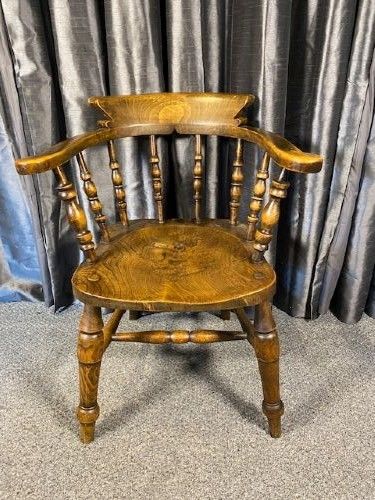
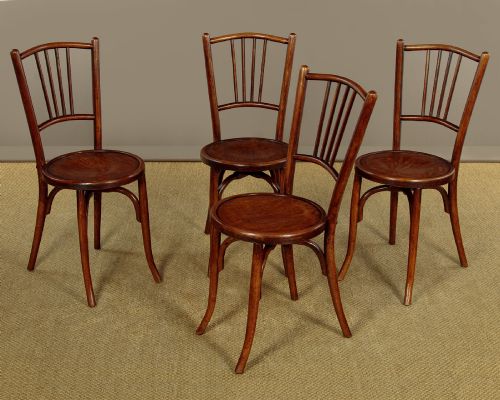
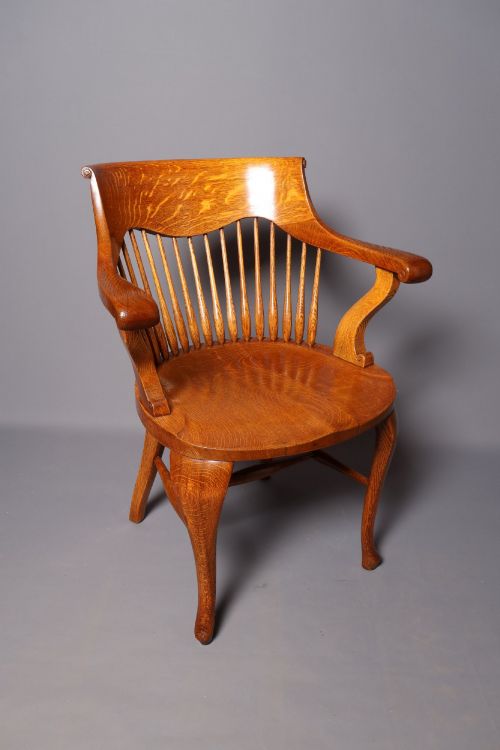
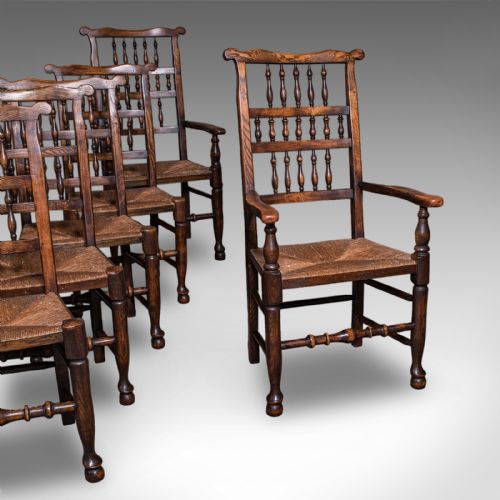
When you search for edwardian spindle back chairs, you encounter seating built around the turn of the twentieth century, alongside nineteenth-century antecedents and country variants. These pieces appear as dining sets, armchairs, and desk chairs designed for practical household use.
The selection ranges from dining sets and Lancashire rush-seat chairs to office armchairs and country kitchen seating. Form follows function directly, with upright turnings supporting the back and simple timber seats providing daily utility.
Evaluating Craftsmanship
Quality rests in the selection of timber and the precision of the turning work. Tighter grain, matched wood selection, and cleanly finished spindles distinguish superior examples from utilitarian workshop output.
Structural integrity dictates value, seen in the tightness of the joints and the absence of excessive timber shrinkage or replacement components. Original surface patination also separates intact specimens from heavily restored ones.
Certain office chairs feature integrated swivel mechanisms and cast iron bases for unexpected desk mobility.
Liberty of London·Kendrick & Jefferson·Codina·Charles Bevan·Edward William Godwin
The Edwardian Spindle Back Chairs Glossary
- Spindle back
- A chair back constructed from a series of slender, turned vertical wooden rods. These uprights provide back support while keeping the frame visually light.
- Smoker's bow
- A low-backed wooden armchair with a continuous curved armrail supported by turned spindles. This form served as a robust desk or smoking room chair.
- Rush seat
- A seating surface woven from dried marsh rushes twisted into cords. It offers a flexible and durable platform for dining and vernacular chairs.
Edwardian Spindle Back Chairs: Frequently Asked Questions
What defines edwardian spindle back chairs?
These chairs combine light turned uprights with sturdy timber frames, originating around the early twentieth century. They draw upon vernacular country designs and late nineteenth-century styles.
Craftsmen built them primarily for dining rooms, kitchens, and offices, utilising accessible hardwoods like beech and elm.
How were these chairs used originally?
Households deployed them as everyday dining seating, kitchen chairs, or desk seating in studies and offices. Their robust construction suited heavy daily domestic tasks.
Armchair versions served as captain's chairs or smokers bows, offering comfortable seating near writing desks or firesides.
How do I care for timber chairs?
Keep wooden frames away from direct heat sources and rapid temperature shifts to prevent timber splitting or joint loosening. Regular dusting and occasional application of appropriate wax maintain the finish.
Avoid excessive moisture on rush or wooden seats to preserve the natural fibres and structural glue.
How do I date an antique chair?
Dating relies on stylistic markers, construction methods, and timber choice, comparing pieces against documented examples from periods like the Victorian and Edwardian eras. Tool marks and fastener types offer further clues.
Makers' stamps or labels, when present, provide definitive proof of origin and workshop attribution.